AI estimate as of September 13, 2026 · verify with a professional before acting
AI-Generated · Verify before acting
Everything on this page is generated by AI for informational purposes only. AI can make mistakes — the AI may misidentify items or misattribute them (artist, maker, brand, designer, origin, era). This is not an official valuation and should not be used for insurance, sale, tax, estate, legal, or lending purposes — or any decision requiring a certified appraisal. It is not an authoritative claim about any person, brand, or rights holder — do not share or rely on it as a factual statement about a third party. Always consult qualified professionals before making financial decisions.
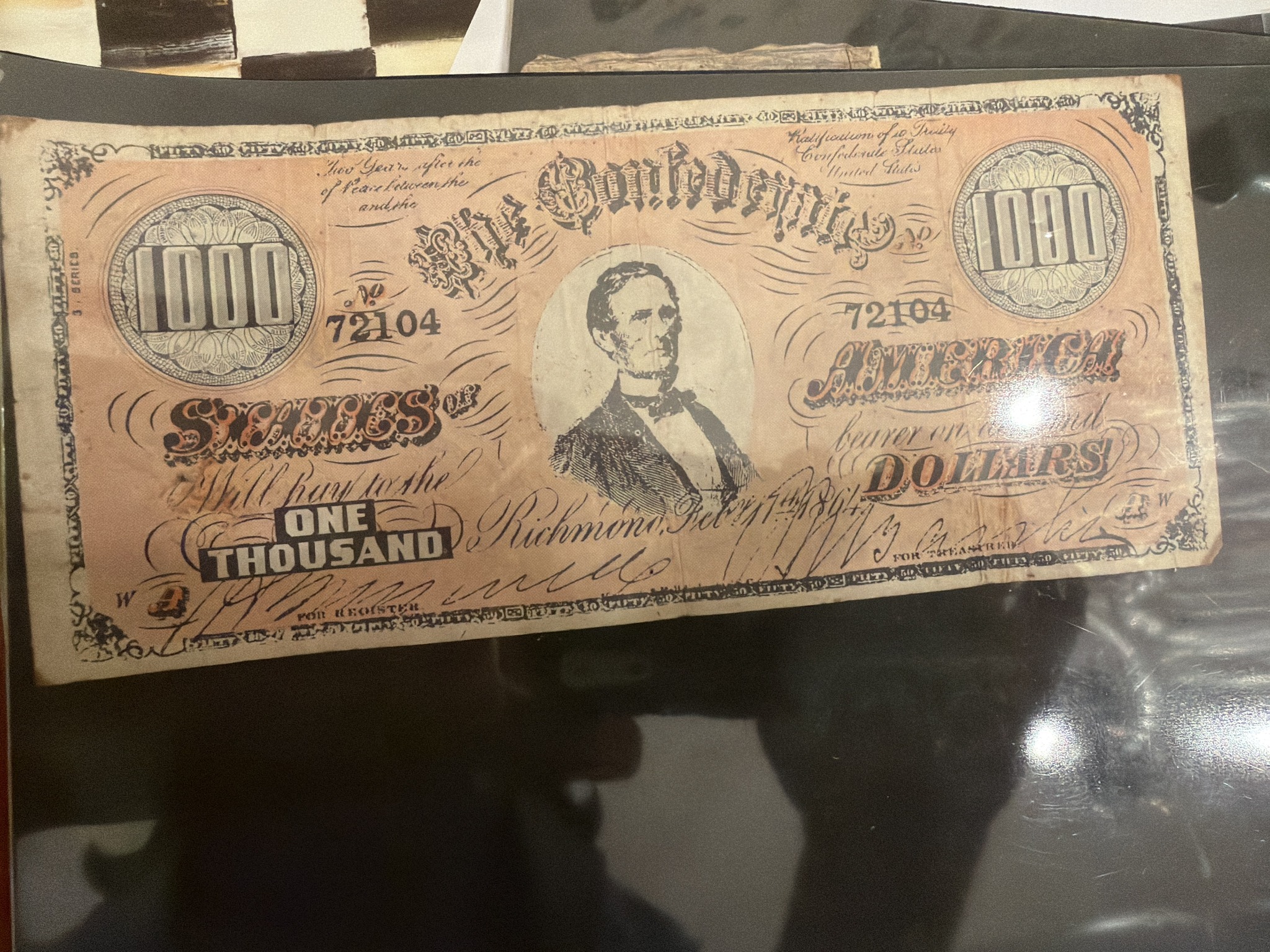
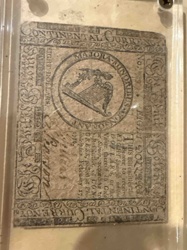
This rectangular paper banknote appears to be a historical financial instrument, specifically a Confederate States of America One Thousand Dollar bill, though its current state is unauthenticated and it bears visual similarities to known contemporary reproductions or facsimiles. The banknote measures in a typical currency proportion, printed on off-white or aged yellowish paper stock using black and red-orange ink tones. The central vignette features a portrait of Andrew Jackson enclosed within an oval frame, flanked by large ornate '1000' numerical denomination roundels in the upper left and right corners. Elaborate scrollwork, guilloche patterns, and decorative borders frame the entire composition. Prominent text readable on the face includes 'The Confederate States of America', 'Will pay to the bearer on demand ONE THOUSAND DOLLARS', and the location and date 'Richmond, Feb 17th 1864'. Serial numbers read '72104' in red ink near the upper section. The lower portion includes handwritten-style manuscript signatures for the register and treasurer, along with small printer or lithographer marks near the lower margin corners. The physical condition exhibits moderate to heavy signs of age, handling, and environmental exposure, including yellowed discoloration, surface toning, creases, folds, edge chipping, minor tears, and scattered foxing spots. The paper texture appears somewhat fragile and softened from handling. Because historical paper currency of this type is frequently counterfeited, reproduced, or fabricated as souvenir items, this example cannot be considered verified without professional in-person numismatic inspection. The identification relies entirely on the visual layout, text, and iconography present on the face of the note.
AI Appraisal Report
Based on the provided image, I am evaluating a rectangular paper banknote that bears the visual layout and text consistent with an 1864 Confederate States of America One Thousand Dollar bill featuring Andrew Jackson. I cannot evaluate the paper composition, printing method, or ink depth from a photograph, meaning physical numismatic inspection is absolutely necessary to properly evaluate this piece. The note displays moderate to heavy signs of age, including yellowed discoloration, creases, edge chipping, and scattered foxing. If this hypothesis holds and the note is a period-issued financial instrument, comparable items in similar condition typically sell in the $1,000 to $2,500 range. However, it is critical to note that historical currency of this specific type is frequently reproduced as souvenirs or fabricated, and I must treat the current attribution strictly as a hypothesis. Many examples bearing specific serial numbers are known copies. Should physical examination reveal this to be a facsimile or reproduction, its market value would be negligible, typically $5 or less. The current appraisal estimate reflects the market behavior only if the working assumption of it being a period-issued note is accurate, which would require professional in-person review by a numismatist to evaluate.