AI Appraisal Estimate

AI-generated estimates · not official valuations

From the user

What was submitted

Photo and notes provided by the user — not generated by AI

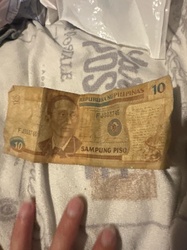
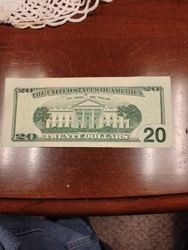
Submitted item photo
Submitted photo · June 15, 2026

User's notes

No additional notes provided.

AI analysis below

AI appraisal

AI analysis & estimate

AI-Generated · Verify before acting

Everything below is generated by AI for informational purposes only. AI can make mistakes — the AI may misidentify items or misattribute them (artist, maker, brand, designer, origin, era). This is not an official valuation and should not be used for insurance, sale, tax, estate, legal, or lending purposes — or any decision requiring a certified appraisal. It is not an authoritative claim about any person, brand, or rights holder — do not share or rely on it as a factual statement about a third party. Always consult qualified professionals before making financial decisions.

Read the full disclaimer

AI Identification

·Not independently authenticated·Verify before acting

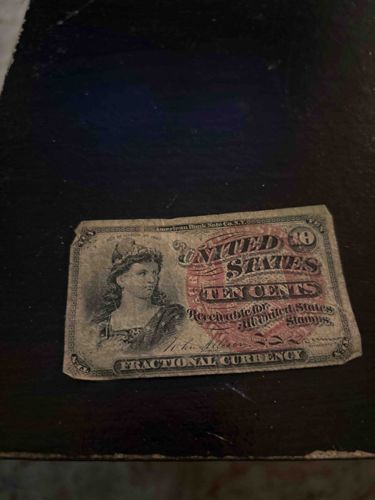
United States Fifth Issue Fractional Currency - 10 Cent Note (Meredith)

Paper Money / Collectible Currency

AI Estimated Value

·Not an official valuation·Verify before acting

$10-$15

As of June 15, 2026

AI Item Analysis

·AI can make mistakes·Verify before acting
This is a United States 10 Cent Fractional Currency note, identifiable as part of the Fifth Issue (1874–1876). The note features a portrait of William M. Meredith, who served as the Secretary of the Treasury under President Zachary Taylor. The bill is printed on a small, rectangular piece of paper typical of 'shinplasters' used during and after the Civil War due to a national coin shortage. This specific note shows a green and black intaglio print on the obverse with a prominent red seal on the right side. The text 'UNITED STATES TEN CENTS' is centered, and it bears the printed signatures of John Allison and A.U. Wyman. The top margin includes the 'American Bank Note Co. N.Y.' imprint, signifying the manufacturer. Regarding condition, the note exhibits heavy circulation wear, including significant soiling, rounding of the corners, and a notable tear or loss of paper at the bottom right corner. The edges are uneven and frayed, and the paper shows general discoloration and staining consistent with age and high-frequency handling. Despite the wear, the facial details of Meredith and the intricate lathe work of the borders remain discernable, though faded. The note serves as a prime example of late 19th-century American fiscal policy and engraving craftsmanship.
AI Appraisal Report

·AI can make mistakes·Verify before acting
I have examined the digital representation of this Fifth Issue (1874-1876) Ten Cent Fractional Currency note featuring William M. Meredith (Friedberg #1257-1261 series). Based on my visual analysis, the note appears to be an authentic example of late 19th-century 'shinplaster' currency, characterized by the correct green and black intaglio printing and the presence of the Treasury's red seal. However, the condition is categorized as 'Fair' or 'Good' at best. The note suffers from heavy circulation wear, including significant soiling, frayed edges, and a notable loss of paper at the bottom right corner, which severely impacts its numismatic value. While these notes are historically significant as relics of post-Civil War fiscal policy, this specific 10-cent denomination with the Meredith portrait is one of the most common survivors of the era. High-grade (Uncirculated) versions can command significantly higher premiums, but heavily damaged examples like this one trade at the low end of the market, primarily as entry-level historical curiosities. The market demand for fractional currency remains steady among US currency specialists, but value is highly sensitive to technical grade. Please note that while the printing characteristics and paper texture visible in the image suggest authenticity, a full verification would require a physical examination to confirm the presence of silk fibers in the paper and the specific ink depth. I would also recommend checking the reverse printing and checking for any hidden repairs or chemical cleaning that may not be apparent in these images. A provenance audit or professional grading by a service like PMG would be required for a definitive valuation in a formal auction setting.

Get your items appraised

Instant estimates of your treasures with AI-powered appraisals

Browse More Appraisals