1777 Five Dollar Continental Currency Note
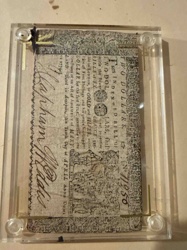
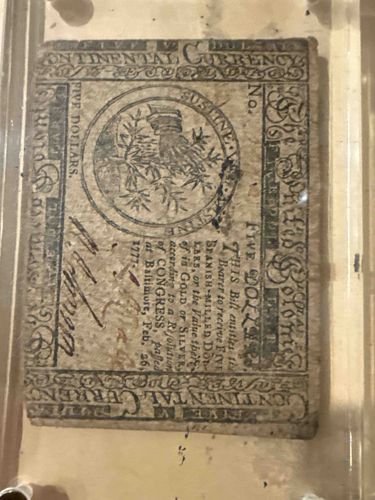
This is a historical Continental Currency note with a face value of Five Dollars, dated February 26, 1777. The note features a rectangular format printed on thick, heavy rag paper, which was standard for the colonial era to prevent counterfeiting. The central vignette displays a hand grasping a thorny bush with the Latin motto SUSTINE VEL ABSTINE (Sustain or Abstain). The text indicates it entitled the bearer to receive five Spanish milled dollars or the value thereof in gold or silver, according to a resolution of Congress passed at Baltimore. The note shows significant historical wear, including foxing (brown spotting), heavy creasing, and fraying along the deckled edges. A faded handwritten signature is visible on the lower left, a security feature of the time. The black ink printing shows some fading, typical of eighteenth century vegetable or carbon-based inks. The paper has aged to a dark beige/tan patina. These notes were printed by Hall and Sellers in Philadelphia (though the series was authorized in Baltimore during the British occupation of Philadelphia), utilizing woodcut borders with intricate scrolling intended to deter forgers. The overall condition reflects an authentic circulated piece from the American Revolutionary War period, showing the characteristic texture of handmade linen and cotton fiber paper.
AI-Generated Appraisal Disclaimer
Estimated Value
$400 - $650
Basic Information
Category
Historical Numismatics / Paper Money
Appraised On
February 23, 2026
Estimated Value
$400 - $650
Item Description
This is a historical Continental Currency note with a face value of Five Dollars, dated February 26, 1777. The note features a rectangular format printed on thick, heavy rag paper, which was standard for the colonial era to prevent counterfeiting. The central vignette displays a hand grasping a thorny bush with the Latin motto SUSTINE VEL ABSTINE (Sustain or Abstain). The text indicates it entitled the bearer to receive five Spanish milled dollars or the value thereof in gold or silver, according to a resolution of Congress passed at Baltimore. The note shows significant historical wear, including foxing (brown spotting), heavy creasing, and fraying along the deckled edges. A faded handwritten signature is visible on the lower left, a security feature of the time. The black ink printing shows some fading, typical of eighteenth century vegetable or carbon-based inks. The paper has aged to a dark beige/tan patina. These notes were printed by Hall and Sellers in Philadelphia (though the series was authorized in Baltimore during the British occupation of Philadelphia), utilizing woodcut borders with intricate scrolling intended to deter forgers. The overall condition reflects an authentic circulated piece from the American Revolutionary War period, showing the characteristic texture of handmade linen and cotton fiber paper.
Get Your Items Appraised
Instant estimates of your treasures with AI-powered instant appraisals