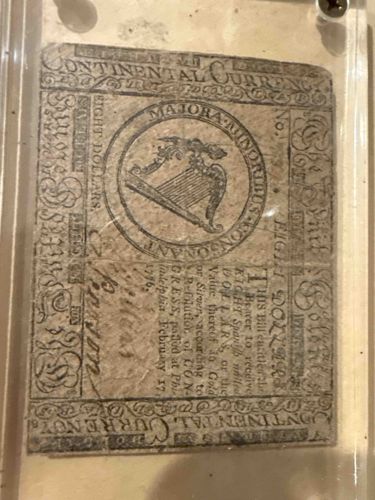
1776 Eight Dollar Continental Currency Note
Numismatics / Historical Currency

1776 Eight Dollar Continental Currency Note

This is a historical Eight Dollar bill issued by the Continental Congress, dated February 17, 1776. The note features colonial-style typography and a central vignette depicting a harp with thirteen strings, symbolizing the unity of the original thirteen colonies. Above the harp is the Latin motto 'MAJORA MINORIBUS CONSONANT'. The currency is printed on thick, rag-based paper with visible blue fibers and mica flakes, common for the era to deter counterfeiting. It displays handwritten serial numbers and signatures in faded iron-gall ink. The borders are decorated with intricate woodcut leaf designs. In terms of condition, the note exhibits significant signs of circulation, including deep vertical and horizontal creases, edge fraying, and overall foxing or surface soiling consistent with its 18th-century origin. The corners appear rounded from handling. There are no obvious modern repairs visible, though the paper has darkened to a brownish-tan patina. Such notes were printed in Philadelphia and are cornerstone pieces of American numismatic history, representing the financial struggles of the Revolutionary War.
Estimated Value

$450 - $650

Basic Information

Category

Numismatics / Historical Currency

Appraised On

February 23, 2026

Estimated Value

$450 - $650

Item Description

This is a historical Eight Dollar bill issued by the Continental Congress, dated February 17, 1776. The note features colonial-style typography and a central vignette depicting a harp with thirteen strings, symbolizing the unity of the original thirteen colonies. Above the harp is the Latin motto 'MAJORA MINORIBUS CONSONANT'. The currency is printed on thick, rag-based paper with visible blue fibers and mica flakes, common for the era to deter counterfeiting. It displays handwritten serial numbers and signatures in faded iron-gall ink. The borders are decorated with intricate woodcut leaf designs. In terms of condition, the note exhibits significant signs of circulation, including deep vertical and horizontal creases, edge fraying, and overall foxing or surface soiling consistent with its 18th-century origin. The corners appear rounded from handling. There are no obvious modern repairs visible, though the paper has darkened to a brownish-tan patina. Such notes were printed in Philadelphia and are cornerstone pieces of American numismatic history, representing the financial struggles of the Revolutionary War.
Get Your Items Appraised

Instant estimates of your treasures with AI-powered instant appraisals

Browse More Appraisals