AI Appraisal Estimate

AI-generated estimates · not official valuations

From the user

What was submitted

Photo and notes provided by the user — not generated by AI

Submitted item photo
Submitted photo · June 8, 2026

User's notes

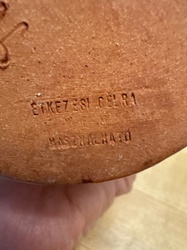
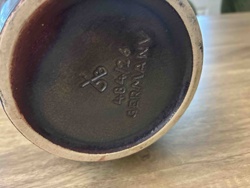
Stamped bottom

AI analysis below

AI appraisal

AI analysis & estimate

AI-Generated · Verify before acting

Everything below is generated by AI for informational purposes only. AI can make mistakes — the AI may misidentify items or misattribute them (artist, maker, brand, designer, origin, era). This is not an official valuation and should not be used for insurance, sale, tax, estate, legal, or lending purposes — or any decision requiring a certified appraisal. It is not an authoritative claim about any person, brand, or rights holder — do not share or rely on it as a factual statement about a third party. Always consult qualified professionals before making financial decisions.

Note

This analysis also relies on unverified notes provided by the user, which may be incomplete or inaccurate and could affect the result.

Read the full disclaimer

AI Identification

·Not independently authenticated·Verify before acting

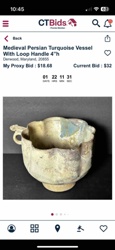
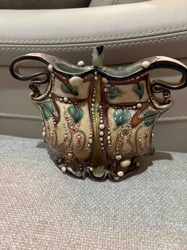
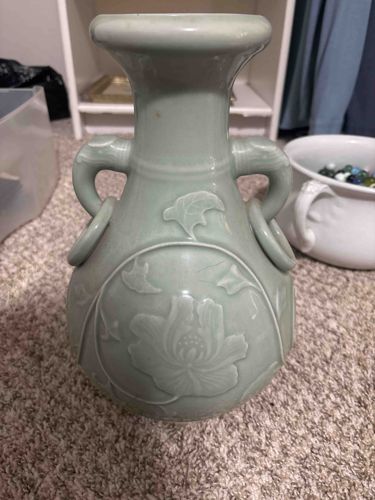
Celadon Glazed Vase with Relief Floral Motifs and Ring Handles

Vessel/Ceramics

AI Estimated Value

·Not an official valuation·Verify before acting

$400 - $600

As of June 8, 2026

AI Item Analysis

·AI can make mistakes·Verify before acting
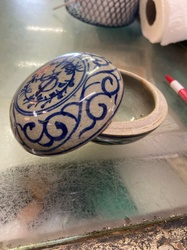
This is a celadon glazed ceramic vase, likely of Asian origin, possibly Chinese or Korean. It stands as a medium-sized vessel, with a relatively broad base that tapers upwards to a narrower neck, flaring out slightly at the rim. The primary color is a soft, muted sage green, characteristic of celadon glazes, which typically exhibit subtle variations in tone due to the firing process and thickness of the glaze. The glaze appears smooth with a slight sheen, although there might be a very fine crackle visible upon closer inspection, a common feature in aged celadon wares. Two looped handles are attached symmetrically to the shoulders of the vase, each with an unattached ring dangling from it, adding an element of decorative functionality. The body of the vase is adorned with raised, relief-carved floral motifs, primarily a large, detailed peony or lotus flower enclosed within a circular medallion on the front, surrounded by smaller foliate designs. These designs suggest a classical Asian aesthetic. No prominent damage such as chips or cracks are immediately visible, but a small, darker speck or discoloration is observable on the neck of the vase, which could be an inclusion from manufacturing or a minor surface stain. The condition appears good overall, indicative of careful handling. The craftsmanship appears to be of good quality, with well-formed handles and precisely executed relief carving. The 'stamped bottom' implies the presence of a maker's mark or perhaps a reign mark, crucial for accurate dating and identification of the specific kiln or period of manufacture.
AI Appraisal Report

·AI can make mistakes·Verify before acting
Upon examining the provided image and description of the Celadon Glazed Vase with Relief Floral Motifs and Ring Handles, I have conducted an initial appraisal. The vase presents as a well-crafted example of celadon ware, likely of Chinese or Korean origin from the 20th century, possibly a revival piece emulating earlier styles such as Song or Goryeo dynasty wares. The form is classical, featuring symmetrical ring handles and detailed relief carvings of floral motifs, likely peonies or lotuses, which are common in East Asian ceramics. The soft, even sage-green glaze appears to be in very good condition with no visible chips or significant cracks, though true condition can only be verified in person. The market for Asian ceramics, particularly celadon, remains robust, though values fluctuate significantly based on age, provenance, and specific kiln origin. A 20th-century decorative piece like this is generally accessible to collectors. The value is primarily impacted by the 'stamped bottom.' A mark indicating a famous workshop, artist, or an earlier reign period (even if apocryphal) could increase interest, whereas a simple 'Made in China' stamp would place it firmly in the decorative category. Without physical inspection, I cannot authenticate the piece definitively. Full authentication would require examining the paste and footrim, feeling the weight and balance, inspecting the glaze texture for signs of age versus modern production techniques, and professionally identifying the stamp. An in-person assessment or Thermoluminescence (TL) testing would be necessary to confirm an earlier dating, which would dramatically increase its value. Assuming it is a high-quality 20th-century decorative piece, its value is estimated based on current comparables in that category.

Get your items appraised

Instant estimates of your treasures with AI-powered appraisals

Browse More Appraisals