AI Appraisal Estimate

AI-generated estimates · not official valuations

From the user

What was submitted

Photo and notes provided by the user — not generated by AI

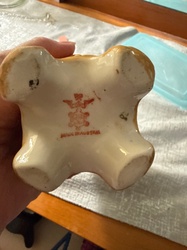
Submitted item photo
Submitted photo · June 6, 2026

User's notes

No additional notes provided.

AI analysis below

AI appraisal

AI analysis & estimate

AI-Generated · Verify before acting

Everything below is generated by AI for informational purposes only. AI can make mistakes — the AI may misidentify items or misattribute them (artist, maker, brand, designer, origin, era). This is not an official valuation and should not be used for insurance, sale, tax, estate, legal, or lending purposes — or any decision requiring a certified appraisal. It is not an authoritative claim about any person, brand, or rights holder — do not share or rely on it as a factual statement about a third party. Always consult qualified professionals before making financial decisions.

Read the full disclaimer

AI Identification

·Not independently authenticated·Verify before acting

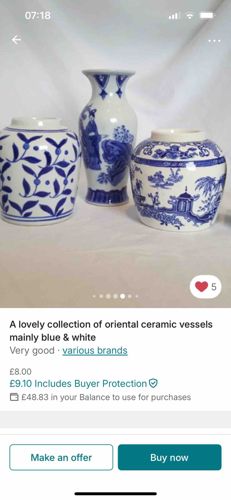
Collection of Oriental Blue and White Ceramic Vessels (Two Ginger Jars and One Vase)

Decorative Ceramics

AI Estimated Value

·Not an official valuation·Verify before acting

$200-350

As of June 6, 2026

AI Item Analysis

·AI can make mistakes·Verify before acting
This lot consists of three oriental ceramic vessels, predominantly in a blue and white color scheme. The materials appear to be glazed ceramic or porcelain. The lot includes two ginger jar-style vessels and one vase. The leftmost vessel is a ginger jar shape, featuring a continuous pattern of stylized blue foliage and berries against a white background. It has a slightly tapered body, a small mouth, and a flat rim. The central piece is a flared vase with a narrow base and a wide, open mouth, decorated with a traditional Chinese-style landscape or figural scene in blue. This design includes what appears to be a person and floral motifs. The rim and base exhibit geometric patterns or borders. The rightmost vessel, also a ginger jar shape but with a wider body, showcases a detailed blue willow-style pattern depicting pagodas, bridges, boats, trees, and figures in a scenic landscape, characteristic of traditional Chinese porcelain designs. All three items demonstrate generally good craftsmanship, with smooth glazed surfaces. The visible condition suggests they are 'very good' according to the listing, implying minimal wear or damage. There are no obvious chips, cracks, or repairs discernible from the image. The blue coloration is consistent across the designs, indicating good firing. The items likely date from the mid-to-late 20th century or early 21st century, given their general appearance and common availability of such decorative items.
AI Appraisal Report

·AI can make mistakes·Verify before acting
Based on my visual examination of the image depicting the Collection of Oriental Blue and White Ceramic Vessels (Two Ginger Jars and One Vase), I assess their condition as very good. The glazes appear smooth and intact, and I observe no visible chips, cracks, or repairs, consistent with the listing's 'very good' condition claim. The blue coloring is uniform, suggesting proper firing. Authenticity, based solely on visual inspection, is limited. These items exhibit characteristics common to mass-produced decorative ceramics from the mid-to-late 20th century or early 21st century. The designs, while traditional (foliate, landscape, willow-style), lack the intricate detail or unique artistry often associated with antique or master-crafted pieces that would command higher values. Market conditions for contemporary decorative blue and white Asian-style ceramics are generally stable, with a constant but not exceptionally high demand. Comparables are readily available in online marketplaces, antique malls, and decorative arts shops, typically retailing in the range I've provided. These pieces are not rare; similar items are produced globally. Factors impacting value include their decorative appeal and good condition. However, their likely origin as decorative reproductions rather than genuine antiques or high-collectible period pieces significantly limits their top-end market value. For full authentication and to determine potential age or origin more precisely, an in-person examination would be critical to assess the quality of the paste, the type of glaze, the finish of the foot rim, and any maker's marks not visible here. Scientific testing (e.g., thermoluminescence dating) or provenance documentation would be needed to confirm age conclusively.

Get your items appraised

Instant estimates of your treasures with AI-powered appraisals

Browse More Appraisals