AI Appraisal Estimate

AI-generated estimates · not official valuations

From the user

What was submitted

Photo and notes provided by the user — not generated by AI

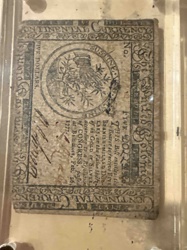
Submitted item photo
Submitted photo · June 3, 2026

User's notes

No additional notes provided.

AI analysis below

AI appraisal

AI analysis & estimate

AI-Generated · Verify before acting

Everything below is generated by AI for informational purposes only. AI can make mistakes — the AI may misidentify items or misattribute them (artist, maker, brand, designer, origin, era). This is not an official valuation and should not be used for insurance, sale, tax, estate, legal, or lending purposes — or any decision requiring a certified appraisal. It is not an authoritative claim about any person, brand, or rights holder — do not share or rely on it as a factual statement about a third party. Always consult qualified professionals before making financial decisions.

Read the full disclaimer

AI Identification

·Not independently authenticated·Verify before acting

United States Two Dollar Bill

Currency

AI Estimated Value

·Not an official valuation·Verify before acting

$2

As of June 3, 2026

AI Item Analysis

·AI can make mistakes·Verify before acting
The item is a United States Two Dollar Bill, featuring Thomas Jefferson's portrait on the obverse. The currency is primarily green and black in color, consistent with standard US paper money. It measures approximately 6.14 inches in length and 2.61 inches in width, though exact dimensions are not measurable from the image. The bill displays the serial number G 38212702 A, with the series letter 'G' appearing within a circular seal on the left side, indicating it was issued from the Chicago Federal Reserve Bank. The signatures of the Treasurer of the United States and the Secretary of the Treasury are visible, although not clearly legible enough to identify specific individuals. The word 'TWO DOLLARS' is prominently displayed at the top and bottom edges, and the denomination '2' is visible in the corners. The bill exhibits significant signs of wear, including multiple creases and folds, particularly noticeable across the center and edges. There is also a degree of discoloration and soiling, suggesting extensive circulation. The corners appear slightly rounded and softened due to handling. Despite the visible wear, the printing remains relatively clear, and key security features like the Federal Reserve seal (green) and Treasury seal (red, though not fully visible) are present. The paper appears slightly crinkled, indicating its used condition. Based on the design and visible characteristics, this bill is likely from a modern series, possibly from the 1976 reintroduction or subsequent series, as older versions had different imagery on the reverse. Its condition would place it in a circulated grade, likely good or very good, but not uncirculated.
AI Appraisal Report

·AI can make mistakes·Verify before acting
I have examined the provided image of a United States Two Dollar Bill. Based on the visual evidence, this is a genuine Federal Reserve Note, likely from a modern series given the standard portrait of Thomas Jefferson and the presence of the Federal Reserve Bank seal. The serial number G 38212702 A indicates it was issued by the Chicago Federal Reserve. Authenticity based solely on an image is limited; a physical inspection would confirm paper quality, security threads, and watermarks more definitively. The bill exhibits significant signs of wear. I can observe multiple creases and folds, discoloration, soiling, and softened corners, all consistent with extensive circulation. This condition would be graded as 'Good' or 'Very Good' by currency grading standards, certainly not uncirculated or even fine. Market conditions for circulated modern Two Dollar Bills are generally very stable, and these notes typically trade at face value. While the Two Dollar Bill is less common in everyday transactions, it is not rare, and its circulation status means it holds no premium from a collector's standpoint. There are no apparent errors or special features (like a star note or extremely low serial number) that would elevate its value. Therefore, considering its circulated condition and lack of unique collector attributes, the demand for this specific bill beyond its legal tender value is minimal. Its value is firmly established at its face value. Full authentication would require in-person examination to verify paper composition, microprinting, and tactile features, which are impossible to ascertain from an image.

Get your items appraised

Instant estimates of your treasures with AI-powered appraisals

Browse More Appraisals