Japanese Sumi-e Bamboo Ink Painting
Asian Fine Art / Calligraphy

Japanese Sumi-e Bamboo Ink Painting

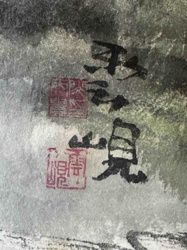
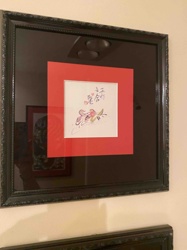
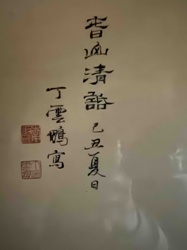
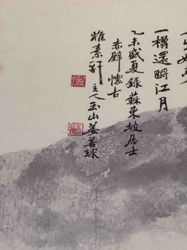
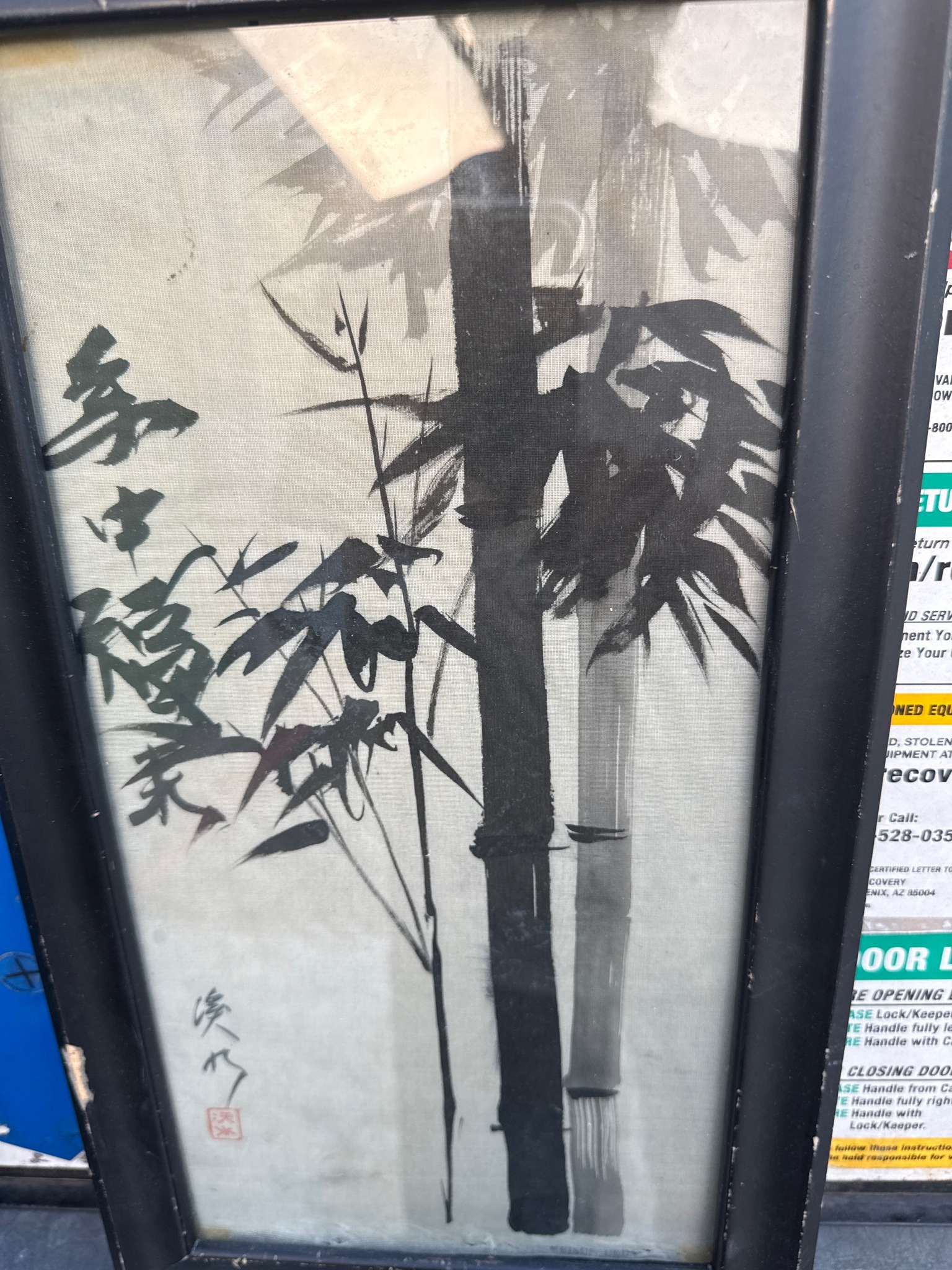
This is a vertical composition of a traditional Japanese ink wash painting, known as Sumi-e, featuring a central bamboo stalk with smaller branches and leaves. The piece is executed on a textured substrate, likely raw silk or high-quality washi paper, which shows a prominent vertical weave pattern. The color palette is monochromatic, utilizing varying shades of black and grey ink to create depth and dimension through atmospheric perspective—the darker stalks appear foregrounded while lighter, more diluted washes suggest background growth. The brushwork exhibits classic calligraphy techniques, with sharp, tapered strokes for the bamboo leaves and segmented, heavy applications for the culms. Located on the left side are several vertical columns of kanji script, accompanied at the base by a black ink signature and a square red cinnabar seal (hanko), which serves as the artist's authentication mark. The condition shows significant signs of age and wear; there is visible water damage or foxing causing yellowed staining at the top and bottom edges, moisture-induced rippling of the substrate, and some degradation of the paper/silk fibers. The piece is housed in a simple black frame that shows minor scuffing. Based on the style and aging characteristics, this piece likely dates from the mid-20th century, following traditional Edo or Meiji period aesthetics.
Estimated Value

$450 - $650

Basic Information

Category

Asian Fine Art / Calligraphy

Appraised On

May 10, 2026

Estimated Value

$450 - $650

Item Description

This is a vertical composition of a traditional Japanese ink wash painting, known as Sumi-e, featuring a central bamboo stalk with smaller branches and leaves. The piece is executed on a textured substrate, likely raw silk or high-quality washi paper, which shows a prominent vertical weave pattern. The color palette is monochromatic, utilizing varying shades of black and grey ink to create depth and dimension through atmospheric perspective—the darker stalks appear foregrounded while lighter, more diluted washes suggest background growth. The brushwork exhibits classic calligraphy techniques, with sharp, tapered strokes for the bamboo leaves and segmented, heavy applications for the culms. Located on the left side are several vertical columns of kanji script, accompanied at the base by a black ink signature and a square red cinnabar seal (hanko), which serves as the artist's authentication mark. The condition shows significant signs of age and wear; there is visible water damage or foxing causing yellowed staining at the top and bottom edges, moisture-induced rippling of the substrate, and some degradation of the paper/silk fibers. The piece is housed in a simple black frame that shows minor scuffing. Based on the style and aging characteristics, this piece likely dates from the mid-20th century, following traditional Edo or Meiji period aesthetics.
Get Your Items Appraised

Instant estimates of your treasures with AI-powered instant appraisals

Browse More Appraisals