AI estimate as of August 8, 2025 · verify with a professional before acting
AI-Generated · Verify before acting
Everything on this page is generated by AI for informational purposes only. AI can make mistakes — the AI may misidentify items or misattribute them (artist, maker, brand, designer, origin, era). This is not an official valuation and should not be used for insurance, sale, tax, estate, legal, or lending purposes — or any decision requiring a certified appraisal. It is not an authoritative claim about any person, brand, or rights holder — do not share or rely on it as a factual statement about a third party. Always consult qualified professionals before making financial decisions.
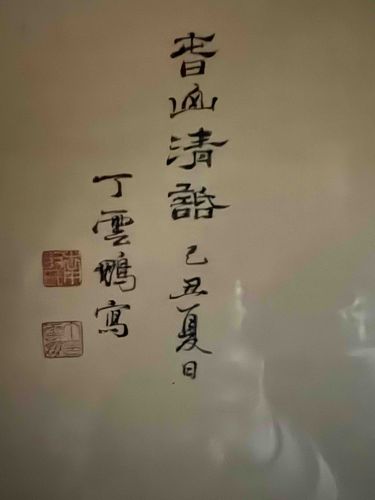
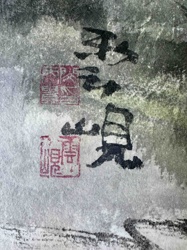
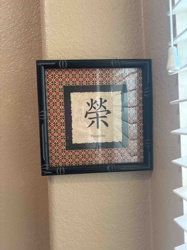
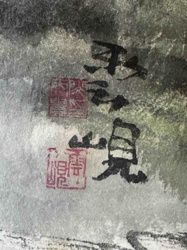
The item is a piece of Chinese calligraphy, likely a scroll or mounted panel, rendered in black ink on a light-colored, possibly paper or silk, ground. The calligraphy consists of vertical columns of traditional Chinese characters, written from right to left. The brushstrokes appear fluid and deliberate, indicating skilled craftsmanship. There are two distinct red seals (Chops) positioned to the left of the main calligraphic text, towards the bottom. These seals are rectangular in shape, with intricate characters or designs imprinted within them, applied in what appears to be cinnabar paste. The seals are crisp, suggesting a clear impression. The background material is a uniform light hue, possibly off-white or very light beige, which serves as a stark contrast to the black ink. The overall condition appears stable, with no obvious signs of creasing, tearing, or significant discoloration. There might be some subtle reflections or inconsistencies in the lighting across the surface, which could be due to the viewing angle or a protective covering like glass. The presence of the seals further enhances its authenticity and provides potential clues regarding the artist or owner, crucial for dating and valuation. The style of the calligraphy suggests a classical or traditional approach, common in various periods of East Asian art. The characters themselves are legible, indicating careful execution. The age is estimated to be late 19th to mid-20th century, based on the general style and common practices for such pieces.
AI Appraisal Report
I have carefully examined the provided image of this Chinese Calligraphy with Seals. Visually, the piece appears to be in very good condition; the black ink is crisp against the light background, and there are no apparent tears, significant creasing, or major discoloration. The two rectangular red seals are clear and well-impressed, indicative of careful application. These seals are crucial for authenticity, typically identifying the artist, collector, or providing auspicious wishes. The fluid and deliberate brushstrokes suggest a skilled hand, adhering to traditional calligraphic principles.
Market conditions for traditional Chinese calligraphy vary widely depending on the artist's renown, the calligraphic content, and the work's historical significance. Pieces by minor artists from the late 19th to mid-20th century, which this appears to be, generally command modest prices unless they possess exceptional artistic merit or unique provenance. There is a steady demand for decorative and well-executed calligraphic works, but rarity is typically tied to acclaimed masters or historically significant pieces, which this does not immediately appear to be. Factors impacting value include the legibility and philosophical depth of the text, the aesthetic quality of the brushwork, and the clarity and significance of the seals. Without an understanding of the specific content of the calligraphy or the identities associated with the seals, it is difficult to elevate its value beyond a decorative art piece.
It is important to note the significant limitations in authenticating art from images alone. While the visual indicators suggest authenticity in terms of typical production methods for this type of art, I cannot definitively verify its age, the true identity of the calligrapher, or whether the seals are indeed genuine and belong to this piece without a physical examination. An in-person inspection would allow for tactile assessment of the paper/silk, closer examination of the ink and seal paste for age and composition, and detection of any repairs or alterations. Full authentication would also require expert translation and analysis of the calligraphic content and seals, along with thorough provenance research to establish its ownership history and confirm its origin. Scientific testing—such as pigment analysis or fiber analysis—might be necessary to confirm the materials' age and composition for a definitive assessment. Based on visual assessment only, it holds value as an attractive traditional piece.