AI estimate as of August 9, 2025 · verify with a professional before acting
AI-Generated · Verify before acting
Everything on this page is generated by AI for informational purposes only. AI can make mistakes — the AI may misidentify items or misattribute them (artist, maker, brand, designer, origin, era). This is not an official valuation and should not be used for insurance, sale, tax, estate, legal, or lending purposes — or any decision requiring a certified appraisal. It is not an authoritative claim about any person, brand, or rights holder — do not share or rely on it as a factual statement about a third party. Always consult qualified professionals before making financial decisions.
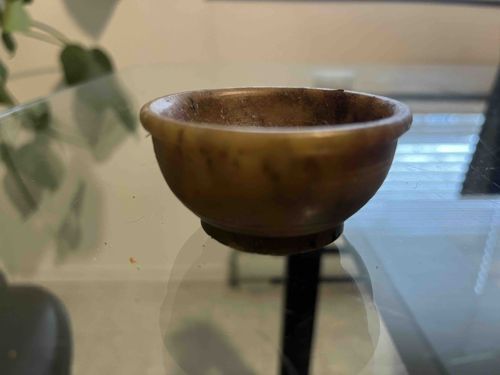
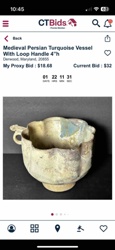
This appears to be a small, possibly antique, mortar or a miniature bowl, likely made of stone, possibly marble, soapstone, or a type of alabaster. Its color is a mottled brown and tan, exhibiting natural variations and striations that suggest a carved stone material. The bowl has a simple, rounded form with a slightly outward-flaring rim, and a small, distinct footring at its base. The interior surface appears somewhat rough and discolored, suggesting use or possibly an aged patina. The exterior shows a smoother finish, although there are visible imperfections and irregularities consistent with hand-carving or natural stone characteristics. There are no discernible maker's marks, signatures, or stamps visible from this angle, which is common for older, hand-crafted items of this nature. The overall condition suggests significant age, with a dull patina that indicates it has been handled over time. There are no obvious signs of cracks, chips, or repairs, though the natural variations in the stone make it difficult to ascertain minor damage without closer inspection. The craftsmanship appears functional rather than highly ornate, focusing on the material's inherent beauty. Its small size suggests it could have been used for grinding small quantities of herbs or spices, or perhaps as a decorative miniature receptacle.
AI Appraisal Report
I have examined the provided image of what appears to be a small stone mortar or bowl. Based on its mottled brown and tan coloring and visible striations, it is likely carved from a natural stone such as marble, alabaster, or a dense soapstone. The form is simple and functional, with a rounded body, a slightly flaring rim, and a distinct footring. The apparent roughness and discoloration of the interior, contrasted with a smoother exterior, suggest use and significant age, developing a pleasing patina. There are no visible chips, cracks, or repairs, though the natural variations of the stone make it challenging to rule out minor imperfections without a tactile inspection. The absence of maker's marks is consistent with older, hand-crafted utilitarian items.
Dating this item precisely from an image is challenging, but its aesthetic suggests it could be antique or vintage. Without provenance, definitive authentication of its age or origin is limited. Its value is driven by its material, apparent age, and decorative appeal. Comparables for small, un-marked stone mortars or bowls typically fall into this range, especially if they exhibit genuine age and hand-carved characteristics. Demand for such items is generally steady among collectors of folk art, primitive tools, or rustic decorative objects, though it is not a rare category.
Key factors impacting value are the actual type of stone (some are more desirable than others), definitive age, and any historical significance (undeterminable from an image). A physical examination would be crucial to confirm the stone type, assess surface texture for hand-carving proof, and check for any subtle damages or repairs. Scientific testing, like material analysis, could confirm the stone, and expert examination of tool marks could help authenticate age and origin.