Antique Copper and Brass Gourd-Shaped Vessel
Antiques & Collectibles

Antique Copper and Brass Gourd-Shaped Vessel

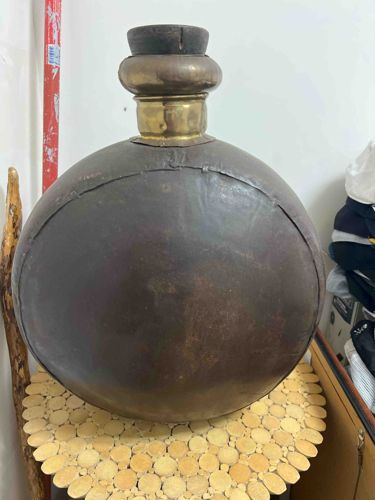
This is an antique globose or gourd-shaped vessel, likely of South Asian or Middle Eastern origin, possibly used for gunpowder storage or as a large-scale canteen. The main body is constructed from two hammered copper hemispheres joined at a prominent horizontal seam, which is reinforced with small metal staples or tabs. The metal exhibits a deep, dark brown oxidized patina with visible surface pitting and minor indentations throughout, consistent with significant age. The neck assembly is more complex, featuring a high-polish brass collar and a secondary bulb-like brass ring, transitioning into a carved wooden stopper or plug that shows drying cracks and significant wear. The craftsmanship reflects traditional metalworking techniques, specifically hand-raising and mechanical joining rather than modern welding. Based on the construction style and patina, it likely dates to the 19th century or early 20th century. There are no clearly visible maker’s marks in the current view, but the overall form suggests a utilitarian object made with durable, high-quality materials intended for heavy field use. Condition issues include notable oxidation, surface dirt, and some loss of structural integrity at the seam line.

Estimated Value

$450 - $650

Basic Information

Category

Antiques & Collectibles

Appraised On

February 9, 2026

Estimated Value

$450 - $650

Item Description

This is an antique globose or gourd-shaped vessel, likely of South Asian or Middle Eastern origin, possibly used for gunpowder storage or as a large-scale canteen. The main body is constructed from two hammered copper hemispheres joined at a prominent horizontal seam, which is reinforced with small metal staples or tabs. The metal exhibits a deep, dark brown oxidized patina with visible surface pitting and minor indentations throughout, consistent with significant age. The neck assembly is more complex, featuring a high-polish brass collar and a secondary bulb-like brass ring, transitioning into a carved wooden stopper or plug that shows drying cracks and significant wear. The craftsmanship reflects traditional metalworking techniques, specifically hand-raising and mechanical joining rather than modern welding. Based on the construction style and patina, it likely dates to the 19th century or early 20th century. There are no clearly visible maker’s marks in the current view, but the overall form suggests a utilitarian object made with durable, high-quality materials intended for heavy field use. Condition issues include notable oxidation, surface dirt, and some loss of structural integrity at the seam line.

Get Your Items Appraised

Instant estimates of your treasures with AI-powered instant appraisals

Browse More Appraisals