AI Appraisal Estimate

AI-generated estimates · not official valuations

From the user

What was submitted

Photo and notes provided by the user — not generated by AI

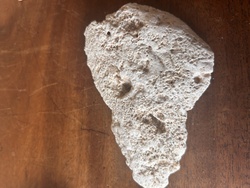
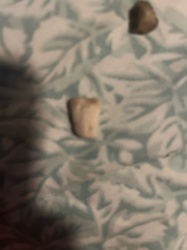
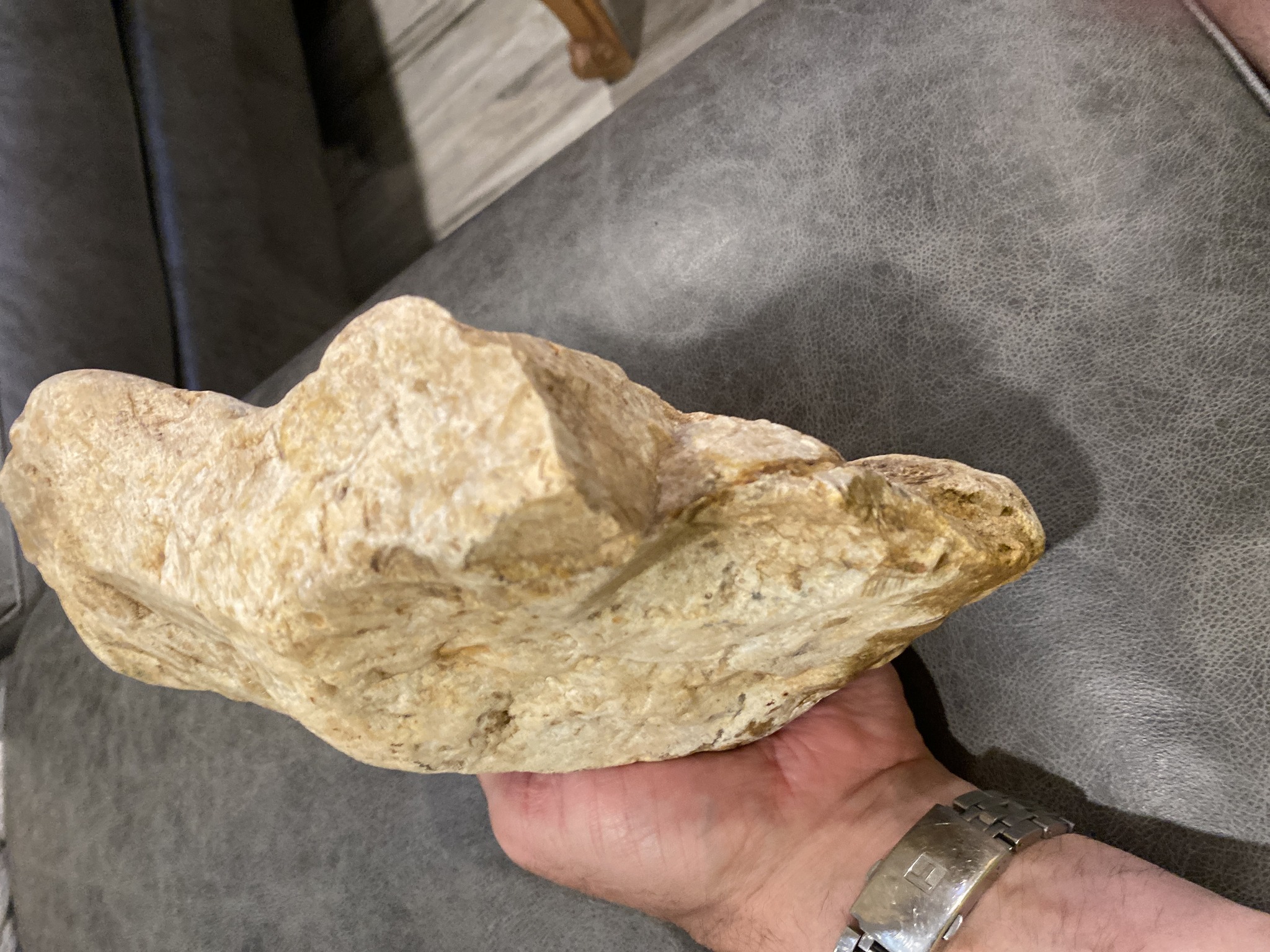
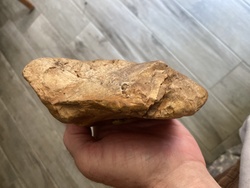
Submitted item photo
Submitted photo · July 21, 2026

User's notes

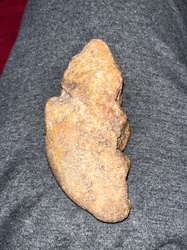
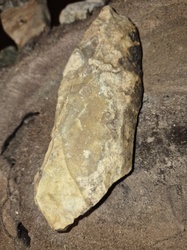
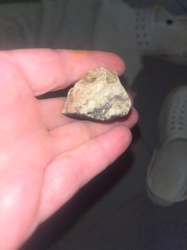
a very large chert hand axe portable bird rock art artifact tool from the Paleo Indian or Paleolithic early stone age era found in Guthrie, OK measuring 9.5" x 7"

AI analysis below

AI appraisal

AI analysis & estimate

AI-Generated · Verify before acting

Everything below is generated by AI for informational purposes only. AI can make mistakes — the AI may misidentify items or misattribute them (artist, maker, brand, designer, origin, era). This is not an official valuation and should not be used for insurance, sale, tax, estate, legal, or lending purposes — or any decision requiring a certified appraisal. It is not an authoritative claim about any person, brand, or rights holder — do not share or rely on it as a factual statement about a third party. Always consult qualified professionals before making financial decisions.

Note

This analysis also relies on unverified notes provided by the user, which may be incomplete or inaccurate and could affect the result.

Read the full disclaimer

AI Identification

·Not independently authenticated·Verify before acting

Large chert specimen or potential lithic tool

Geological Specimens and Lithic Objects

AI Estimated Value

·Not an official valuation·Verify before acting

$50 - $1,500

As of July 21, 2026

AI Item Analysis

·AI can make mistakes·Verify before acting
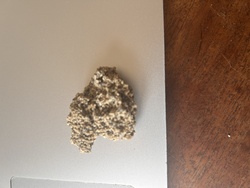
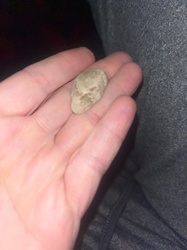
This item is a substantial, irregularly shaped rock specimen, appearingly composed of chert or a similar cryptocrystalline sedimentary stone. It exhibits a tan, buff, and cream coloration with significant surface pitting, iron staining, and varied textures. The user identifies this object as a Paleo-Indian or Paleolithic hand axe and 'bird rock art' artifact found in Guthrie, OK, measuring approximately 9.5 by 7 inches; however, these historical and functional claims are unverified at this time. Visually, the object lacks the distinct, systematic flake scars or clear bifacial thinning typically associated with diagnostic lithic tools. Some edges show fracturing that could be interpreted as percussion-driven, but which may also result from natural geological processes or random mechanical impact. The morphology is complex with various protrusions and recesses that the owner suggests represent bird imagery, a phenomenon often categorized as pareidolia without peer-reviewed archaeological context. The surface shows heavy weathering and no visible maker's marks or cultural inscriptions. Further in-person examination by a professional lithic analyst or geologist would be required to determine if the fracturing is intentional (man-made) or natural.
AI Appraisal Report

·AI can make mistakes·Verify before acting
I have examined the provided images of the 9.5 by 7-inch chert specimen. Per the user's submission, this object is attributed to the Paleo-Indian or Paleolithic era as a hand axe and bird rock art artifact found in Guthrie, OK. Based on what I can see, the item exhibits the characteristics of a large cryptocrystalline sedimentary stone, possibly chert, with surface features that may result from geological weathering rather than intentional percussion. I cannot verify from a photo whether the fracturing is anthropogenic or the result of mechanical environmental impact. The 'bird imagery' described is currently considered a hypothesis involving potential pareidolia, as I do not see the systematic bifacial thinning or diagnostic flaking patterns typically required by the archaeological community to confirm an intentional lithic tool. If the hypothesis that this is a culturally significant Paleo-Indian artifact were correct, the value could reach the $1,000–$1,500 range for collectors of rare lithic art, depending on the strength of the archaeological context. However, as a natural geological specimen without confirmed cultural provenance, the item would typically sell in the $50–$100 range. The value estimate is highly sensitive to authentication. To confirm the owner's claims, an in-person examination by a professional lithic analyst and a formal geological report would be necessary to distinguish between natural cortex weathering and intentional micro-flaking. General market demand for unprovenanced lithic objects is modest, while verified prehistoric tools carry significantly higher premiums. Should the item be determined to be a natural geofact, its value would be based solely on its aesthetic interest as a mineral specimen rather than its historical significance as an artifact, likely at the lower end of the provided range.

Get your items appraised

Instant estimates of your treasures with AI-powered appraisals

Browse More Appraisals