AI Appraisal Estimate

AI-generated estimates · not official valuations

From the user

What was submitted

Photo and notes provided by the user — not generated by AI

Submitted item photo
Submitted photo · May 22, 2026

User's notes

No additional notes provided.

AI analysis below

AI appraisal

AI analysis & estimate

AI-Generated · Verify before acting

Everything below is generated by AI for informational purposes only. AI can make mistakes — the AI may misidentify items or misattribute them (artist, maker, brand, designer, origin, era). This is not an official valuation and should not be used for insurance, sale, tax, estate, legal, or lending purposes — or any decision requiring a certified appraisal. It is not an authoritative claim about any person, brand, or rights holder — do not share or rely on it as a factual statement about a third party. Always consult qualified professionals before making financial decisions.

Read the full disclaimer

AI Identification

·Not independently authenticated·Verify before acting

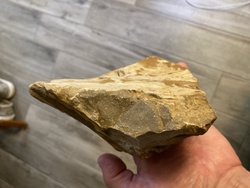
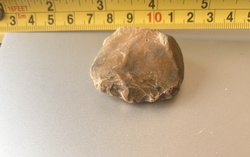
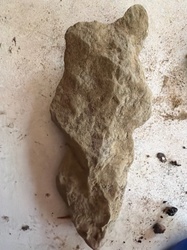
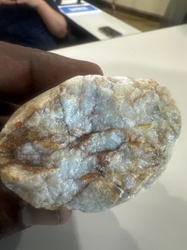
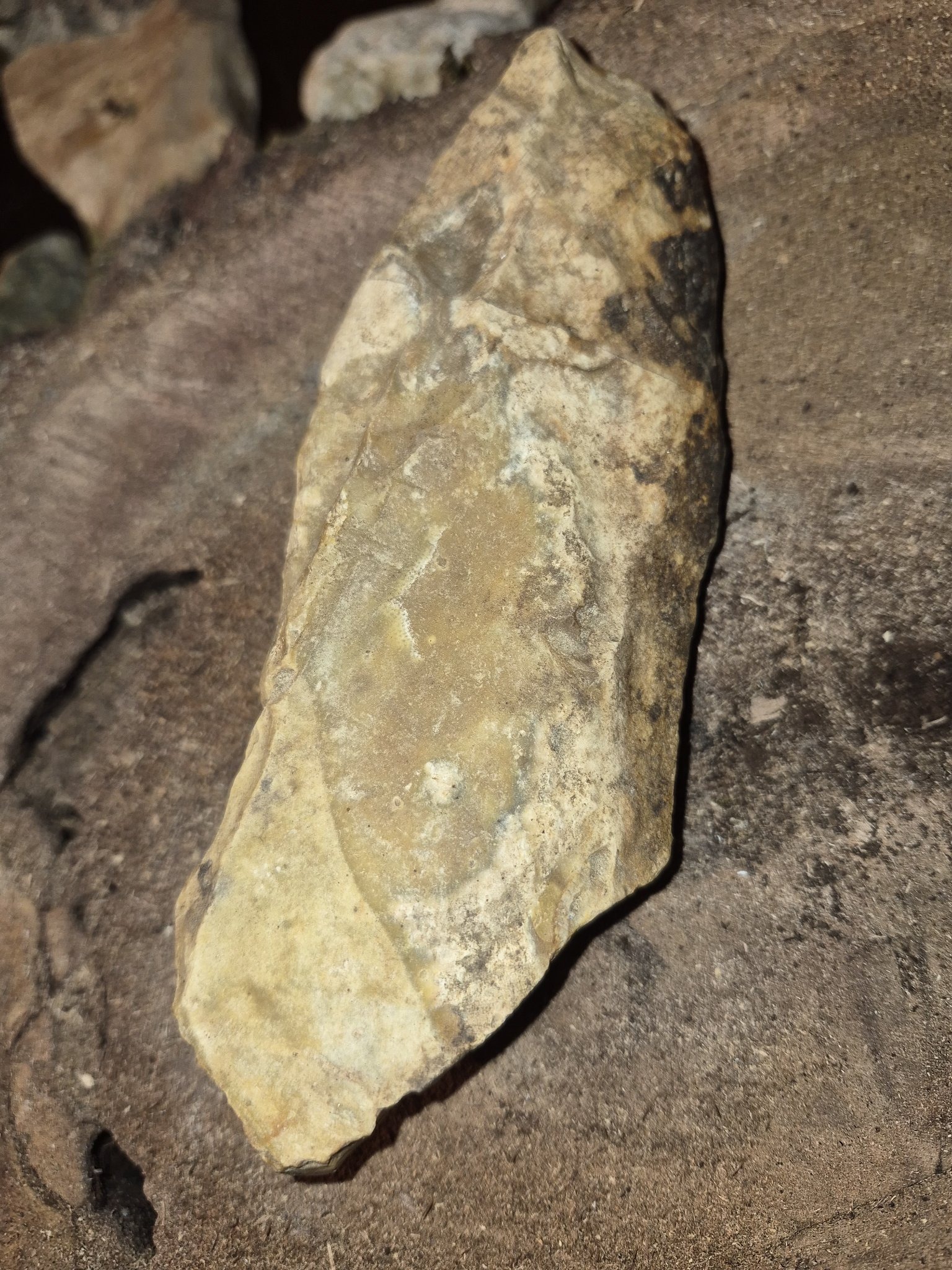
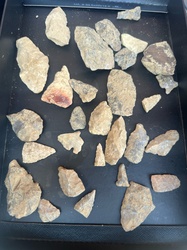
Chert or flint lithic fragment consistent with a lithic tool preform

Geological and Archaeological Specimens

AI Estimated Value

·Not an official valuation·Verify before acting

$15 - $45

As of May 22, 2026

AI Item Analysis

·AI can make mistakes·Verify before acting
This object is an elongated, cryptocrystalline silicate stone, likely chert or flint, displaying characteristics consistent with a lithic tool preform or a large percussion-flaked debitage fragment. The specimen measures several inches in length and exhibits a predominantly tan and beige coloration with dark, mottled inclusions and some brownish-orange surface staining, possibly from iron-rich soil. The morphology is bifacial in appearance, featuring multiple overlapping flake scars along its edges and faces, which suggests deliberate reduction via flintknapping. However, the absence of a refined edge, notched base, or final pressure flaking suggests it is in an unfinished state or may be a naturally fractured cobble that mimics anthropogenic flaking. The surface texture appears matte with visible topographical variations created by conchoidal fractures. No signs of modern tool marks or grinding are visible. The age is indeterminable from the photograph alone, and it could range from an ancient prehistoric artifact to a more modern lithic reduction or a naturally occurring geofact. Physical inspection by a lithic specialist would be required to assess the intentionality of the flaking and determine if it has any archaeological significance.
AI Appraisal Report

·AI can make mistakes·Verify before acting
Based on my examination of the provided image, this specimen appears to be a cryptocrystalline silicate lithic fragment, possibly representing a tool preform or an anthropogenic flake. As I cannot verify the item's intentionality from a photograph alone, it must be treated as a hypothetical artifact. The visible conchoidal fracture scars suggest potential human modification, but I cannot exclude the possibility of this being a naturally fractured 'geofact' without a physical inspection to check for specific striking platform characteristics and bulbs of percussion. From what I can see, the value is heavily dependent on the object's archaeological context and the verification of its manufacture. In the current market for lithic specimens, pieces that lack clear diagnostic features—such as a finished point or specific cultural markers—generally command modest prices. The range of $15 to $45 reflects the typical market demand for unprovenanced lithic debitage or preforms of this type. If a lithic specialist were to determine that these flaking patterns are purely natural, the value would decrease to a nominal geological curiosity level, likely under $5. Conversely, if documentation or scientific testing could associate this piece with a specific prehistoric culture or site (provenance), the value could increase slightly, though unfinished preforms remain a common category of find. To achieve a more accurate valuation, a physical examination by an archaeologist is necessary to confirm that the flaking is intentional and not the result of environmental tumbling or frost wedging. The absence of a refined edge or base limits its desirability among collectors compared to finished projectile points.

Get your items appraised

Instant estimates of your treasures with AI-powered appraisals

Browse More Appraisals