AI Appraisal Estimate

AI-generated estimates · not official valuations

From the user

What was submitted

Photo and notes provided by the user — not generated by AI

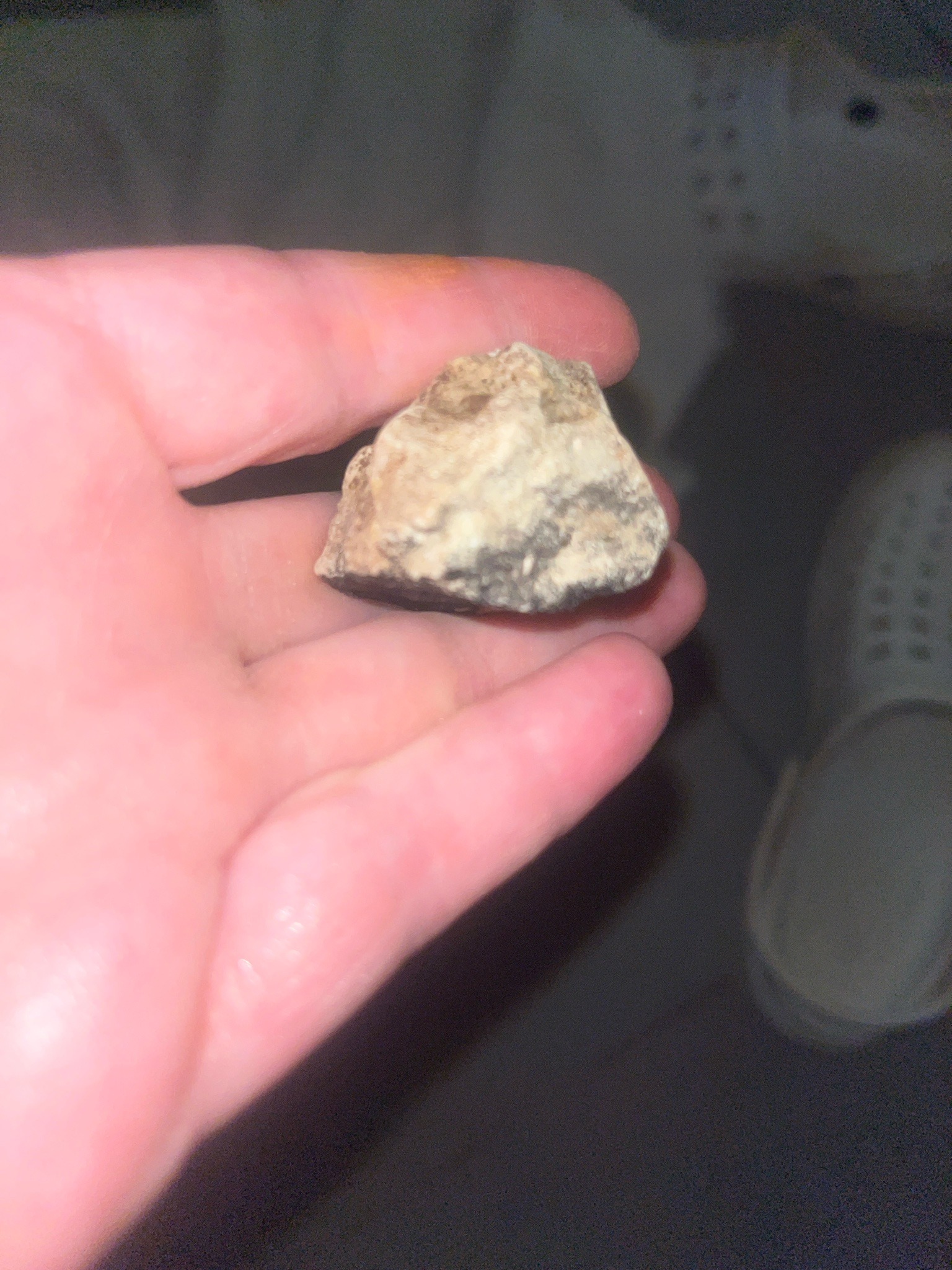
Submitted item photo
Submitted photo · July 3, 2026

User's notes

No additional notes provided.

AI analysis below

AI appraisal

AI analysis & estimate

AI-Generated · Verify before acting

Everything below is generated by AI for informational purposes only. AI can make mistakes — the AI may misidentify items or misattribute them (artist, maker, brand, designer, origin, era). This is not an official valuation and should not be used for insurance, sale, tax, estate, legal, or lending purposes — or any decision requiring a certified appraisal. It is not an authoritative claim about any person, brand, or rights holder — do not share or rely on it as a factual statement about a third party. Always consult qualified professionals before making financial decisions.

Read the full disclaimer

AI Identification

·Not independently authenticated·Verify before acting

Small lithic or geological specimen

Geological Specimens

AI Estimated Value

·Not an official valuation·Verify before acting

$5 - $25

As of July 3, 2026

AI Item Analysis

·AI can make mistakes·Verify before acting
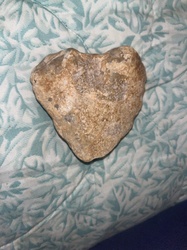
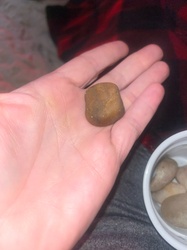
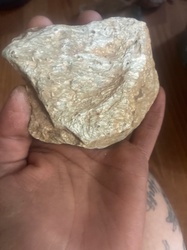
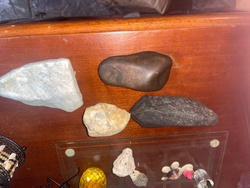
The specimen is a palm-sized, irregular rock or lithic fragment held between fingers for scale. It possesses a rugged, angular topography with a somewhat triangular or pyramidal silhouette. The color palette is predominantly cream and light tan on the upper surfaces, transitioning into a darker, charcoal-gray or blackish layer along the base. The texture appears coarse and granular, containing visible inclusions and variations in mineral composition. There are no legible markings, labels, or inscriptions visible on the surface. Based on the visual evidence, the item is consistent with a naturally occurring mineral fragment, such as chert, flint, or limestone with a darker matrix, typically associated with sedimentary or volcanic processes. It could represent a geological find or a rough tool precursor, though without in-person microscopic analysis and chemical testing, its specific mineralogy remains unverified. Condition includes surface weathering, dust accumulation, and sharp, fractured edges indicative of mechanical stress or natural breakage. The attribution is hedged as geological specimen because no cultural modifications or diagnostic markers are present to categorize it more specifically from an image alone.

AI Appraisal Report

·AI can make mistakes·Verify before acting
Based on my visual examination of the provided image, I have analyzed this palm-sized lithic specimen. The object displays physical characteristics consistent with a naturally occurring mineral fragment, potentially chert, flint, or a bimineralic sedimentary rock. From what I can see, it features a granular, weathered surface and a dark matrix base; however, I cannot verify the specific mineral composition or geological origin from a photograph alone. Without physical inspection, it is impossible to determine if the item possesses any archaeological significance as a lithic flake or tool precursor, or if it is simply a byproduct of natural mechanical stress. The value estimate is 기반ed on the assumption that this is a common geological find. In the current market, specimens of this type are generally valued for their educational or aesthetic appeal rather than rarity. If this item were to be identified through scientific testing or expert in-person analysis as a specific prehistoric artifact with locality data, its value could increase slightly, likely into the $50–$100 range depending on cultural context. Conversely, as a standard garden or field stone without provenance, its market value is nominal. To establish a more precise valuation, an in-person examination by a geologist or lithic specialist would be required to rule out modern mechanical breakage and to conduct mineralogical testing. For the purposes of this report, the specimen is treated as a generic geological sample, as no diagnostic markers or cultural modifications are visible to support a higher attribution. The market for unattributed rock fragments remains limited to hobbyist collectors or educators, where demand is consistently low for items lacking established provenance or exceptional mineral purity/crystallization. Any change in the hypothesized identification would directly impact the estimated replacement value and liquidity of the piece in the secondary market.

Related Tags

Explore similar items and categories

Get your items appraised

Instant estimates of your treasures with AI-powered appraisals

Browse More Appraisals