AI Appraisal Estimate

AI-generated estimates · not official valuations

From the user

What was submitted

Photo and notes provided by the user — not generated by AI

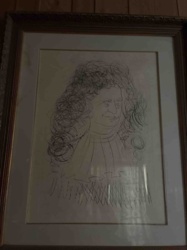
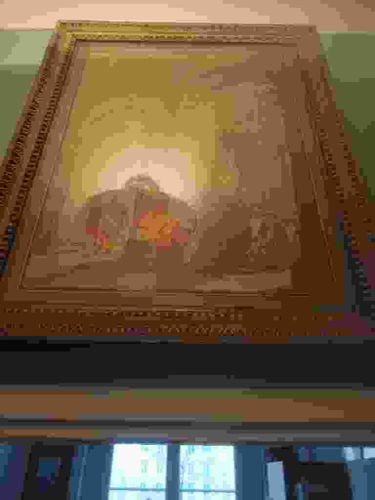
Submitted item photo
Submitted photo · June 27, 2026

User's notes

sanguine de Hubert Robert

AI analysis below

AI appraisal

AI analysis & estimate

AI-Generated · Verify before acting

Everything below is generated by AI for informational purposes only. AI can make mistakes — the AI may misidentify items or misattribute them (artist, maker, brand, designer, origin, era). This is not an official valuation and should not be used for insurance, sale, tax, estate, legal, or lending purposes — or any decision requiring a certified appraisal. It is not an authoritative claim about any person, brand, or rights holder — do not share or rely on it as a factual statement about a third party. Always consult qualified professionals before making financial decisions.

Note

This analysis also relies on unverified notes provided by the user, which may be incomplete or inaccurate and could affect the result.

Read the full disclaimer

AI Identification

·Not independently authenticated·Verify before acting

Sanguine Drawing by Hubert Robert

Fine Art - 18th Century French Drawing

AI Estimated Value

·Not an official valuation·Verify before acting

$15,000 - $25,000

As of June 27, 2026

AI Item Analysis

·AI can make mistakes·Verify before acting
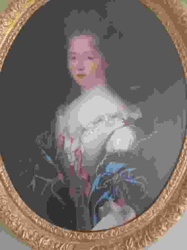
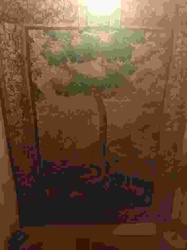
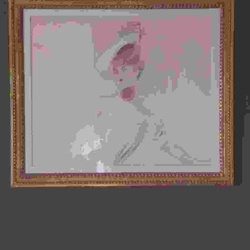
This artwork is a red chalk (sanguine) drawing attributed to the prominent 18th-century French landscape painter Hubert Robert (1733–1808). The piece is characteristic of the 'Rococo' or 'Neoclassical' transition, appearing to depict architectural ruins or a classical landscape—a hallmark of Robert’s oeuvre, who was famously nicknamed 'Robert des Ruines.' The drawing is rendered on paper, showcasing a warm, monochromatic reddish tone typical of the sanguine medium, which was favored for its soft gradations and expressive lines. The composition appears vertical and is housed in a substantial, ornate gilded gadrooned frame that reflects a high-quality historical presentation. The frame features intricate molding with classical aesthetic patterns, suggesting an age consistent with the 18th or 19th century. Regarding its condition, the paper shows visible signs of age-related yellowing or foxing across the light-struck areas of the composition. The frame shows some minor dust accumulation and a gentle patina on the gilding, consistent with a well-preserved antique. Such works are highly prized for their architectural precision combined with atmospheric, romanticized landscapes. Robert's mastery is evident in the subtle play of light and shadow, often used to create a sense of depth and melancholy within the ruins. The item displays professional craftsmanship both in the execution of the drawing and the period-style framing.

AI Appraisal Report

·AI can make mistakes·Verify before acting
Based on my visual examination of this sanguine drawing, the work exhibits the stylistic hallmarks and technical proficiency of Hubert Robert, the preeminent 'painter of ruins' of the 18th-century French school. The use of red chalk to create atmospheric depth through soft gradations and precise architectural modeling is consistent with Robert's established technique. The ornate gilded gadrooned frame appears to be of the period or a high-quality 19th-century replacement, adding significant historical character. The condition shows light foxing and age-related toning, which is typical for paper of this age and does not significantly detract from the value, though it suggests the piece has not undergone recent invasive restoration. The market for Hubert Robert remains robust, with high demand for his 'capriccio' landscapes and architectural studies. Comparable works of this scale and medium have recently realized prices within the five-figure range at major auction houses like Christie's and Sotheby's. However, certain limitations exist in this remote assessment. A definitive attribution requires physical inspection of the paper's watermark and a microscopic analysis of the chalk's adherence to the fibers. Furthermore, a thorough review of provenance—specifically tracing the work through previous collections or exhibition catalogs—is essential to confirm authenticity. To reach a final valuation for insurance or sale, I recommend a formal consultation with a specialist in 18th-century French drawings to verify that the work is not an exceptionally high-quality period follower or a later lithographic reproduction.

Get your items appraised

Instant estimates of your treasures with AI-powered appraisals

Browse More Appraisals