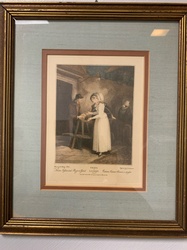
AI identification & appraisal estimate

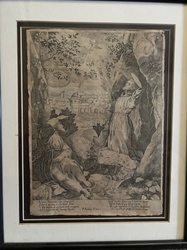
18th-Century French Copper-Plate Engraving after Jean-Baptiste Oudry

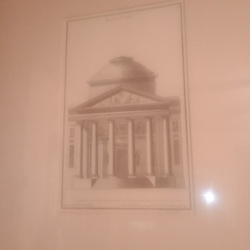
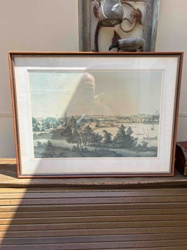
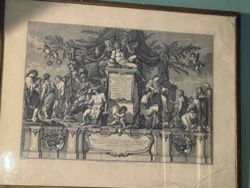
Submitted photo of 18th-Century French Copper-Plate Engraving after Jean-Baptiste Oudry
Photo submitted by the user — not generated by AI

User's notes

gravure 18 siècle de JB Oudry

These notes were written by the person who submitted this item. Appraiser.AI has not verified them, and the AI's identification and estimate may rely on them.

AI Estimated Value

Not an official valuation

$400 - $700

AI estimate as of February 10, 2026 · verify with a professional before acting

AI-Generated · Verify before acting

Everything on this page is generated by AI for informational purposes only. AI can make mistakes — the AI may misidentify items or misattribute them (artist, maker, brand, designer, origin, era). This is not an official valuation and should not be used for insurance, sale, tax, estate, legal, or lending purposes — or any decision requiring a certified appraisal. It is not an authoritative claim about any person, brand, or rights holder — do not share or rely on it as a factual statement about a third party. Always consult qualified professionals before making financial decisions.

This analysis also relies on unverified notes provided by the user, which may be incomplete or inaccurate and could affect the result.

Read the full disclaimer

AI Item Analysis

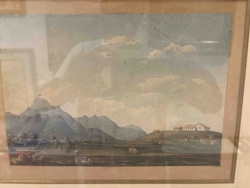
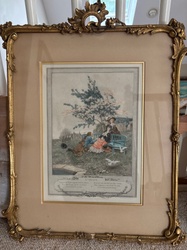
This item is an 18th-century French copper-plate engraving, specifically an etching or engraving based on the work of Jean-Baptiste Oudry (1686–1755), a master of the Rococo period known for his naturalistic hunting scenes and animal studies. The print is monochrome, likely executed in black ink on laid paper, which was typical for mid-18th-century production. The composition reflects the high-quality craftsmanship of the era, showcasing intricate cross-hatching and fine line work used to build depth and texture in the landscape and subjects. It is housed in a decorative frame with a multi-layered matting (passe-partout) featuring a grey wash and gilded inner border, which suggests a mid-20th-century professional framing job. The visible condition includes significant foxing (small brown spots caused by fungus or oxidation) across the paper surface, common in aged wood-pulp or cotton fibers. There are also signs of light yellowing and potential humidity-related paper rippling. The lower margin likely contains a 'letter' with the names of the original artist (Oudry) and the engraver, along with a title, though these are obscured by the frame's mounting. Despite the foxing, the integrity of the image remains largely intact, representing the sophisticated anatomical precision Oudry was famous for.
AI Appraisal Report

I have virtually examined this 18th-century copper-plate engraving after Jean-Baptiste Oudry. The work exhibits the hallmark precision of mid-18th-century French printmaking, specifically capturing the dynamic naturalism and anatomical accuracy for which Oudry was celebrated. Based on the visual evidence, the technique—characterized by sophisticated cross-hatching and fine line work—aligns with authentic period productions on laid paper. However, the condition is a significant factor in the valuation. I observe substantial foxing across the plate, likely the result of historic exposure to humidity and acidic framing materials. The paper rippling suggests a need for professional conservation. The mid-20th-century decorative frame and French matting add aesthetic appeal but obscure the plate mark and lower margins, which typically house the engraver's name and title—crucial data for identifying specific editions (such as the 'Fables de La Fontaine' series). The market for Oudry-related prints remains steady, particularly among collectors of Rococo naturalism and canine hunting scenes. While the rarity of the subject matter is moderate, the condition issues place this example in the mid-to-lower tier of auction comparables. Please note: this appraisal is based on digital images. A definitive valuation and authentication require a physical inspection to confirm the presence of a watermark, measure the depth of the plate mark, and verify the paper's chain lines. Scientific testing of the ink and paper fibers, along with a review of provenance documentation, would be necessary to rule out high-quality 19th-century reproductions.

Keep exploring

More fine art - antique prints and engravings appraisals

Get your items appraised

Instant AI-powered appraisal estimates from a photo

Browse More Appraisals