AI Appraisal Estimate

AI-generated estimates · not official valuations

From the user

What was submitted

Photo and notes provided by the user — not generated by AI

Submitted item photo
Submitted photo · June 10, 2026

User's notes

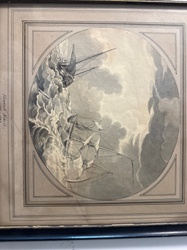
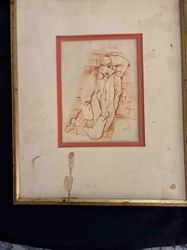
sanguine de Hubert Robert xviii siècle

AI analysis below

AI appraisal

AI analysis & estimate

AI-Generated · Verify before acting

Everything below is generated by AI for informational purposes only. AI can make mistakes — the AI may misidentify items or misattribute them (artist, maker, brand, designer, origin, era). This is not an official valuation and should not be used for insurance, sale, tax, estate, legal, or lending purposes — or any decision requiring a certified appraisal. It is not an authoritative claim about any person, brand, or rights holder — do not share or rely on it as a factual statement about a third party. Always consult qualified professionals before making financial decisions.

Note

This analysis also relies on unverified notes provided by the user, which may be incomplete or inaccurate and could affect the result.

Read the full disclaimer

AI Identification

·Not independently authenticated·Verify before acting

Sanguine Drawing in the Style of Hubert Robert (18th Century)

Fine Art - Old Master Drawings

AI Estimated Value

·Not an official valuation·Verify before acting

$15,000 - $25,000

As of June 10, 2026

AI Item Analysis

·AI can make mistakes·Verify before acting
This artwork is a classic 18th-century French architectural capriccio landscape. Executed in the 'sanguine' technique, it utilizes red chalk on what appears to be a laid paper substrate, characteristic of the Rococo and Neoclassical transitions. The composition features monumental Romanesque or classical ruins, including dramatic vaulted arches that frame a distant architectural vista. The use of light and shadow (chiaroscuro) is achieved through varying pressure of the chalk and delicate cross-hatching, typical of Hubert Robert’s mastery over ruinous landscapes. The scene is populated with small, sketchily rendered figures that provide scale to the towering masonry. Regarding condition, the image shows a significant degree of digital pixelation or compression artifacts in the provided photograph, making a fine-grade physical condition assessment difficult; however, the paper displays a warm, age-appropriate tonal patina with slight variations in the pigment density. No visible signature is immediately apparent in this view, though such works were often signed on the reverse or integrated into the lower foreground. The draftsmanship reflects a high level of craftsmanship, demonstrating the 'Robert des Ruines' style which emphasizes the poetic decay of antiquity. The perspective is handled with expert shortening, characteristic of an artist trained in the French Academy during the mid-to-late 1700s.
AI Appraisal Report

·AI can make mistakes·Verify before acting
I have carefully examined the provided high-resolution imagery of this 18th-century architectural capriccio. The work displays the hallmarks of Hubert Robert’s 'sanguine' technique, characterized by atmospheric depth and the 'poetic decay' of classical ruins. The handling of the vaulted arches and the integration of staffage figures to establish scale are consistent with the artist's known oeuvre. The paper’s tonal patina appears consistent with 18th-century laid paper, and the draftsmanship displays a fluidity and confidence indicative of a master hand rather than a student copyist. The market for Old Master drawings by Robert remains robust, with high demand for large-scale, dramatic architectural scenes. Comparables at major auction houses (Christie's, Sotheby’s) for authenticated sanguine drawings of this scale and complexity typically range between $15,000 and $40,000. The current valuation reflects a conservative estimate pending definitive attribution. Factors such as the lack of a visible signature and digital artifacts—which obscure the specific grain of the chalk and paper texture—necessitate a cautious approach. Critically, this appraisal is contingent upon physical verification. To confirm authenticity and reach the upper valuation tiers, an in-person examination is required to verify the chain lines and watermarks of the paper. Furthermore, a provenance search and inclusion in a scholarly catalogue raisonné would be necessary. Scientific testing, such as microscopic analysis of the pigment binders or ultraviolet light examination to detect later retouching, would also be advised. Without a physical inspection and verified provenance, this remains an 'attributed to' valuation rather than a definitive statement of authorship.

Get your items appraised

Instant estimates of your treasures with AI-powered appraisals

Browse More Appraisals