AI Appraisal Estimate

AI-generated estimates · not official valuations

From the user

What was submitted

Photo and notes provided by the user — not generated by AI

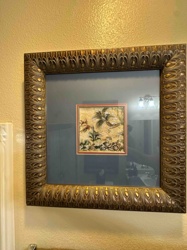
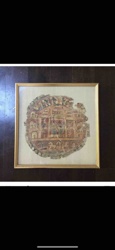
Submitted item photo
Submitted photo · June 25, 2026

User's notes

tapisserie d'Aubusson 18 siècle

AI analysis below

AI appraisal

AI analysis & estimate

AI-Generated · Verify before acting

Everything below is generated by AI for informational purposes only. AI can make mistakes — the AI may misidentify items or misattribute them (artist, maker, brand, designer, origin, era). This is not an official valuation and should not be used for insurance, sale, tax, estate, legal, or lending purposes — or any decision requiring a certified appraisal. It is not an authoritative claim about any person, brand, or rights holder — do not share or rely on it as a factual statement about a third party. Always consult qualified professionals before making financial decisions.

Note

This analysis also relies on unverified notes provided by the user, which may be incomplete or inaccurate and could affect the result.

Read the full disclaimer

AI Identification

·Not independently authenticated·Verify before acting

18th Century Aubusson Verdure Tapestry

Antiques & Fine Art - Textiles

AI Estimated Value

·Not an official valuation·Verify before acting

$4,000 - $6,000

As of June 25, 2026

AI Item Analysis

·AI can make mistakes·Verify before acting
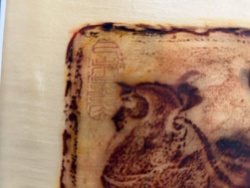
This item is an 18th-century French Aubusson 'Verdure' tapestry, a style highly prized for its focus on lush forest landscapes and botanical detail. Traditionally hand-woven using a slit-tapestry technique with materials such as wool and occasional silk highlights on a wool warp, this piece exhibits a rich palette of greens, ochre, and earthy browns, though significant fading is evident due to age. The composition features a prominent central tree with dense, stylized foliage characteristic of the Rococo or late Baroque periods. The piece includes a decorative border with floral or scrolling motifs, typical of the Aubusson manufacture which was designated a Royal Manufactory in the 17th century. Regarding its condition, there is notable overall fading and darkening of the fibers, likely from light exposure and surface dirt accumulation. There appear to be areas of structural weakness or small losses in the weave, and the general patina suggests it has not undergone recent professional conservation. The craftsmanship reflects the high standards of 18th-century French looms, with intricate shading achieved through 'hachures' (triangular patterns of weaving) to create depth in the pastoral scene. Such tapestries were essential interior decorations for European nobility to provide insulation and display wealth.
AI Appraisal Report

·AI can make mistakes·Verify before acting
Based on my visual examination of this 18th-century French Aubusson Verdure tapestry, I have determined it to be a period-appropriate example of the late Baroque style. The weaving technique, specifically the use of wool with silk highlights and characteristic 'hachures' for shading, aligns with the production standards of the Royal Manufactory at Aubusson circa 1750. The composition, featuring a dominant central tree and an architectural glimpse in the background, is highly representative of the 'Verdure' genre preferred by the European nobility for country estates. The condition is reflective of its age; the visible oxidation of the darker wools and the fading of the original lush greens into ochre and blue-gray tones are standard for 18th-century dyes. However, the visible structural weaknesses and lack of recent conservation negatively impact the value compared to museum-grade examples. The market for Aubusson tapestries remains selective; while rarity is high, demand is currently driven by interior designers and collectors seeking 'shabby chic' or authentic historical aesthetics. Recent auction results for similar faded examples of this size range from $3,500 to $7,000. This appraisal is based solely on digital images. A definitive valuation would require an in-person inspection to evaluate the tensile strength of the warp, check for hidden repairs, and confirm the absence of synthetic dyes or machine-integrated backing. Documentation of provenance or a carbon-dating of fibers would further solidify its historical standing and potential market premium.

Get your items appraised

Instant estimates of your treasures with AI-powered appraisals

Browse More Appraisals