These notes were written by the person who submitted this item. Appraiser.AI has not verified them, and the AI's identification and estimate may rely on them.
AI Estimated Value
Not an official valuation
$40-60
AI estimate as of August 24, 2025 · verify with a professional before acting
AI-Generated · Verify before acting
Everything on this page is generated by AI for informational purposes only. AI can make mistakes — the AI may misidentify items or misattribute them (artist, maker, brand, designer, origin, era). This is not an official valuation and should not be used for insurance, sale, tax, estate, legal, or lending purposes — or any decision requiring a certified appraisal. It is not an authoritative claim about any person, brand, or rights holder — do not share or rely on it as a factual statement about a third party. Always consult qualified professionals before making financial decisions.
This analysis also relies on unverified notes provided by the user, which may be incomplete or inaccurate and could affect the result.
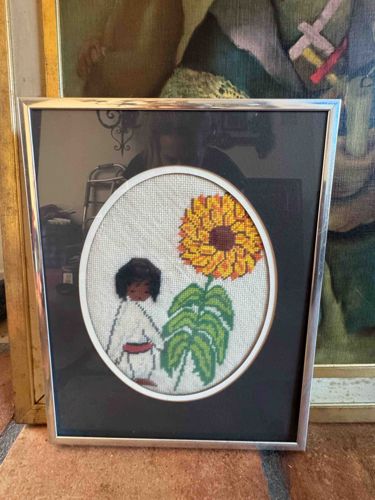
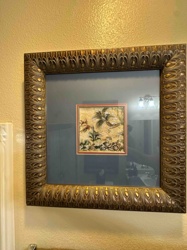
This item is a framed, circular cross-stitch embroidery depicting a small, dark-haired figure alongside a large, stylized sunflower. The cross-stitch is executed on a light, possibly off-white, Aida cloth or similar even-weave fabric, allowing the individual stitches to form the pixilated image. The thread colors are vibrant, primarily a rich yellow and orange for the sunflower petals, dark brown for its center, and various shades of green for the stem and leaves. The figure appears to be wearing a white garment with a thin red band around the waist, and their dark hair is depicted with solid black stitching. The embroidery is neatly done, showcasing consistent stitch tension and alignment, indicative of good craftsmanship. The textile portion is housed within a circular white mat board or frame, which is then set into a larger rectangular black mat. This entire assembly is enclosed in a modern, sleek silver-toned metal frame with a glass front. The frame shows no visible damage, scratches, or tarnishing, appearing to be in good condition. The glass also appears clean and clear, reflecting light and surroundings. The piece has a contemporary aesthetic due to the frame choice, but the cross-stitch itself might suggest an earlier, possibly mid to late 20th-century origin, given the style of cross-stitch patterns popular during that period. There are no discernible maker's marks, signatures, or stamps visible on the front. The overall condition is good, with no apparent wear, damage, or significant fading to the textile.
AI Appraisal Report
Upon my examination of the provided images, this framed cross-stitch embroidery presents as a charming example of 20th-century textile art. The piece, depicting a figure alongside a large sunflower, demonstrates solid craftsmanship with consistent stitch tension and vibrant thread colors. It is well-preserved, showing no visible signs of fading, staining, or damage to the fabric. The modern silver-toned metal frame and double matting are in good condition and complement the artwork, enhancing its display quality. The overall aesthetic is clean and contemporary, despite the traditional nature of the craft.
The market for anonymous, later 20th-century cross-stitch pieces is primarily decorative. While the skill is evident, the value is often tied to aesthetic appeal rather than artistic rarity or historical significance. Similar completed and framed needlework projects from this era are commonly available on secondary markets like Etsy and eBay, with prices typically falling within the $25 to $75 range, depending on size, complexity, and framing quality.
The primary factor limiting the value is the lack of an identifiable artist or provenance. Without a signature or documentation linking it to a known designer or a specific historical context, it is valued as a decorative craft item. A physical, in-person examination would allow for closer inspection of the fabric and thread type to better date the piece and to check for any condition issues not visible in photos, such as hidden damage under the frame or subtle fading. However, based on the visual evidence, it is a well-executed and attractively presented piece of folk art.