AI estimate as of August 25, 2025 · verify with a professional before acting
AI-Generated · Verify before acting
Everything on this page is generated by AI for informational purposes only. AI can make mistakes — the AI may misidentify items or misattribute them (artist, maker, brand, designer, origin, era). This is not an official valuation and should not be used for insurance, sale, tax, estate, legal, or lending purposes — or any decision requiring a certified appraisal. It is not an authoritative claim about any person, brand, or rights holder — do not share or rely on it as a factual statement about a third party. Always consult qualified professionals before making financial decisions.
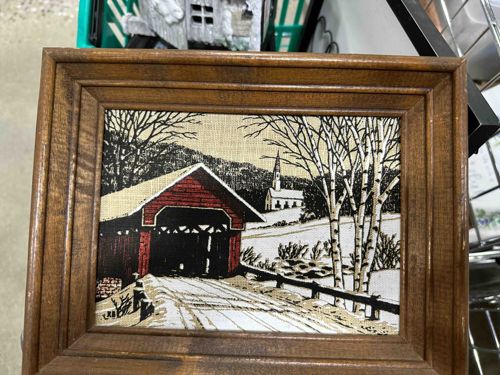
This item is a framed textile art piece, likely a needlework or a printed fabric panel, depicting a winter landscape scene. The physical characteristics include a rectangular, horizontally oriented image enclosed within a wooden frame. The frame appears to be made of a medium-brown wood, possibly stained or lacquered, with a stepped or layered profile, giving it a somewhat traditional or rustic aesthetic. The inner edge of the frame has a simple fillet that borders the artwork.
The artwork itself is stylized, featuring a predominantly black, white, and a muted yellow/beige color palette, with a striking red for the covered bridge. Notable features of the scene include a prominent red covered bridge extending from the left side towards the center, covered in a blanket of snow. To the right of the bridge, a cluster of white-trunked trees, likely birch, stand out against a darker background, suggesting a forest beyond. In the middle ground, on a slight rise, a white church with a tall steeple is visible. The ground is covered in white, indicating snow, while the sky or background is depicted in the muted yellow/beige, possibly representing an overcast winter day or the base color of the fabric. The black elements provide strong contrast for tree branches, outlines, and the interior of the bridge.
Visible condition issues from the image are minimal; the frame appears to be in good condition with no obvious chips, cracks, or significant scuffs, maintaining its original finish. The textile art itself seems to be well-preserved within the frame, showing no apparent tears, stains, or fading. The craftsmanship suggests it is a decor piece intended for display, with the framing appearing sturdy and competently executed. While no specific maker's marks or signatures are visible, the style of the scene, particularly the use of a covered bridge and church in a snowy setting, is characteristic of American folk art or country-themed decor, possibly dating from the mid to late 20th century.
AI Appraisal Report
Upon examining the provided image of the Framed Textile Art: Winter Scene with Covered Bridge and Church, I've concluded my appraisal. The piece presents as a well-maintained decorative item. The wooden frame is in good condition, showing no apparent damage, chips, or significant wear. The textile itself appears sound, free from visible tears, stains, or noticeable fading, which suggests it has been kept in a stable environment. The craftsmanship, though not high art, is competent for a decorative piece.
From the visual evidence, authenticity verification is limited. Without physical inspection, I cannot confirm the exact medium (needlework vs. printed fabric) or the specific age. Maker's marks or signatures, if they exist, are not visible. This style, featuring covered bridges and churches in winter landscapes, is very common in American folk art and country decor, particularly from the mid-to-late 20th century. This broad category means there is a steady but not exceptionally high demand.
Market conditions for such decorative textile art pieces are generally stable but do not command premium prices unless attributed to a known artist or displaying exceptional craftsmanship. Comparable items, typically found in antique malls, online marketplaces (like Etsy or eBay), or country decor shops, range widely depending on size, condition, and perceived artistic merit. This particular piece, while charming, lacks identifiable characteristics that would elevate its rarity or demand significantly beyond general decorative value.
The primary factor impacting value is its decorative appeal for a specific niche of home decorators who appreciate country, rustic, or folk art aesthetics. Its condition is a positive, but the lack of provenance, artist attribution, or unique artistic properties limits its higher market potential. To fully authenticate the method of creation (hand-stitched vs. machine-made or printed) and pinpoint its exact age, an in-person examination would be necessary. A blacklight test could reveal repairs or material changes, and a closer inspection of the fabric's weave and thread work would be crucial. Provenance documentation, such as receipts or family history, would also significantly aid in an accurate appraisal.
Considering these factors, I assess this item as a decorative home accent.