AI Appraisal Estimate

AI-generated estimates · not official valuations

From the user

What was submitted

Photo and notes provided by the user — not generated by AI

Submitted item photo
Submitted photo · June 30, 2026

User's notes

No additional notes provided.

AI analysis below

AI appraisal

AI analysis & estimate

AI-Generated · Verify before acting

Everything below is generated by AI for informational purposes only. AI can make mistakes — the AI may misidentify items or misattribute them (artist, maker, brand, designer, origin, era). This is not an official valuation and should not be used for insurance, sale, tax, estate, legal, or lending purposes — or any decision requiring a certified appraisal. It is not an authoritative claim about any person, brand, or rights holder — do not share or rely on it as a factual statement about a third party. Always consult qualified professionals before making financial decisions.

Read the full disclaimer

AI Identification

·Not independently authenticated·Verify before acting

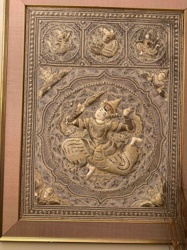
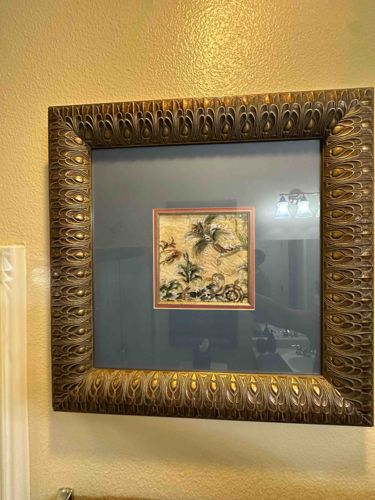
Framed Antique Needlework or Textile Fragment

Antique Textiles / Wall Art

AI Estimated Value

·Not an official valuation·Verify before acting

$450 - $650

As of June 30, 2026

AI Item Analysis

·AI can make mistakes·Verify before acting
This item is a small, ornate piece of needlework or a textile fragment, likely late 19th to early 20th century, presented in a contemporary high-profile frame. The textile central piece appears to be a crewel or silk embroidery execution featuring a botanical or floral motif with soft shades of green, gold, and earthy browns on a neutral cream background. The stitching suggests a high level of detail, possibly indicating a fragment from a larger tapestry or waistcoat. It is double-matted with a narrow red inner border and a wide slate grey or charcoal outer mat, which provides a modern contrast to the antiquity of the textile. The frame is a notable feature, being a thick, deeply carved wooden or composite moulding with a repeating feathered or 'egg-and-dart' inspired relief pattern in a burnished bronze or antiqued gold finish. The finish shows a deliberate dark patina in the recesses to highlight the texture. Regarding condition, the textile shows some age-related fading and surface texture common with antique threads, though it is protected under glass. The frame appears to be in excellent condition with no visible chips or cracks. The craftsmanship of the central piece indicates a traditional handmade origin, whereas the framing and matting are representative of professional custom archival work from the late 20th century.
AI Appraisal Report

·AI can make mistakes·Verify before acting
Based on my visual examination of the textile fragment and its presentation, I find this to be a late 19th or early 20th-century floral embroidery, likely of European origin. The central piece exhibits fine crewelwork or silk stitching with a botanical motif characterized by soft, organic tones. The textile shows age-appropriate oxidation and mild fading, typical for natural fibers of this era. A significant portion of the value is derived from the high-quality, professional archival framing. The deep-profile, 'egg-and-dart' inspired burnished frame and custom double-matting suggest the piece was valued by a previous owner and preserved to modern museum standards. The market for antique textile fragments is stable, though value is often dictated more by the aesthetic appeal and quality of presentation than by the rarity of the fragment itself, unless it can be tied to a specific historical garment or workshop. This piece serves as a sophisticated example of 'antique-into-modern' interior decor. Limitations: My assessment is based solely on high-resolution imagery. Without a physical inspection, I cannot definitively determine the fiber content (silk vs. rayon/cotton) or the exact age of the ground fabric. A hands-on examination is required to verify the presence of an acidic or archival backing behind the textile, which impacts long-term preservation value. Full authentication would require removing the piece from the frame to inspect the reverse side for hand-stitching techniques and potential provenance marks. I recommend a professional inspection of the weave structure and, if the history warrants, a carbon-14 test for more precise dating, though the latter is rarely cost-effective for items in this price range.

Get your items appraised

Instant estimates of your treasures with AI-powered appraisals

Browse More Appraisals