AI identification & appraisal estimate

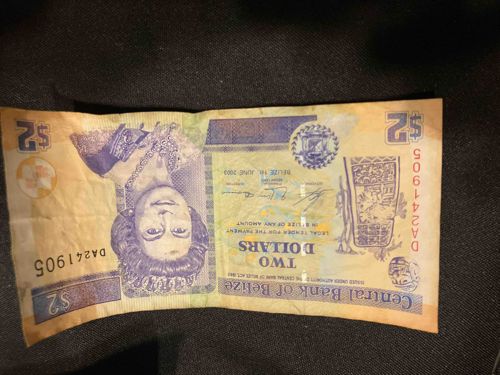
Belize Two Dollars (BZD) Banknote - 2000 Series

This name is the AI's identification of the item — it may be incorrect.

Submitted photo of Belize Two Dollars (BZD) Banknote - 2000 Series
Photo submitted by the user — not generated by AI

AI Estimated Value

Not an official valuation

$1.00

AI estimate as of September 11, 2025 · verify with a professional before acting

AI-Generated · Verify before acting

Everything on this page is generated by AI for informational purposes only. AI can make mistakes — the AI may misidentify items or misattribute them (artist, maker, brand, designer, origin, era). This is not an official valuation and should not be used for insurance, sale, tax, estate, legal, or lending purposes — or any decision requiring a certified appraisal. It is not an authoritative claim about any person, brand, or rights holder — do not share or rely on it as a factual statement about a third party. Always consult qualified professionals before making financial decisions.

Read the full disclaimer

AI Item Analysis

This item is a two-dollar banknote from Belize, issued by the Central Bank of Belize. The primary colors evident are shades of cream, yellow, and blue-purple, with some hints of green in the background coloration. The banknote features a vertical orientation of the portrait of Queen Elizabeth II on the left side, adorned with a regal crown and necklace. The top left and bottom right corners of the note display the denomination '2$' in a distinct blue-purple ink. Another '2$' appears upright in the top right corner. The serial number 'DA241905' is prominently displayed vertically on both the right and left sides of the note. In the center, below the coat of arms, the text 'BELIZE HI JUNE 2000' is visible, indicating the series date. Below this, the words 'TWO DOLLARS' are printed in a bold, capitalized font, along with what appears to be a signature and text referencing 'LEGAL TENDER FOR THE PAYMENT'. The reverse side of the note is not visible in the provided image. The overall condition of the banknote shows significant signs of wear, including multiple creases and folds across the surface, particularly noticeable around the center and near the portrait. There is some discoloration and general softening of the paper, consistent with circulation and handling. The edges appear somewhat frayed, and there are no immediate signs of major tears, but the paper quality suggests a well-used item. The craftsmanship is typical of national currency, with intricate designs and security features, though some details are muted due to wear. This banknote is an example of circulating currency from the early 2000s.
AI Appraisal Report

Upon examining the provided image of this Belize Two Dollars (BZD) Banknote from the 2000 Series, I observe a well-circulated example of everyday currency. The primary colors are consistent with this issue, featuring cream, yellow, blue-purple, and green undertones. The portrait of Queen Elizabeth II and the '2$' denominations are correctly placed. The serial number 'DA241905' and date 'HI JUNE 2000' align with the expected features for this series. My assessment of the condition reveals significant signs of wear. There are numerous creases and folds, particularly noticeable central to the note and around the portrait. Discoloration, softening of the paper, and frayed edges are consistent with extensive circulation. This condition significantly limits its numismatic value, as collectors generally prefer uncirculated or minimally circulated examples. While there are no visible major tears, the overall poor state of preservation implies it has little appeal beyond its face value. From a market perspective, common circulating banknotes in this condition typically hold little more than their face value. There is no inherent rarity for a standard 2000 series Belize two-dollar note, especially in this worn state. Demand for such a heavily used item is extremely low among collectors. Factors impacting its value negatively are primarily its poor physical condition and lack of special features (e.g., fancy serial number, error printing). Based on visual evidence alone, I find no immediate red flags regarding authenticity; it appears to be a genuine circulating banknote. However, it is crucial to state that definitive authentication would require a hands-on examination. This would involve inspecting security features such as watermarks, security threads, and intaglio printing under magnification to confirm their presence and accuracy. Examination under UV light for phosphorescent features and analysis of paper composition for consistency would also be essential for full authentication. Without physical inspection, provenance documentation, or scientific testing, absolute certainty of authenticity remains limited to visual confirmation.

Keep exploring

More currency appraisals

Get your items appraised

Instant AI-powered appraisal estimates from a photo

Browse More Appraisals