AI Appraisal Estimate

AI-generated estimates · not official valuations

From the user

What was submitted

Photo and notes provided by the user — not generated by AI

Submitted item photo
Submitted photo · May 25, 2026

User's notes

Chinese porcelain

AI analysis below

AI appraisal

AI analysis & estimate

AI-Generated · Verify before acting

Everything below is generated by AI for informational purposes only. AI can make mistakes — the AI may misidentify items or misattribute them (artist, maker, brand, designer, origin, era). This is not an official valuation and should not be used for insurance, sale, tax, estate, legal, or lending purposes — or any decision requiring a certified appraisal. It is not an authoritative claim about any person, brand, or rights holder — do not share or rely on it as a factual statement about a third party. Always consult qualified professionals before making financial decisions.

Note

This analysis also relies on unverified notes provided by the user, which may be incomplete or inaccurate and could affect the result.

Read the full disclaimer

AI Identification

·Not independently authenticated·Verify before acting

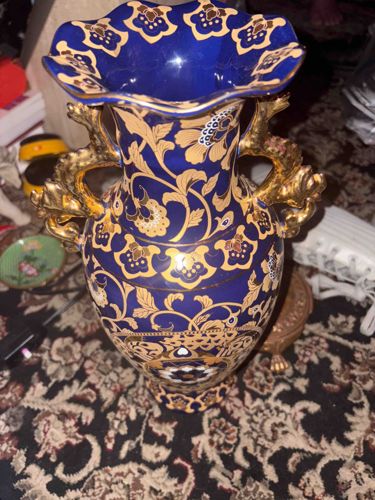
Cobalt Blue and Gilt Chinese Porcelain Dragon-Handled Vase

Asian Decorative Arts / Ceramics

AI Estimated Value

·Not an official valuation·Verify before acting

$150 - $300

As of May 25, 2026

AI Item Analysis

·AI can make mistakes·Verify before acting
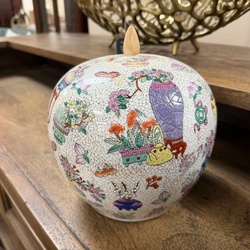
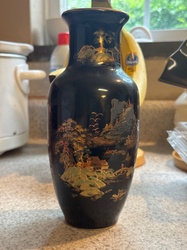
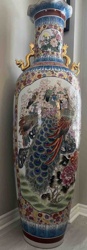
This is a decorative Chinese porcelain vase, likely dating from the mid-to-late 20th century. The piece features a striking baluster body with a wide, ruffled or pie-crust rim and is flanked by two ornate gilt-painted handles modeled as stylized dragons (chilong). The exterior is finished in a deep cobalt blue glaze, which serves as a vibrant ground for extensive gold-toned (gilt) floral and foliate scrolling motifs. The decoration includes large stylized peony or lotus blooms interspersed with interlocking vines and geometric borders near the base and neck. The ruffles of the rim are also highlighted with gold. In terms of condition, the gilding shows some surface wear and minor oxidation, particularly on the relief areas of the dragon handles. The porcelain body appears intact without visible cracks or significant chips from this angle, though fine crazing or minor glaze imperfections typical of mass-produced export wares may be present. The level of craftsmanship suggests an export-grade piece rather than an imperial antique, characterized by printed or stenciled gilt outlines that have been hand-filled. There are no visible maker's marks or signatures in the photograph, but such items typically feature a red stamped seal on the underside.
AI Appraisal Report

·AI can make mistakes·Verify before acting
I have examined the provided images of this cobalt blue and gilt porcelain dragon-handled vase. The vessel is a mid-to-late 20th-century decorative piece, consistent with the style of the 'People’s Republic of China' production era, likely intended for the international export market. The craftsmanship features a characteristic deep cobalt glaze with stencil-applied/hand-finished gilt floral motifs. The 'chilong' handles and ruffled rim are typical of modern decorative interpretations of traditional Qing Dynasty forms. In terms of condition, I note significant wear to the gilding on the handles and rim, which suggests a loss of surface integrity common in decorative items of this age. The lack of visible high-relief hand-painting and the uniformity of the transfer-like patterns indicate mass production rather than unique imperial craftsmanship. Given the current market for Asian decorative arts, pieces of this period are plentiful. They are valued as interior design accents rather than investment-grade antiques. Comparable sales for similar mid-century export vases typically fall within the low hundreds at regional auctions. It is important to note that a definitive assessment of age and kiln origin is limited by photographic analysis. I cannot examine the foot rim for clay composition or the underside for a characteristic red stamp mark. A physical inspection would be required to rule out modern 21st-century reproductions or to confirm the absence of professional repairs to the delicate rim. No further scientific testing (such as thermoluminescence) is recommended, as the cost of testing would exceed the market value of the object. Provenance documentation, if available, would provide helpful context but is unlikely to significantly alter the valuation of this specific decorative grade.

Get your items appraised

Instant estimates of your treasures with AI-powered appraisals

Browse More Appraisals