Pair of Japanese Satsuma Style Ceramic Komainu (Lion Dogs)
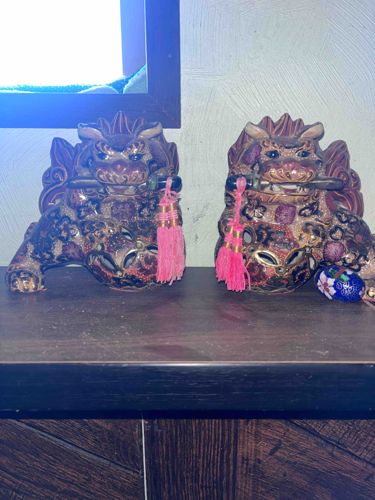
This is a matching pair of ceramic guardian figures, known as Komainu or Shi-Shi lion dogs, likely of Japanese origin in the Satsuma or Kutani style. Each figure is depicted in a traditional crouching stance with dynamic, swirling tails and stylized manes. They are constructed from ceramic with a complex polychrome glaze and heavy moriage (raised enamel) decoration. The color palette is dominated by earthy browns, deep reds, and accented with gold leaf or metallic pigments throughout the intricate floral and scroll patterns on their bodies. A notable feature is the horizontally held staff or flute in their mouths, through which bright pink decorative silk tassels are looped. The right-hand figure appears to have an additional small blue cloisonné or enameled egg-shaped accessory at its base. The craftsmanship displays high levels of detail in the hand-painted enameling and pierced open-work (reticulation) on the lower portion of the bodies. Condition-wise, while the glaze remains vibrant, there appears to be significant dust accumulation indicating they have been on display for some time; some minor wear to the gilding is likely given the style. These figures likely date from the mid-to-late 20th century, serving as decorative pieces meant to bring protection and good fortune to a household.
AI-Generated Appraisal Disclaimer
Estimated Value
$450 - $700
Basic Information
Category
Asian Decorative Arts & Ceramics
Appraised On
March 22, 2026
Estimated Value
$450 - $700
Item Description
This is a matching pair of ceramic guardian figures, known as Komainu or Shi-Shi lion dogs, likely of Japanese origin in the Satsuma or Kutani style. Each figure is depicted in a traditional crouching stance with dynamic, swirling tails and stylized manes. They are constructed from ceramic with a complex polychrome glaze and heavy moriage (raised enamel) decoration. The color palette is dominated by earthy browns, deep reds, and accented with gold leaf or metallic pigments throughout the intricate floral and scroll patterns on their bodies. A notable feature is the horizontally held staff or flute in their mouths, through which bright pink decorative silk tassels are looped. The right-hand figure appears to have an additional small blue cloisonné or enameled egg-shaped accessory at its base. The craftsmanship displays high levels of detail in the hand-painted enameling and pierced open-work (reticulation) on the lower portion of the bodies. Condition-wise, while the glaze remains vibrant, there appears to be significant dust accumulation indicating they have been on display for some time; some minor wear to the gilding is likely given the style. These figures likely date from the mid-to-late 20th century, serving as decorative pieces meant to bring protection and good fortune to a household.
Get Your Items Appraised
Instant estimates of your treasures with AI-powered instant appraisals