AI Appraisal Estimate

AI-generated estimates · not official valuations

From the user

What was submitted

Photo and notes provided by the user — not generated by AI

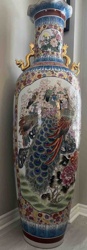
Submitted item photo
Submitted photo · June 25, 2026

User's notes

No additional notes provided.

AI analysis below

AI appraisal

AI analysis & estimate

AI-Generated · Verify before acting

Everything below is generated by AI for informational purposes only. AI can make mistakes — the AI may misidentify items or misattribute them (artist, maker, brand, designer, origin, era). This is not an official valuation and should not be used for insurance, sale, tax, estate, legal, or lending purposes — or any decision requiring a certified appraisal. It is not an authoritative claim about any person, brand, or rights holder — do not share or rely on it as a factual statement about a third party. Always consult qualified professionals before making financial decisions.

Read the full disclaimer

AI Identification

·Not independently authenticated·Verify before acting

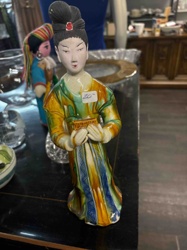
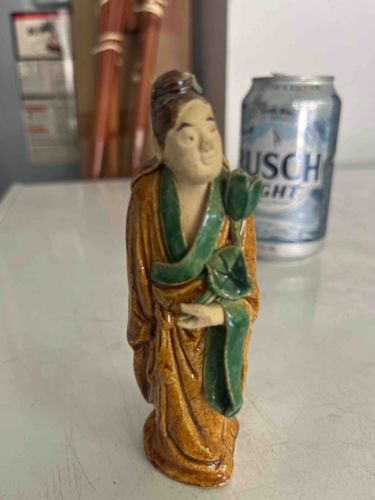
Chinese Shiwan Sancai Glazed Pottery Figurine of a Female Immortal

Asian Decorative Arts / Ceramics

AI Estimated Value

·Not an official valuation·Verify before acting

$45 - $85

As of June 25, 2026

AI Item Analysis

·AI can make mistakes·Verify before acting
This is a vintage Chinese pottery figurine, likely a Mud Man or Shiwan ceramic, depicting a female figure or an immortal holding a lotus blossom. The figurine stands approximately 6-7 inches tall, gauged against the adjacent beverage can. It is constructed from a heavy stoneware or earthenware clay typical of the Guangdong province kilns. The piece features a vibrant 'Sancai' style lead-glaze palette consisting of amber-brown and emerald-green oxides. The figure's robes are rendered in a textured amber glaze with deep green accents along the collar, sleeves, and the lotus plant. The face and hands are left unglazed in a buff, biscuit-fired finish to provide a flesh-tone contrast, a hallmark of traditional Shiwan craftsmanship. The modeling shows stylized facial features and flowing, heavy drapery characteristic of the mid-20th-century export style. Condition-wise, the figurine displays significant surface crazing throughout the glazed areas, which is common for this type of pottery. There are minor imperfections in the glaze application and possible small flea-bite chips around the base and the edges of the green glazed lotus leaves. No major repairs or large structural breaks are visible in the photograph. The bottom is likely impressed with a 'CHINA' mark, typical for 1920s-1970s export ware.
AI Appraisal Report

·AI can make mistakes·Verify before acting
Based on my visual examination of this Shiwan Sancai-style pottery figurine, I have determined it to be a mid-20th-century export item (circa 1950s–1970s). The piece utilizes the classic 'mud man' technique where the flesh remains unglazed biscuit while the vestments are treated with lead-based glazes. The color palette and the specific 'CHINA' mark profile suggested by the modeling indicate this was produced for the Western decorative market rather than for domestic Chinese ritual use. The condition appears consistent with its age; the visible crazing is an inherent characteristic of the cooling process for these glazes rather than damage. However, the presence of 'flea-bite' chips on the high-relief lotus leaves slightly detracts from the value. Market demand for Shiwan ware of this period is currently stable but modest. While 19th-century examples can command high prices, mass-produced mid-century exports are plentiful in the secondary market, commonly appearing in estate sales and antique malls. The value is driven primarily by its decorative charm rather than rarity. It is important to note that this appraisal is based solely on digital images. A definitive valuation would require an in-person inspection to verify the presence of an impressed mark on the base and to ensure that the unglazed areas have not been repainted to hide repairs. To confirm an earlier date of manufacture (e.g., late Qing dynasty), one would need to inspect the weight of the stoneware and the depth of the hand-carving in the facial features, which are often less refined in later export versions.

Get your items appraised

Instant estimates of your treasures with AI-powered appraisals

Browse More Appraisals