AI Appraisal Estimate

AI-generated estimates · not official valuations

From the user

What was submitted

Photo and notes provided by the user — not generated by AI

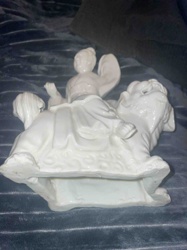
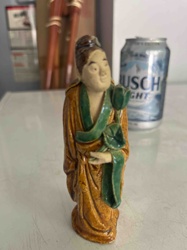
Submitted item photo
Submitted photo · May 27, 2026

User's notes

No additional notes provided.

AI analysis below

AI appraisal

AI analysis & estimate

AI-Generated · Verify before acting

Everything below is generated by AI for informational purposes only. AI can make mistakes — the AI may misidentify items or misattribute them (artist, maker, brand, designer, origin, era). This is not an official valuation and should not be used for insurance, sale, tax, estate, legal, or lending purposes — or any decision requiring a certified appraisal. It is not an authoritative claim about any person, brand, or rights holder — do not share or rely on it as a factual statement about a third party. Always consult qualified professionals before making financial decisions.

Read the full disclaimer

AI Identification

·Not independently authenticated·Verify before acting

Sancai-Style Glazed Ceramic Figure of a Tang Dynasty Lady

Asian Decorative Arts / Ceramics

AI Estimated Value

·Not an official valuation·Verify before acting

$45-75

As of May 27, 2026

AI Item Analysis

·AI can make mistakes·Verify before acting
This item is a ceramic decorative figurine depicting a standing female figure in traditional Chinese Tang Dynasty attire. The figure stands approximately 8 to 10 inches tall and is constructed from a light-colored ceramic, likely earthenware or a low-fire stoneware. It features a distinctive 'Sancai' (three-color) lead-based glaze palette consisting of amber, green, and cream/white drips, with additional blue detailing along the vertical folds of the skirt. The lady is depicted with her hands clasped in front of her chest holding a small box or musical instrument. Her face is pale and finely painted with delicate black eyes and red lips, surmounted by a high black bun (chignon) adorned with a small red ornament. The glaze shows characteristic pooling and streaking effects, particularly on the sleeves and hem. In terms of condition, there is a visible price sticker on the chest which may leave adhesive residue. There are minor surface scuffs, small pits in the glaze, and slight wear to the cold-painted facial features and hair. While styled after 8th-century tomb figures, the crispness of the mold and the specific glaze application suggest this is a mid-to-late 20th-century reproduction or 'tribute' piece rather than an ancient artifact. The craftsmanship displays a blend of mold-formed mass production and hand-painted finishing.
AI Appraisal Report

·AI can make mistakes·Verify before acting
I have conducted a visual examination of the Sancai-style glazed ceramic figure. The 10-inch figurine exhibits the classic motifs of the Tang Dynasty 'fat lady' aesthetic, characterized by voluminous robes and a high chignon. Upon close inspection, the glaze possesses the characteristic pooling of amber and green lead glazes; however, the blue pigment appears somewhat modern in its saturation and application. The facial features are cold-painted, showing significant wear, while the base and body exhibit a crispness suggestive of modern slip-casting rather than hand-modelled antiquity. A significant detractor is the modern pressure-sensitive adhesive label on the chest, which risks surface damage upon removal. The market for mid-20th-century Tang reproductions is saturated. These pieces were mass-produced for the export and decorative markets in the 1960s through the 1980s. Unlike authentic 8th-century artifacts which command thousands at auction, this 'tribute' piece holds value primarily as a decorative furnishing. Comparable sales for similar vintage sancai-style figures typically fall within the sub-$100 range at regional estate auctions. Limitations: This appraisal is based solely on digital images. A definitive determination of age would require a physical inspection to check for 'crazing' depth and authentic mineral encrustation. To rule out an ancient origin, a Thermoluminescence (TL) test would be required to date the firing of the clay. Without provenance or scientific testing, this item is valued as a modern decorative object. Higher value could only be realized if the piece was proven to be an authentic Tang period artifact, which visual evidence currently contradicts.

Get your items appraised

Instant estimates of your treasures with AI-powered appraisals

Browse More Appraisals