AI Appraisal Estimate

AI-generated estimates · not official valuations

From the user

What was submitted

Photo and notes provided by the user — not generated by AI

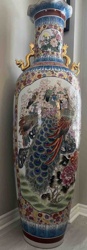
Submitted item photo
Submitted photo · May 30, 2026

User's notes

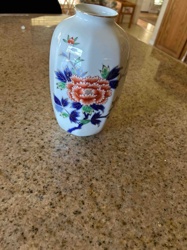
Porcelain Asian figurine riding foo dog

AI analysis below

AI appraisal

AI analysis & estimate

AI-Generated · Verify before acting

Everything below is generated by AI for informational purposes only. AI can make mistakes — the AI may misidentify items or misattribute them (artist, maker, brand, designer, origin, era). This is not an official valuation and should not be used for insurance, sale, tax, estate, legal, or lending purposes — or any decision requiring a certified appraisal. It is not an authoritative claim about any person, brand, or rights holder — do not share or rely on it as a factual statement about a third party. Always consult qualified professionals before making financial decisions.

Note

This analysis also relies on unverified notes provided by the user, which may be incomplete or inaccurate and could affect the result.

Read the full disclaimer

AI Identification

·Not independently authenticated·Verify before acting

Dehua Style Blanc de Chine Porcelain Figurine of a Lady Atop a Guardian Lion (Foo Dog)

Asian Decorative Arts - Ceramics

AI Estimated Value

·Not an official valuation·Verify before acting

$125 - $200

As of May 30, 2026

AI Item Analysis

·AI can make mistakes·Verify before acting
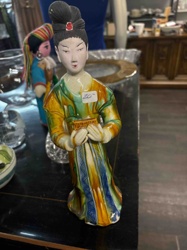
This is a monochrome white porcelain figurine depicting a graceful female figure, likely a celestial maiden or deity, seated sidesaddle upon a stylized guardian lion, commonly referred to as a foo dog. The item is crafted in the 'Blanc de Chine' (Dehua) style, characterized by a creamy white, translucent glaze that flows over the molded and hand-finished porcelain body. The female figure is dressed in traditional flowing robes with wide sleeves, her hair styled in a high bun. The foo dog is depicted with a wide grin, bulging eyes, and a textured mane, standing with all four feet on an integrated rectangular base. The base is hollowed out, a common trait in cast porcelain figurines. The craftsmanship displays moderate detail in the drapery of the clothing and the facial features of the lion. While there are no visible maker's marks from this angle, the uniform white glaze is the primary aesthetic feature. The condition appears fair to good with some visible scuffing or minor pitting along the lower edges of the base and some surface grime consistent with age and display. The style suggests mid-to-late 20th-century production, emulating traditional Chinese porcelain art. The piece measures approximately 6 to 8 inches in length based on visual proportions against the background fabric texture.
AI Appraisal Report

·AI can make mistakes·Verify before acting
I have carefully examined the provided images and descriptions of the Dehua-style (Blanc de Chine) figurine. The piece displays the characteristic 'creamy' white glaze and fine-grained body associated with the Fujian province tradition. Based on the sharpness of the mold lines, the specific treatment of the lion’s features, and the surface texture, I assess this as a mid-20th-century decorative export piece rather than a 17th or 18th-century antique. The condition appears fair to good; while the glaze retains its luster, the visible pitting and base scuffing suggest it has been handled and displayed without museum-grade preservation. In the current Asian Decorative Arts market, mass-produced 20th-century Blanc de Chine remains popular for interior design but lacks the rarity of earlier Ming or Qing dynasty examples. Comparables for mid-century figures of this size (6-8 inches) consistently realize between $100 and $250 at auction. The value is capped by its status as a later revival piece. It is important to note that a definitive assessment of age and kiln origin is impossible through photography alone. High-quality fakes often mimic aging through chemical washes. To confirm authenticity or a possibly earlier 19th-century date, an in-person examination is required to check for 'heji' (fire cracks) inside the hollow base, the specific weight-to-size ratio of the porcelain, and the presence of any impressed potter's marks. Scientific testing, such as thermoluminescence, would be necessary to verify an older provenance if the owner possesses documentation linking it to an established collection.

Get your items appraised

Instant estimates of your treasures with AI-powered appraisals

Browse More Appraisals