AI Appraisal Estimate

AI-generated estimates · not official valuations

From the user

What was submitted

Photo and notes provided by the user — not generated by AI

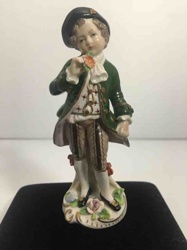
Submitted item photo
Submitted photo · June 25, 2026

User's notes

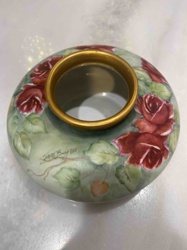
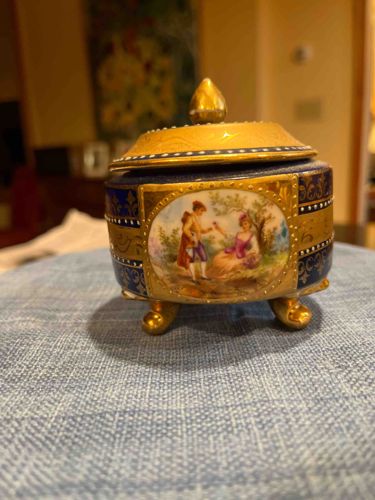
Cache pot with top, 3 inches in diameter

AI analysis below

AI appraisal

AI analysis & estimate

AI-Generated · Verify before acting

Everything below is generated by AI for informational purposes only. AI can make mistakes — the AI may misidentify items or misattribute them (artist, maker, brand, designer, origin, era). This is not an official valuation and should not be used for insurance, sale, tax, estate, legal, or lending purposes — or any decision requiring a certified appraisal. It is not an authoritative claim about any person, brand, or rights holder — do not share or rely on it as a factual statement about a third party. Always consult qualified professionals before making financial decisions.

Note

This analysis also relies on unverified notes provided by the user, which may be incomplete or inaccurate and could affect the result.

Read the full disclaimer

AI Identification

·Not independently authenticated·Verify before acting

Tripod Porcelain Trinket Box in Sèvres Style

Antique Decorative Arts / Porcelain

AI Estimated Value

·Not an official valuation·Verify before acting

$250 - $400

As of June 25, 2026

AI Item Analysis

·AI can make mistakes·Verify before acting
A fine porcelain tripod trinket box or small covered pot, approximately 3 inches in diameter. The piece is crafted in a 19th-century Sèvres revival style, featuring a rich cobalt blue (bleu de roi) glaze as the primary field. The body is decorated with three gilded Bun feet and a central hand-painted oval reserve depicting a romanticized Fragonard-style scene of a seated couple (a gallant and his lady) in a bucolic landscape. The painting is executed with soft pastels and fine brushwork. Surrounding the vignette is an intricate raised gold (moriage-style) gilding including fleur-de-lis motifs and scrolled borders, accented by white beaded enamel dots. The lid is slightly domed with a gilded conical finial and matching gold-scroll decoration over a yellowish-tan ground. The construction suggests a late 19th to early 20th-century European manufacture, likely French or German (Limoges or Dresden). Detailed examination reveals minor age-related thinning of the gold gilt on the finial and feet, but the central porcelain vignette remains vibrant. The absence of a visible maker's mark in the photograph suggests it may be marked on the underside. The craftsmanship reflects high-quality decorative porcelain intended for the luxury boudoir market.
AI Appraisal Report

·AI can make mistakes·Verify before acting
Based on my visual examination of this tripod porcelain trinket box, I have identified it as a high-quality 19th-century Svres-style revival piece. The use of 'bleu de roi' glaze, hand-painted romantic vignettes in the style of Jean-Honor Fragonard, and raised paste gilding suggests a manufacture date between 1880 and 1910. While the craftsmanship is evocative of the Petit Trianon aesthetic, the lack of a visible mark suggests it is likely a 'Svres-style' production from a Limoges studio or a high-end German manufacturer like Dresden, rather than an 18th-century Royal Manufactory original. The condition appears very good; the central porcelain vignette is vibrant, though I noted expected thinning of the gilt on the primary contact points (finial and feet). The demand for 'Le Galant' decorative arts remains steady among collectors of Belle poque boudoir decor, though prices have softened from their 1990s peak. Similar pieces of this size (3 inches) typically achieve mid-range decorative prices at boutique auctions. Please note that this appraisal is based on photographic evidence. A definitive valuation would require an in-person physical inspection to verify the 'feel' of the glaze, search for hidden underglaze marks, and use UV light to check for professional restorations. Authenticity as a true Svres piece would require provenance documentation or chemical analysis of the paste to differentiate between 'pte tendre' and hard-paste porcelain.

Get your items appraised

Instant estimates of your treasures with AI-powered appraisals

Browse More Appraisals