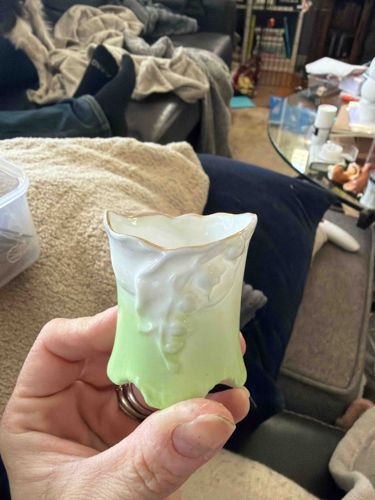
R.S. Prussia Lily of the Valley Porcelain Toothpick Holder
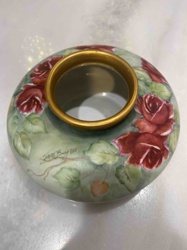
This is a small, ornate porcelain toothpick holder, characteristic of the Art Nouveau period, specifically attributed to the R.S. Prussia (Reinhold Schlegelmilch) style. The item stands approximately 2 to 2.5 inches tall and features a distinctive pedestal-waisted shape with a scalloped, lily-like rim. The body is crafted from high-quality bone china or porcelain, showcasing an integrated relief of Lily of the Valley flowers draped across the front profile. The color palette consists of a vibrant pale lime or chartreuse green glaze on the lower half that realistically ombré-shades upwards into a clean white glazed interior and upper section. The rim is delicately accented with a thin line of gold gilt (liquid gold), a common indicator of turn-of-the-century craftsmanship. Notable features include the intricate 'hidden' leaf textures and the characteristic scalloped feet. While no maker's mark is visible from this angle, the mold and glaze application are synonymous with late 19th or early 20th-century German porcelain manufacturing. The condition appears excellent with no visible chips or cracks, though typical micro-wear to the gold gilding on the high points of the rim is present, consistent with age and handled use.
AI-Generated Appraisal Disclaimer
Estimated Value
$125.00 - $175.00
Basic Information
Category
Antique Decorative Arts Porcelain
Appraised On
March 23, 2026
Estimated Value
$125.00 - $175.00
Item Description
This is a small, ornate porcelain toothpick holder, characteristic of the Art Nouveau period, specifically attributed to the R.S. Prussia (Reinhold Schlegelmilch) style. The item stands approximately 2 to 2.5 inches tall and features a distinctive pedestal-waisted shape with a scalloped, lily-like rim. The body is crafted from high-quality bone china or porcelain, showcasing an integrated relief of Lily of the Valley flowers draped across the front profile. The color palette consists of a vibrant pale lime or chartreuse green glaze on the lower half that realistically ombré-shades upwards into a clean white glazed interior and upper section. The rim is delicately accented with a thin line of gold gilt (liquid gold), a common indicator of turn-of-the-century craftsmanship. Notable features include the intricate 'hidden' leaf textures and the characteristic scalloped feet. While no maker's mark is visible from this angle, the mold and glaze application are synonymous with late 19th or early 20th-century German porcelain manufacturing. The condition appears excellent with no visible chips or cracks, though typical micro-wear to the gold gilding on the high points of the rim is present, consistent with age and handled use.
Related Tags
Get Your Items Appraised
Instant estimates of your treasures with AI-powered instant appraisals