AI Appraisal Estimate

AI-generated estimates · not official valuations

From the user

What was submitted

Photo and notes provided by the user — not generated by AI

Submitted item photo
Submitted photo · July 21, 2026

User's notes

Height 60cm

AI analysis below

AI appraisal

AI analysis & estimate

AI-Generated · Verify before acting

Everything below is generated by AI for informational purposes only. AI can make mistakes — the AI may misidentify items or misattribute them (artist, maker, brand, designer, origin, era). This is not an official valuation and should not be used for insurance, sale, tax, estate, legal, or lending purposes — or any decision requiring a certified appraisal. It is not an authoritative claim about any person, brand, or rights holder — do not share or rely on it as a factual statement about a third party. Always consult qualified professionals before making financial decisions.

Note

This analysis also relies on unverified notes provided by the user, which may be incomplete or inaccurate and could affect the result.

Read the full disclaimer

AI Identification

·Not independently authenticated·Verify before acting

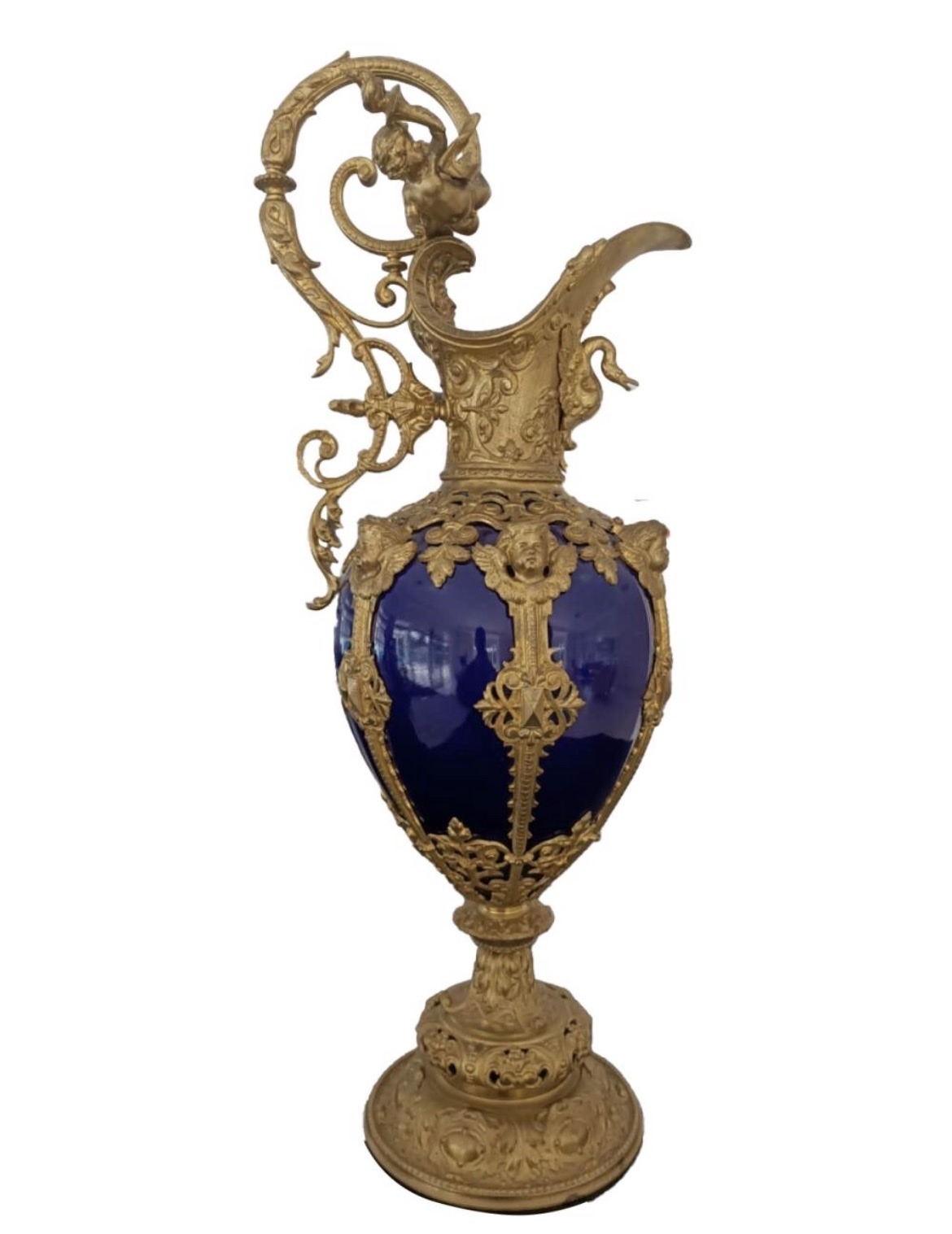
Ormolu-mounted cobalt blue porcelain ewer in the Neoclassical style

Decorative Arts

AI Estimated Value

·Not an official valuation·Verify before acting

$1,500 - $2,500

As of July 21, 2026

AI Item Analysis

·AI can make mistakes·Verify before acting
This decorative ewer, which the user identifies as being 60cm in height, features a deep cobalt blue porcelain body encased in an elaborate gilt-metal, ormolu-style frame. The central vessel is an ovoid porcelain form, consistent with the rich blue glazes often associated with Sèvres-style decorative arts. The ornate metalwork includes a highly decorative handle featuring a putto or cherub figure reaching towards a scrolling vine, and a spout adorned with high-relief floral swags and a small avian figure. The porcelain body is vertically sectioned by four gilded metal straps punctuated by cherub-head masks and acanthus leaf crests. The piece stands on a trumpet-shaped pedestal base featuring relief medallions and a circular foot. The overall aesthetic is stylistically consistent with late 19th-century French 'Belle Époque' revivals of Neoclassical and Rococo designs. The metal appears to be a gilded casting, possibly bronze or brass, though physical material testing is required for confirmation. No maker's marks, signatures, or porcelain stamps are visible in the provided image, so specific attribution to a kiln or foundry like Sèvres or Barbedienne remains a hypothesis based on stylistic cues rather than a confirmed fact. The surface shows some darkening in the recessed areas of the casting, consistent with a degree of oxidation or accumulated dust, but the porcelain appears to be in good visual condition without large visible cracks.
AI Appraisal Report

·AI can make mistakes·Verify before acting
Based on my visual examination of the provided image, this large-scale cobalt blue ewer appears to be a fine example of 19th-century French 'Belle Époque' decorative arts produced in the Neoclassical revival style. Standing at approximately 60cm, the scale is significant, which enhances its decorative appeal. I can see what appears to be a cobalt glaze consistent with Sèvres-style porcelain, though I cannot confirm the kiln of origin from a photograph. The elaborate ormolu-style mountings featuring putto figures, floral swags, and scrollwork are typical of high-quality 19th-century Parisian castings, but physical testing is required to determine if the metal is gilded bronze (ormolu) or a lesser gilded brass. This estimate assumes the piece dates to the late 19th century and that the porcelain remains free of restored cracks or significant loss of gilding, which I cannot fully verify without a hands-on inspection. The market for grand-scale 'Sèvres-style' decorative objects remains stable among collectors of traditional European interiors, where such pieces are valued for their classical symmetry and rich color. However, because no maker's marks were identified, this valuation is based on the item being 'in the style of' major 19th-century foundries. To confirm a higher valuation or a specific attribution to a maker like Barbedienne or Sèvres, a specialist would need to conduct an in-person examination to locate hidden marks and analyze the porcelain paste. If this item were found to be a mid-20th-century reproduction with lower-quality casting, the value would likely drop significantly to the $400-$600 range.

Get your items appraised

Instant estimates of your treasures with AI-powered appraisals

Browse More Appraisals