Carved Green Nephrite Jade Seated Buddha Figurine
Asian Art & Collectibles

Carved Green Nephrite Jade Seated Buddha Figurine

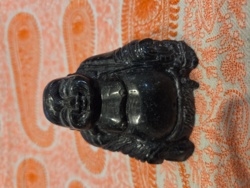
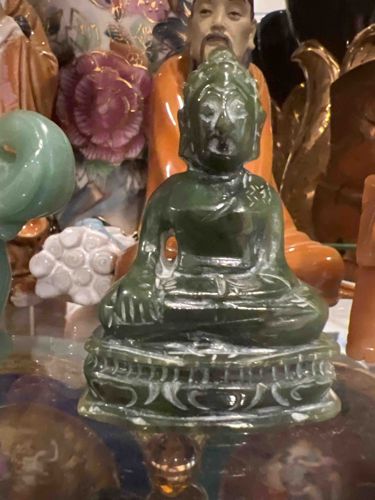
This item is a hand-carved figurine representing a Buddha seated in the Dhyana Mudra (meditation) position, specifically styled in an aesthetic common to Southeast Asian traditions, possibly Thai or Burmese. The piece is crafted from a dark spinach-green stone, likely nephrite jade or a similar hardstone. It features a traditional ushnisha topknot and elongated earlobes symbolizing enlightenment. The figure rests upon a tiered, lotus-style pedestal base with linear incised decorations. The carving craftsmanship is folk-style rather than fine-art quality, evidenced by the somewhat soft facial features and the irregular, deep incisions on the base. Notably, white residue or calcification is visible in the recessed areas of the carving, particularly around the face, chest, and base; this could be dried cleaning agent, mineral deposits, or remnants of a surface wax. There is visible wear on the edges, including small chips on the base and abrasions on the high points of the nose and knees, suggesting mid-to-late 20th-century manufacture. The stone exhibits a waxy luster characteristic of nephrite, though it lacks the high-polish finish found in premium ornamental pieces. No maker's marks or signatures are visible in the provided view.
Estimated Value

$150-$250

Basic Information

Category

Asian Art & Collectibles

Appraised On

February 7, 2026

Estimated Value

$150-$250

Item Description

This item is a hand-carved figurine representing a Buddha seated in the Dhyana Mudra (meditation) position, specifically styled in an aesthetic common to Southeast Asian traditions, possibly Thai or Burmese. The piece is crafted from a dark spinach-green stone, likely nephrite jade or a similar hardstone. It features a traditional ushnisha topknot and elongated earlobes symbolizing enlightenment. The figure rests upon a tiered, lotus-style pedestal base with linear incised decorations. The carving craftsmanship is folk-style rather than fine-art quality, evidenced by the somewhat soft facial features and the irregular, deep incisions on the base. Notably, white residue or calcification is visible in the recessed areas of the carving, particularly around the face, chest, and base; this could be dried cleaning agent, mineral deposits, or remnants of a surface wax. There is visible wear on the edges, including small chips on the base and abrasions on the high points of the nose and knees, suggesting mid-to-late 20th-century manufacture. The stone exhibits a waxy luster characteristic of nephrite, though it lacks the high-polish finish found in premium ornamental pieces. No maker's marks or signatures are visible in the provided view.
Get Your Items Appraised

Instant estimates of your treasures with AI-powered instant appraisals

Browse More Appraisals