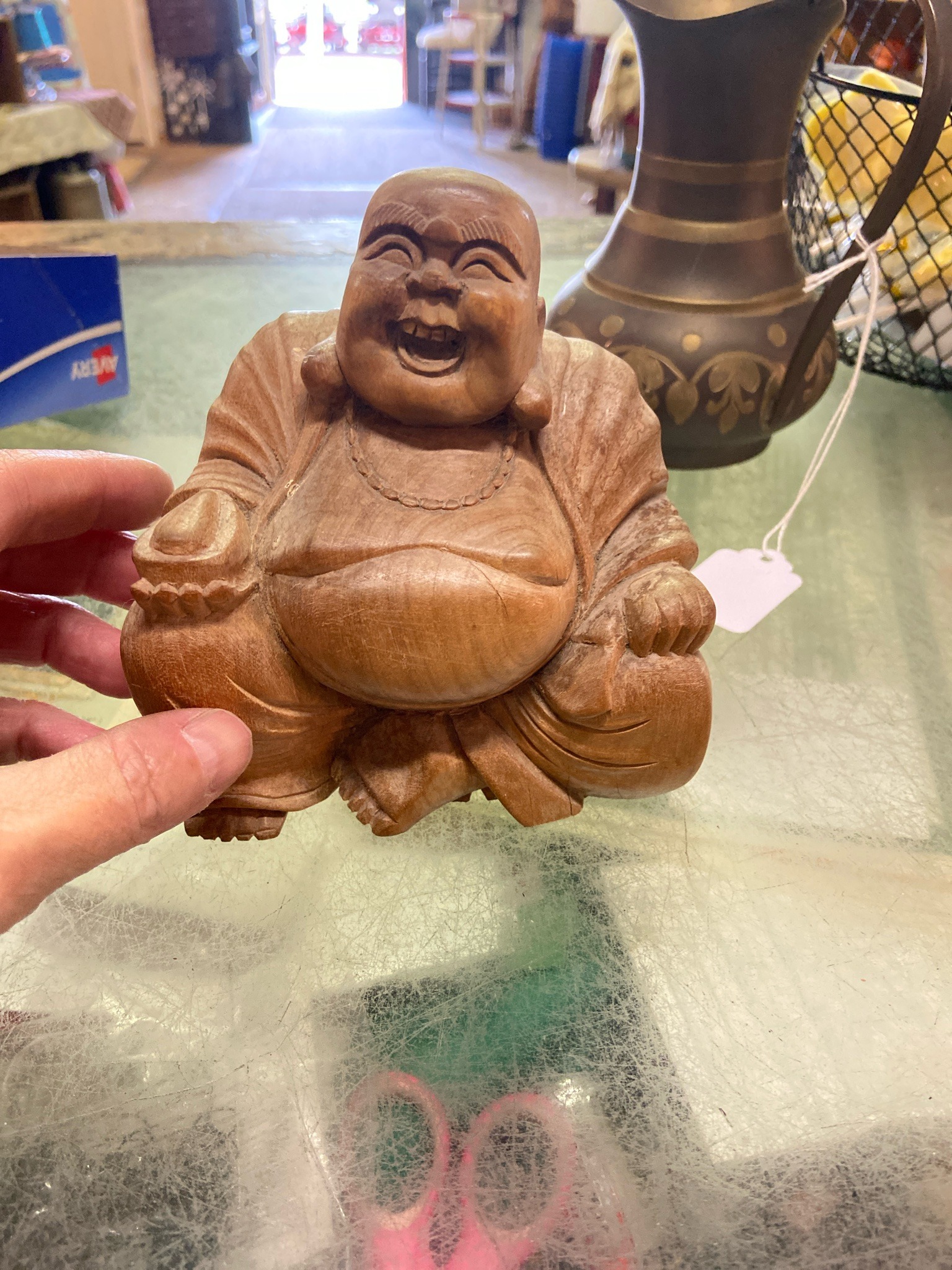
Hand-Carved Wooden Laughing Buddha (Budai) Figurine
Asian Art & Collectibles

Hand-Carved Wooden Laughing Buddha (Budai) Figurine

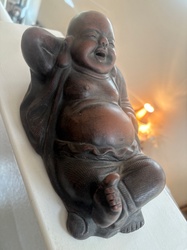
This is a hand-carved wooden sculpture depicting Budai, commonly known as the 'Laughing Buddha,' portrayed in a seated cross-legged position. The figure is characterized by a joyous facial expression with an open mouth, squinting eyes, and elongated earlobes symbolizing wisdom. He holds a 'yuanbao' (ingot) in his right hand, representing wealth. The piece is carved from a single block of dense, medium-toned hardwood, likely teak or rosewood, showcasing a natural grain with warm honey and reddish-brown hues. The carving style is folk-traditional, with smooth contours for the prominent belly and more detailed chisel work on the drapery of the robes and the beaded necklace. In terms of condition, the piece shows a soft, lustrous patina from handling, though there are minor surface abrasions and some light-colored dust or residue buildup in the deeper crevices of the carving. No significant cracks, chips, or major structural repairs are visible. The craftsmanship suggests a mid-20th-century origin, likely from East or Southeast Asia. The proportions are slightly squat, giving it a solid feel, and it lacks visible maker's marks, which is common for this type of decorative export and devotional art.
Estimated Value

$150 - $250

Basic Information

Category

Asian Art & Collectibles

Appraised On

April 18, 2026

Estimated Value

$150 - $250

Item Description

This is a hand-carved wooden sculpture depicting Budai, commonly known as the 'Laughing Buddha,' portrayed in a seated cross-legged position. The figure is characterized by a joyous facial expression with an open mouth, squinting eyes, and elongated earlobes symbolizing wisdom. He holds a 'yuanbao' (ingot) in his right hand, representing wealth. The piece is carved from a single block of dense, medium-toned hardwood, likely teak or rosewood, showcasing a natural grain with warm honey and reddish-brown hues. The carving style is folk-traditional, with smooth contours for the prominent belly and more detailed chisel work on the drapery of the robes and the beaded necklace. In terms of condition, the piece shows a soft, lustrous patina from handling, though there are minor surface abrasions and some light-colored dust or residue buildup in the deeper crevices of the carving. No significant cracks, chips, or major structural repairs are visible. The craftsmanship suggests a mid-20th-century origin, likely from East or Southeast Asia. The proportions are slightly squat, giving it a solid feel, and it lacks visible maker's marks, which is common for this type of decorative export and devotional art.
Get Your Items Appraised

Instant estimates of your treasures with AI-powered instant appraisals

Browse More Appraisals