AI Appraisal Estimate

AI-generated estimates · not official valuations

From the user

What was submitted

Photo and notes provided by the user — not generated by AI

Submitted item photo
Submitted photo · June 1, 2026

User's notes

No additional notes provided.

AI analysis below

AI appraisal

AI analysis & estimate

AI-Generated · Verify before acting

Everything below is generated by AI for informational purposes only. AI can make mistakes — the AI may misidentify items or misattribute them (artist, maker, brand, designer, origin, era). This is not an official valuation and should not be used for insurance, sale, tax, estate, legal, or lending purposes — or any decision requiring a certified appraisal. It is not an authoritative claim about any person, brand, or rights holder — do not share or rely on it as a factual statement about a third party. Always consult qualified professionals before making financial decisions.

Read the full disclaimer

AI Identification

·Not independently authenticated·Verify before acting

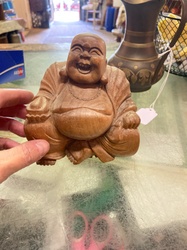
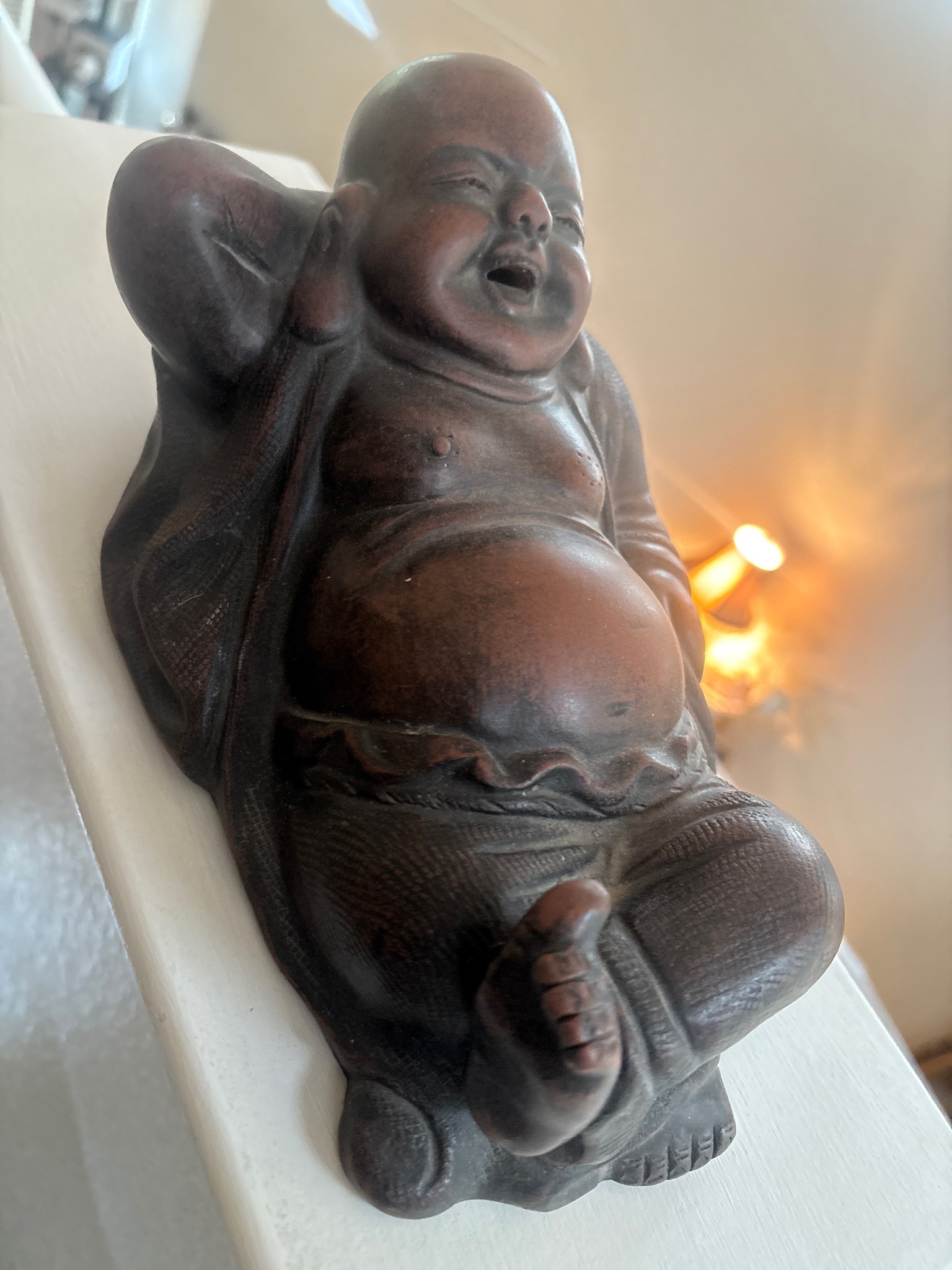
Carved Wood Laughing Buddha (Budai) Figurine

Asian Art & Collectibles

AI Estimated Value

·Not an official valuation·Verify before acting

$150 - $250

As of June 1, 2026

AI Item Analysis

·AI can make mistakes·Verify before acting
This is a hand-carved wooden figurine of Budai, popularly known as the Laughing Buddha, depicted in a seated, reclining posture. The item is crafted from a medium-to-dark stained wood with a prominent reddish-brown undertone, possibly cherry or a stained hardwood. It features the characteristic potbelly, joyful facial expression with an open mouth, and elongated earlobes. Notable details include fine cross-hatching on the trousers to simulate fabric texture and a wavy-edged hem on the upper garment. The figure carries a large cloth sack over its right shoulder, which is a traditional iconographic element representing abundance. The surface displays a soft, lustrous patina consistent with age and handling. Condition-wise, the piece appears well-maintained with minor surface abrasions and dust accumulation in the crevices, particularly around the feet and garment folds. There are no immediate signs of structural cracks or major repairs. The level of detail in the fingers and facial features suggests mid-20th-century craftsmanship or later, typical of Chinese decorative folk art. No discernible maker's marks are visible in this view, suggesting it may be a workshop production rather than a signed artist piece.
AI Appraisal Report

·AI can make mistakes·Verify before acting
I have conducted a visual inspection of this carved wood Budai figurine. The piece exhibits characteristic mid-to-late 20th-century craftsmanship typical of high-volume decorative workshops in East Asia. The wood shows a sympathetic reddish-brown stain and a decent hand-burnished patina, though the wear patterns appear consistent with modern domestic decorative use rather than antique veneration. The cross-hatching and stylized drapery are executed with professional competency but lack the idiosyncratic refinement found in master-signed works. Condition is good to very good; I noted minor dust accretion and light surface abrasions, which are expected and do not detract from the decorative appeal. The market for mid-century Chinese folk art is currently stable but saturated. Comparables for unsigned, medium-hardwood carvings of this scale frequently realize prices in the $150 to $250 range at regional auctions and specialized decor markets. The demand for 'Laughing Buddha' motifs remains high for feng shui and interior design purposes, though this piece lacks the rarity or age (19th century or earlier) required to reach the premium collector tier. Critically, a visual assessment from photographs cannot definitively identify the specific wood species (such as genuine boxwood or sandalwood) nor can it detect sophisticated repairs under ultraviolet light. A full authentication would require an in-person examination to verify the depth of the carving marks and scent-testing of the wood. Documentation of provenance or an original bill of sale would be necessary to substantiate any claims of earlier 20th-century origin.

Get your items appraised

Instant estimates of your treasures with AI-powered appraisals

Browse More Appraisals