Carved Black Obsidian Hotei (Laughing Buddha) Figurine
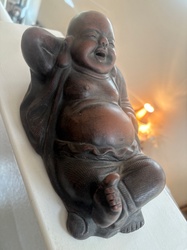
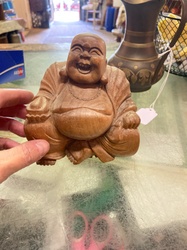
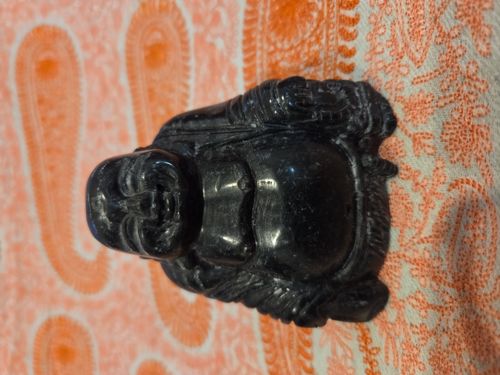
This is a hand-carved figurine of Hotei, commonly known as the Laughing Buddha, crafted from a solid, heavy black stone, likely black obsidian or a similar dense volcanic glass or dark schist. The piece measures approximately 3 to 4 inches in height and 3 to 4 inches in width. It features the characteristic seated pose with an exposed, large belly symbolizing abundance and a wide, joyful facial expression with deep-set eyes and elongated earlobes. The carving style is folk-traditional with simplified, bold lines defining the robes. The stone has a polished, reflective finish that shows a soft sheen under direct light. Notable condition markers include several small white surface abrasions and nicks, particularly on the chest and lower robes, which are typical of handling on harder stone materials. There are no visible maker's marks or signatures, suggesting it is a late 20th-century decorative export piece. The craftsmanship shows moderate skill in anatomical proportion and consistent smoothing of the stone’s surface, though some deeper crevices retain a slightly matte texture from the carving tools.
AI-Generated Appraisal Disclaimer
Estimated Value
$40-80
Basic Information
Category
Asian Art & Collectibles
Appraised On
February 20, 2026
Estimated Value
$40-80
Additional Details Provided By Owner
User Provided Information
Heavy, solid real stone
Item Description
This is a hand-carved figurine of Hotei, commonly known as the Laughing Buddha, crafted from a solid, heavy black stone, likely black obsidian or a similar dense volcanic glass or dark schist. The piece measures approximately 3 to 4 inches in height and 3 to 4 inches in width. It features the characteristic seated pose with an exposed, large belly symbolizing abundance and a wide, joyful facial expression with deep-set eyes and elongated earlobes. The carving style is folk-traditional with simplified, bold lines defining the robes. The stone has a polished, reflective finish that shows a soft sheen under direct light. Notable condition markers include several small white surface abrasions and nicks, particularly on the chest and lower robes, which are typical of handling on harder stone materials. There are no visible maker's marks or signatures, suggesting it is a late 20th-century decorative export piece. The craftsmanship shows moderate skill in anatomical proportion and consistent smoothing of the stone’s surface, though some deeper crevices retain a slightly matte texture from the carving tools.
Get Your Items Appraised
Instant estimates of your treasures with AI-powered instant appraisals