AI Appraisal Estimate

AI-generated estimates · not official valuations

From the user

What was submitted

Photo and notes provided by the user — not generated by AI

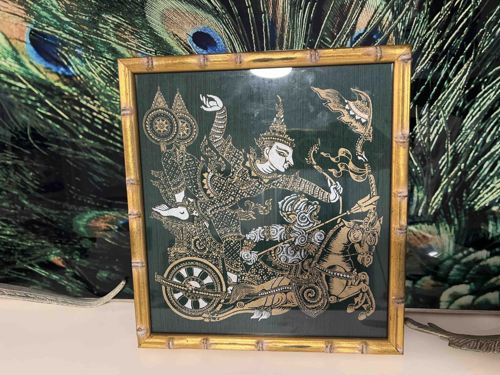
Submitted item photo
Submitted photo · June 25, 2026

User's notes

No additional notes provided.

AI analysis below

AI appraisal

AI analysis & estimate

AI-Generated · Verify before acting

Everything below is generated by AI for informational purposes only. AI can make mistakes — the AI may misidentify items or misattribute them (artist, maker, brand, designer, origin, era). This is not an official valuation and should not be used for insurance, sale, tax, estate, legal, or lending purposes — or any decision requiring a certified appraisal. It is not an authoritative claim about any person, brand, or rights holder — do not share or rely on it as a factual statement about a third party. Always consult qualified professionals before making financial decisions.

Read the full disclaimer

AI Identification

·Not independently authenticated·Verify before acting

Framed Thai Silk Painting of Prince Rama in a Chariot

Asian Art & Collectibles

AI Estimated Value

·Not an official valuation·Verify before acting

$150 - $250

As of June 25, 2026

AI Item Analysis

·AI can make mistakes·Verify before acting
This is a traditional Thai silk painting, likely dating from the mid-to-late 20th century. The artwork is executed on a dark hunter green silk textured ground, featuring intricate hand-painted or silk-screened details in metallic gold and white pigments. The subject matter depicts a classical scene from the Ramakien (the Thai version of the Ramayana), showcasing Prince Rama or a similarly high-ranking deity/hero figure standing in a highly decorative royal chariot. The chariot is pulled by a mythical horse and driven by a smaller monkey-like figure, possibly Hanuman or a vanara soldier. The central figure is dressed in elaborate traditional Thai 'khon' attire, characterized by a tall pointed 'chada' crown and highly detailed patterns representing embroidered silk. The artistic style is identified by its flat perspective, rhythmic line work, and traditional motifs such as the 'lai kranok' patterns. The piece is housed in a vintage gilt wood frame carved to simulate bamboo, a popular mid-century framing style for Southeast Asian art. The silk appears well-preserved within the glass, showing no significant fading or water damage, though there is a slight ripple in the fabric tension towards the bottom left. The frame shows minor shelf wear and age-related darkening of the gold leaf or paint, which contributes to its vintage character. This type of souvenir art was highly popular for export from Thailand between the 1960s and 1980s, showcasing skilled local craftsmanship and religious storytelling.
AI Appraisal Report

·AI can make mistakes·Verify before acting
I have virtually examined this framed Thai silk painting depicting a scene from the Ramakien. The work displays characteristic traits of mid-to-late 20th-century Thai souvenir art, specifically the 'Jim Thompson' era influence where metallic pigments on dark silk became a standard aesthetic for the export market. The composition, featuring Prince Rama in a royal chariot with a vanara driver, utilizes traditional Sukhothai and Ayutthaya-style motifs, particularly the 'lai kranok' flame patterns. The bamboo-style gilt frame is a quintessential mid-century touch that adds to the piece's decorative appeal. Condition appears excellent, with the gold pigment retaining much of its lustre; however, minor rippling in the silk and age-related darkening of the frame are present. Market demand for these pieces is currently driven by the 'Grandmillennial' and Mid-Century Modern interior design trends rather than Fine Art collectors. Comparables on the secondary market frequently realize prices between $100 and $300 depending on size and frame quality. Limitations: This appraisal is based on digital images alone. A physical inspection is necessary to determine if the details are hand-painted or silk-screened, which significantly impacts value. Additionally, I cannot verify the acidity of the backing materials, which could affect the silk’s long-term preservation. Full authentication would require removing the dust cover to inspect for artist stamps or workshop labels often found on high-quality exports from the 1960s.

Get your items appraised

Instant estimates of your treasures with AI-powered appraisals

Browse More Appraisals