Bicolor Raw Mineral Specimen
Rocks, Fossils & Minerals

Bicolor Raw Mineral Specimen

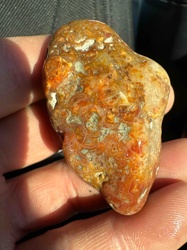
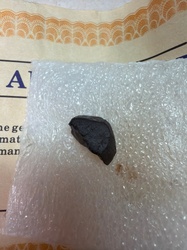
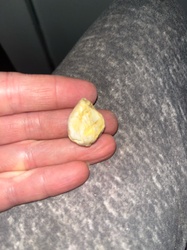
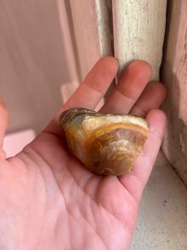
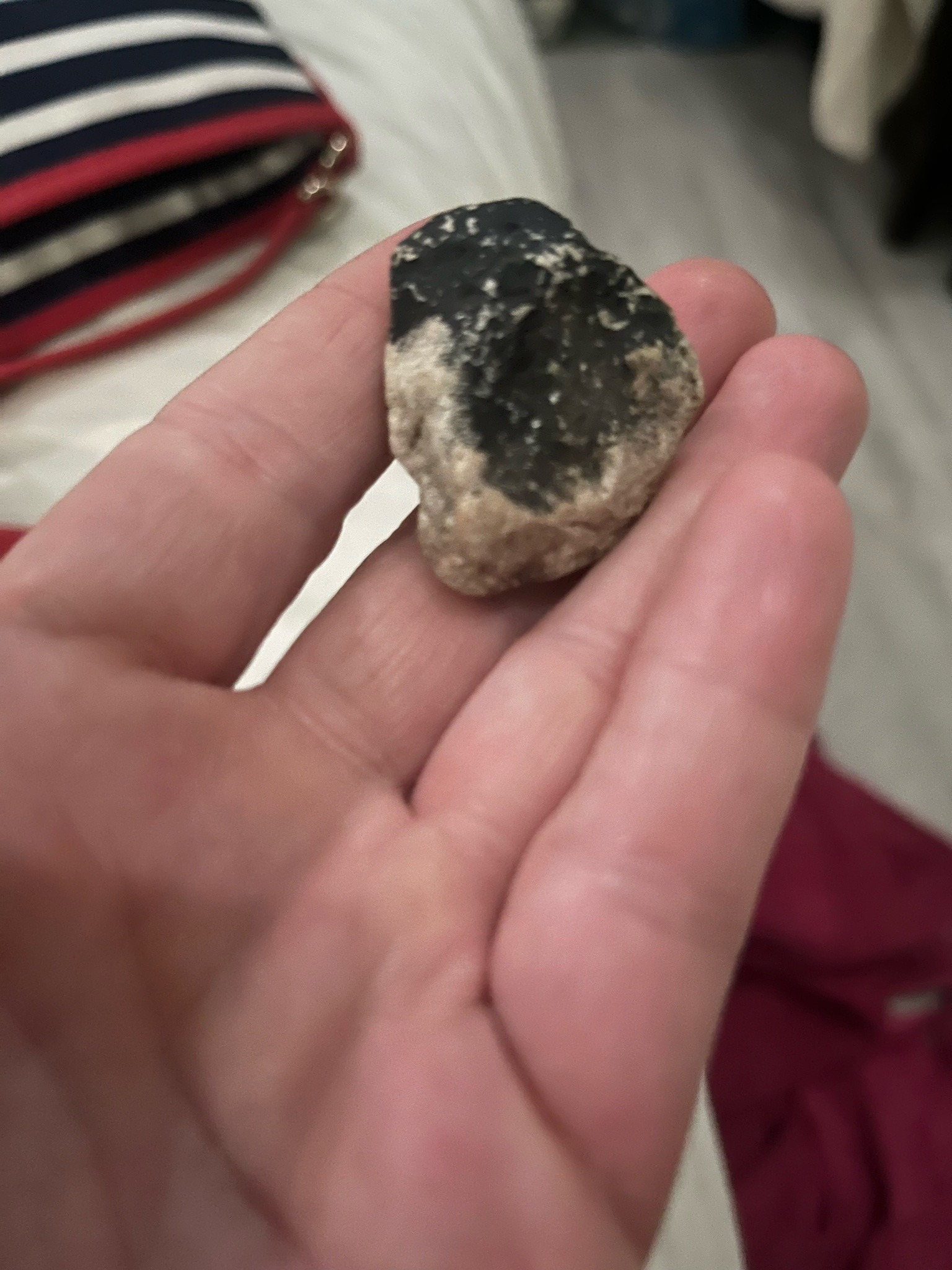
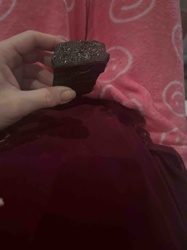
This item is a raw, naturally occurring mineral or rock specimen, approximately 2.5 to 3 centimeters in length, held in a person's hand for scale. The specimen displays a distinctive bicolor composition, featuring a dark, matte black upper portion and a contrasting light tan or off-white lower section. The black surface appears textured with fine, white speckles or crystalline inclusions, suggesting a porous or volcanic origin like basalt, or perhaps a charred residue. In contrast, the lighter base has a granular, sedimentary appearance, similar to sandstone or limestone. The overall shape is irregular and sub-angular, indicating it has undergone some degree of natural weathering or tumbling but retains sharp facets and a jagged interior cavity. There are no visible maker's marks, as this is a natural formation rather than a manufactured object. The condition is raw and unpolished, showing natural abrasions, surface pitting, and a lack of artificial coating. The interface between the dark and light materials is irregular, suggesting a geological process where two different mineral layers were bonded together or where a secondary material infiltrated a pre-existing stone matrix. Its age is geological, likely spanning thousands to millions of years depending on its precise mineralogical identification.
Estimated Value

$15 - $35

Basic Information

Category

Rocks, Fossils & Minerals

Appraised On

April 30, 2026

Estimated Value

$15 - $35

Item Description

This item is a raw, naturally occurring mineral or rock specimen, approximately 2.5 to 3 centimeters in length, held in a person's hand for scale. The specimen displays a distinctive bicolor composition, featuring a dark, matte black upper portion and a contrasting light tan or off-white lower section. The black surface appears textured with fine, white speckles or crystalline inclusions, suggesting a porous or volcanic origin like basalt, or perhaps a charred residue. In contrast, the lighter base has a granular, sedimentary appearance, similar to sandstone or limestone. The overall shape is irregular and sub-angular, indicating it has undergone some degree of natural weathering or tumbling but retains sharp facets and a jagged interior cavity. There are no visible maker's marks, as this is a natural formation rather than a manufactured object. The condition is raw and unpolished, showing natural abrasions, surface pitting, and a lack of artificial coating. The interface between the dark and light materials is irregular, suggesting a geological process where two different mineral layers were bonded together or where a secondary material infiltrated a pre-existing stone matrix. Its age is geological, likely spanning thousands to millions of years depending on its precise mineralogical identification.
Get Your Items Appraised

Instant estimates of your treasures with AI-powered instant appraisals

Browse More Appraisals