AI estimate as of September 12, 2025 · verify with a professional before acting
AI-Generated · Verify before acting
Everything on this page is generated by AI for informational purposes only. AI can make mistakes — the AI may misidentify items or misattribute them (artist, maker, brand, designer, origin, era). This is not an official valuation and should not be used for insurance, sale, tax, estate, legal, or lending purposes — or any decision requiring a certified appraisal. It is not an authoritative claim about any person, brand, or rights holder — do not share or rely on it as a factual statement about a third party. Always consult qualified professionals before making financial decisions.
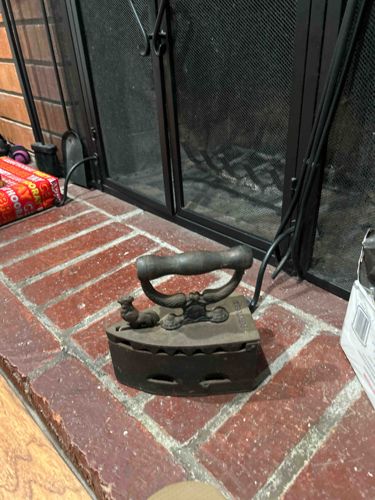
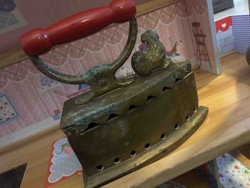
This is an antique cast iron flat iron, likely dating from the late 19th to early 20th century. It measures approximately 6-8 inches in length, with a common 'sad iron' or 'laundry iron' form, characterized by its solid, heavy construction. The primary material is cast iron, exhibiting a dark, almost black patina consistent with age and use. The handle is an inverted 'U' shape, also made of cast iron, with a carved or molded wooden grip across the top, which appears to be dark brown or blackened, possibly from grime or original staining. The top surface of the iron features decorative elements, most notably a small, detailed cast iron squirrel finial positioned near the front, adding a unique and whimsical touch. Other decorative elements include a scalloped or beaded edge along the top plate of the iron, encircling the base of the handle. There are visible markings on the top surface of the iron, near the handle's front support, though the specific text is illegible from the image; these would likely indicate the manufacturer or model. The base of the iron appears solid and smooth, designed for pressing clothes, although the very bottom surface is not visible. The overall condition shows signs of significant age and use, including a heavy, dark patina, some surface rust or pitting indicative of cast iron that hasn't been recently cleaned or polished. There are no obvious signs of major damage or repairs, and the craftsmanship appears robust and functional for its intended purpose. The presence of the squirrel finial suggests it might be a specific model or a collectible novelty iron, rather than a generic utility item.
AI Appraisal Report
Upon visual examination of the provided image, I assess this antique cast iron flat iron with a squirrel finial. Its authenticity as an antique cast iron 'sad iron' from the late 19th to early 20th century is highly probable given its form, material, and visible patina. The presence of a detailed squirrel finial and scalloped edging significantly elevates its appeal beyond a utilitarian item, categorizing it as a collectible novelty iron. The 'dark, almost black patina,' and 'some surface rust or pitting' are consistent with genuine age and use, not significant damage, suggesting it retains its original surface without aggressive cleaning. The wooden grip's condition appears stable, though its exact finish isn't clear.
Market conditions for antique flat irons are generally steady, with novelty or figural examples commanding higher prices than plain ones. Comparables for figural irons, especially those with animal motifs, can vary widely, but good condition and unique features like this squirrel are key value drivers. Demand for such specific collecting niches is modest but consistent, contributing to its rarity. The legible but unidentifiable markings are crucial; if they reveal a desirable manufacturer, the value could increase, but this can't be determined from the image.
My primary limitation in authenticity verification from an image alone is the inability to conduct a physical inspection. An in-person examination would allow for tactile assessment of the surface integrity, confirmation of the wooden handle's condition and attachment, and clearer identification of any maker's marks or patent numbers. Provenance documentation, such as original sales receipts or family history, would provide the highest level of authenticity. Scientific testing, like material analysis, is typically not warranted for items of this value unless forgery is suspected. Based on the visual evidence, I estimate its value to be in the range of $75 - $125.