AI estimate as of September 7, 2025 · verify with a professional before acting
AI-Generated · Verify before acting
Everything on this page is generated by AI for informational purposes only. AI can make mistakes — the AI may misidentify items or misattribute them (artist, maker, brand, designer, origin, era). This is not an official valuation and should not be used for insurance, sale, tax, estate, legal, or lending purposes — or any decision requiring a certified appraisal. It is not an authoritative claim about any person, brand, or rights holder — do not share or rely on it as a factual statement about a third party. Always consult qualified professionals before making financial decisions.
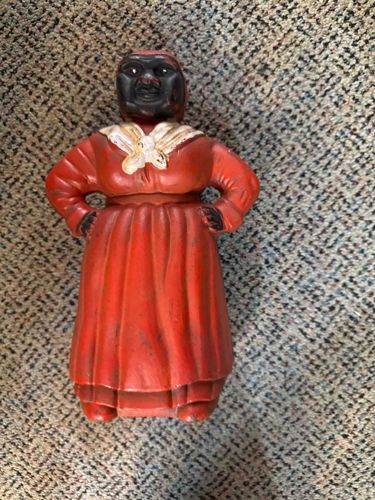
This item is a vintage cast iron doorstop, shaped in the caricature of a 'Mammy' figure. Standing upright, the figure is predominantly painted in a vibrant red for her dress, contrasting with a black-painted face and hands, and a white, possibly yellowed, kerchief or collar around her neck. Her head is also wrapped in a red headscarf. The figure's arms are akimbo, with hands on hips, suggesting a firm or assertive stance. The dress is long, reaching near the base, and features prominent vertical folds or pleats, giving it a somewhat voluminous appearance. The construction appears solid and weighty, consistent with cast iron, designed for stability to function as a doorstop. Visible condition issues include areas of paint loss and wear, particularly on the raised surfaces such as the nose, cheeks, and edges of the dress folds, revealing the darker metal beneath. This suggests an item that has been used over time, acquiring an age-appropriate patina. There are no discernible maker's marks or stamps visible in the image. Stylistically, this figure is characteristic of the early to mid-20th century, a period when such caricatures were common in household decorative items. The craftsmanship is utilitarian, focused on solid construction for its intended purpose rather than intricate detail. The portrayal is a racially stereotypical depiction, which was prevalent in American memorabilia during that era.
AI Appraisal Report
Based on my visual examination of the provided image, this vintage cast iron 'Mammy' figure doorstop appears to be authentic to the early to mid-20th century. The wear patterns, particularly the paint loss on raised surfaces such as the nose, cheeks, and dress folds, are consistent with an item of this age that has seen use, developing an age-appropriate patina. The red, black, and white (or yellowed) paint scheme is typical for such pieces.
From a market perspective, these stereotypical 'Mammy' figures, while historically significant as examples of American decorative arts from a specific era, face fluctuating demand. While popular with some collectors of Americana and cast iron, the racially charged nature of the caricature can limit broader appeal. Comparables for similar cast iron doorstops of this size and condition typically range from $100 to $300, depending on specific design and rarity. This particular piece, while utilitarian, doesn't present unique artistic or manufacturing characteristics that would elevate its value significantly above this range.
Factors impacting value include its good overall structural integrity despite paint loss, which is expected. Its rarity is moderate; while not a unique design, these pieces are not ubiquitous. The lack of visible maker's marks is common for doorstops of this period but prevents attribution to a specific, potentially more collectible, foundry.
It is crucial to note that this assessment is based solely on visual inspection of the image. A definitive authentication would require an in-person examination to assess the casting quality, the specific weight and feel of the iron, and the texture and layering of the paint. Provenance documentation, though unlikely for such a common item, would also strengthen its authenticity. Scientific testing, such as paint analysis, could confirm the age of the materials, but this is typically overkill for items in this price range.