AI Appraisal Estimate

AI-generated estimates · not official valuations

From the user

What was submitted

Photo and notes provided by the user — not generated by AI

Submitted item photo
Submitted photo · June 10, 2026

User's notes

Authentic Mata Ortiz, México pottery

AI analysis below

AI appraisal

AI analysis & estimate

AI-Generated · Verify before acting

Everything below is generated by AI for informational purposes only. AI can make mistakes — the AI may misidentify items or misattribute them (artist, maker, brand, designer, origin, era). This is not an official valuation and should not be used for insurance, sale, tax, estate, legal, or lending purposes — or any decision requiring a certified appraisal. It is not an authoritative claim about any person, brand, or rights holder — do not share or rely on it as a factual statement about a third party. Always consult qualified professionals before making financial decisions.

Note

This analysis also relies on unverified notes provided by the user, which may be incomplete or inaccurate and could affect the result.

Read the full disclaimer

AI Identification

·Not independently authenticated·Verify before acting

Polychrome Mata Ortiz Marbled Clay Olla

Native American & Mexican Folk Art / Ceramics

AI Estimated Value

·Not an official valuation·Verify before acting

$1,200 - $1,800

As of June 10, 2026

AI Item Analysis

·AI can make mistakes·Verify before acting
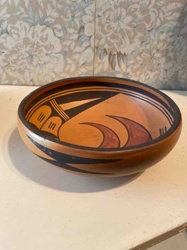
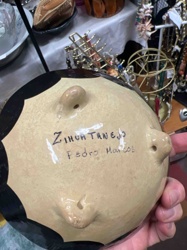
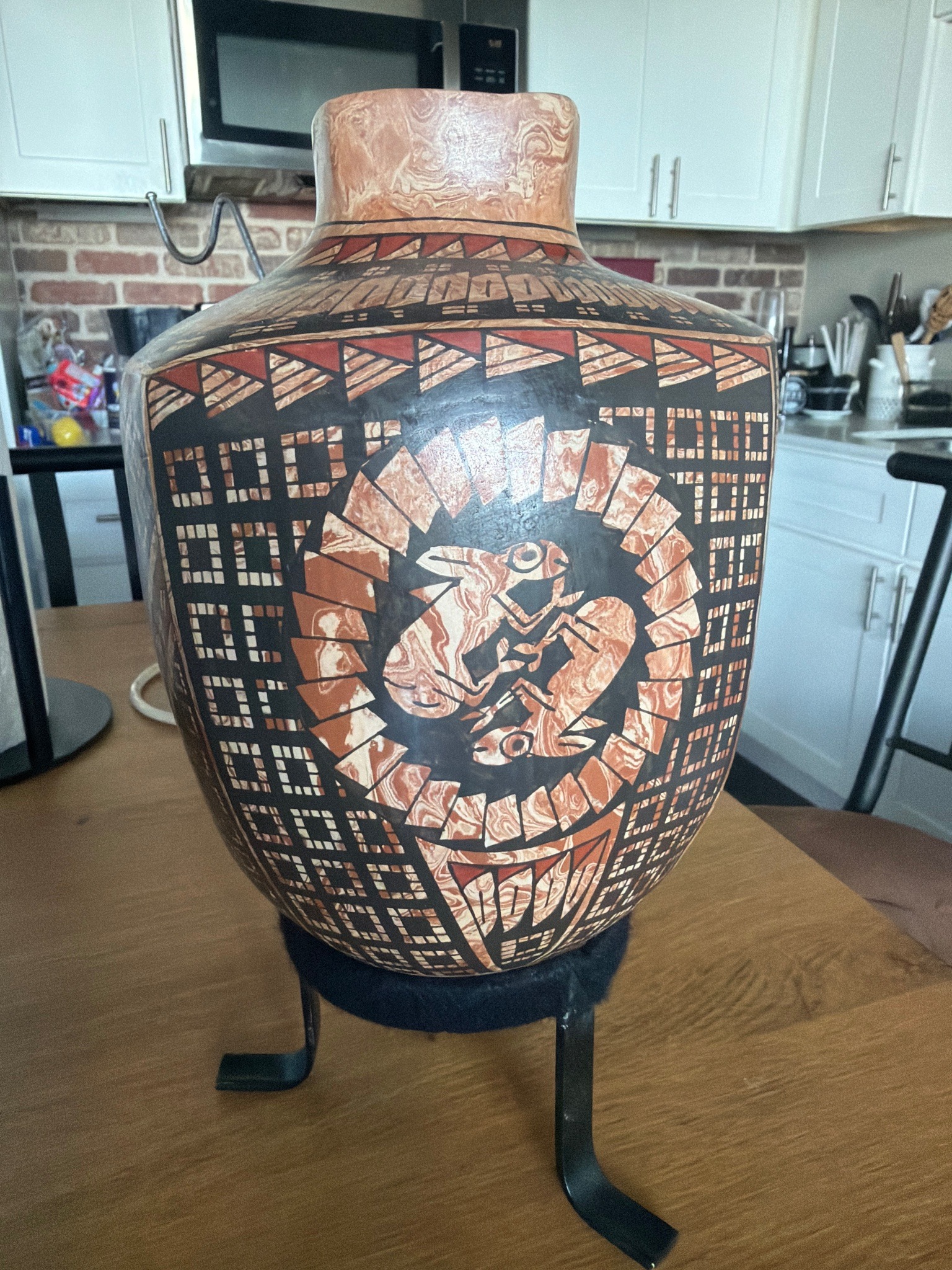
This is an authentic hand-coiled ceramic olla from Mata Ortiz, Chihuahua, Mexico. The vessel is notable for its use of marbled (marmolada) clay, which introduces a swirling, stone-like texture to the base material in hues of cream and sienna. The pot features a rounded body tapering toward a straight neck and flat rim. The exterior is meticulously hand-painted with traditional geometric and zoomorphic designs using natural mineral pigments. Central to the composition is a circular medallion containing abstract Paquimé-inspired figures, possibly stylized rabbits or birds, rendered in marbled clay against a dark black carbon-painted background. Surrounding this are intricate bandings of staggered triangles, checkered patterns, and step motifs that exhibit the high-precision linework characteristic of master potters like the Quezada or Ortiz families. The surface has been hand-burnished to a soft luster using a smooth stone. The construction is thin-walled and lightweight, indicative of superior craftsmanship. While the base is not visible to confirm a signature, the quality suggests a contemporary work (late 20th to early 21st century). The condition appears excellent with no visible cracks, chips, or significant paint loss; it is displayed on a custom three-legged wrought iron stand to protect the rounded base.
AI Appraisal Report

·AI can make mistakes·Verify before acting
I have carefully examined the provided images and documentation for this Mata Ortiz marbled clay olla. This vessel represents a sophisticated example of the 'Marmolada' technique, achieved through the skillful blending of local clays. The thin-walled construction and high-precision geometric linework—specifically the Paquimé-inspired avian/zoomorphic medallions—suggest the work of a highly skilled potter within the Juan Quezada or Ortiz lineage. The hand-burnished surface exhibits a soft luster, and the use of natural mineral pigments appears consistent with authentic Mata Ortiz traditions. The market for high-profile Mata Ortiz ceramics remains steady among collectors of Mexican Folk Art and Southwestern pottery. Comparable pieces by established artists featuring complex marbleized bodies and intricate carbon-black backgrounds frequently realize prices in the $1,200 to $2,000 range at specialty auctions. The inclusion of a custom tripod stand indicates the piece has been curated with care, preserving its structural integrity. However, there are limitations to this digital appraisal. While the quality is indicative of a masterwork, I cannot confirm the artist's signature or the presence of microscopic 'pop-outs' (mineral expansions during firing) without physical inspection. A full authentication would require an in-person examination of the base to verify the signature, tactile verification of wall thickness to ensure it was hand-coiled rather than mold-poured, and provenance documentation (e.g., purchase records from reputable galleries in Chihuahua or New Mexico). Condition is currently assessed as 'excellent' based on visual data, but a physical check for 'ring' or internal stress fractures would be necessary for a definitive valuation.

Get your items appraised

Instant estimates of your treasures with AI-powered appraisals

Browse More Appraisals