AI Appraisal Estimate

AI-generated estimates · not official valuations

From the user

What was submitted

Photo and notes provided by the user — not generated by AI

Submitted item photo
Submitted photo · June 10, 2026

User's notes

Authentic Mata Ortiz, México pottery

AI analysis below

AI appraisal

AI analysis & estimate

AI-Generated · Verify before acting

Everything below is generated by AI for informational purposes only. AI can make mistakes — the AI may misidentify items or misattribute them (artist, maker, brand, designer, origin, era). This is not an official valuation and should not be used for insurance, sale, tax, estate, legal, or lending purposes — or any decision requiring a certified appraisal. It is not an authoritative claim about any person, brand, or rights holder — do not share or rely on it as a factual statement about a third party. Always consult qualified professionals before making financial decisions.

Note

This analysis also relies on unverified notes provided by the user, which may be incomplete or inaccurate and could affect the result.

Read the full disclaimer

AI Identification

·Not independently authenticated·Verify before acting

Authentic Mata Ortiz Marbelized Polychrome Olla

Native American & Mexican Folk Art / Ceramics

AI Estimated Value

·Not an official valuation·Verify before acting

$450 - $700

As of June 10, 2026

AI Item Analysis

·AI can make mistakes·Verify before acting
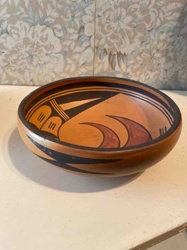
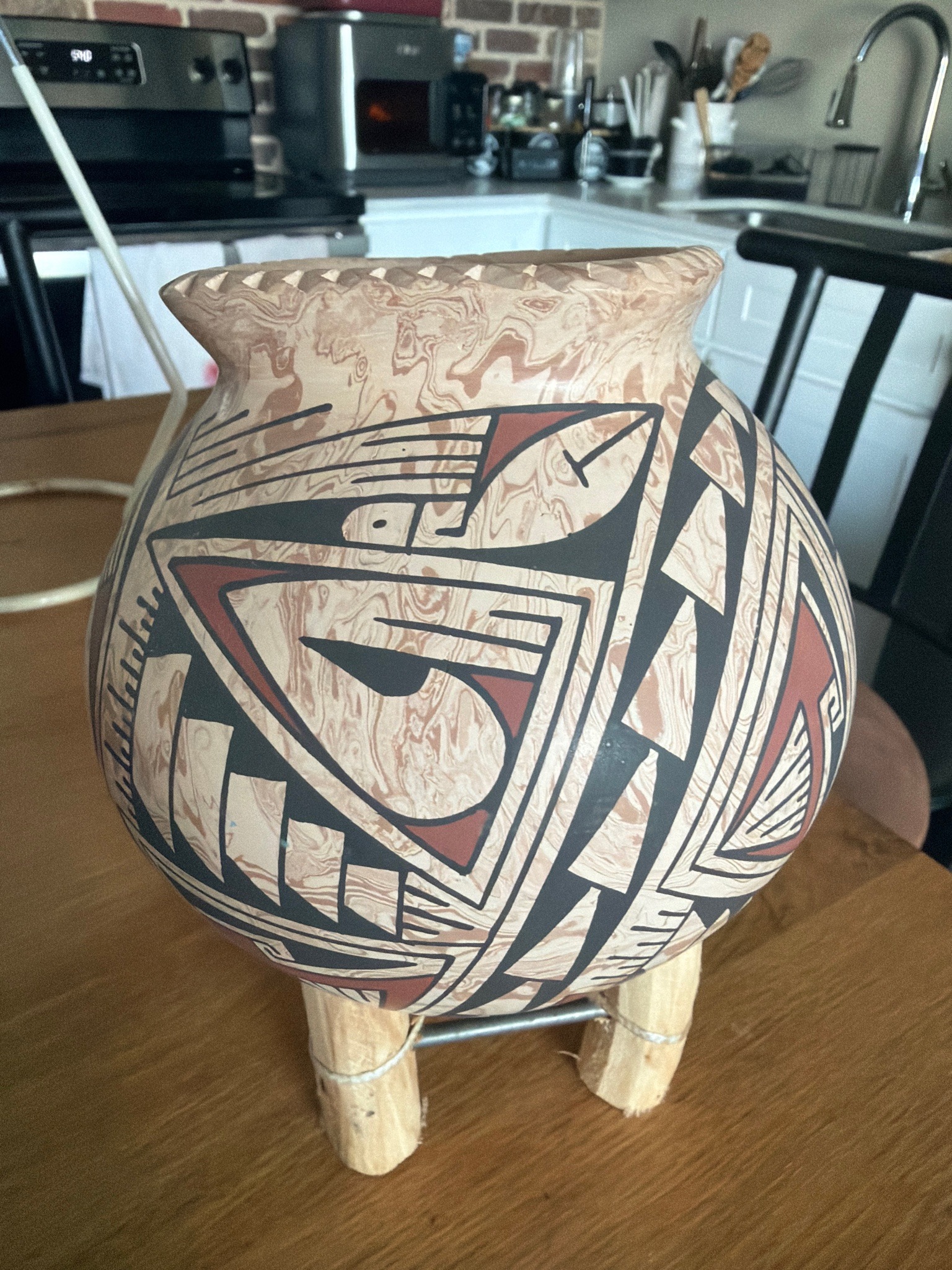
This is a hand-coiled Mata Ortiz pottery vessel (olla) from Chihuahua, Mexico, showcasing the distinctive 'marbelized' clay technique. The base material features a complex swirl of natural earth-toned clays, creating a wood-grain or marbled aesthetic. This background is meticulously hand-painted with traditional Paquimé-inspired geometric motifs (Casas Grandes style) using minerals-based pigments in matte black and terracotta red. Notable design elements include serrated edges along the flared rim, sharp angular line work, and intricate hatching patterns. The vessel exhibits a rounded, bulbous form with a tapered neck and scalloped lip. The craftsmanship reflects high-quality fine-line painting, likely executed with a brush made of human hair, characteristic of master potters from this region. The condition appears excellent with no visible cracks, chips, or significant fading, showing a smooth, stone-polished finish. Estimated to be a contemporary piece from the late 20th to early 21st century, it sits upon a primitive wooden tripod stand for display. This piece represents the modern revival of ancient Mogollon pottery traditions popularized by Juan Quezada.
AI Appraisal Report

·AI can make mistakes·Verify before acting
I have examined the provided images and descriptions of this Mata Ortiz marbled polychrome olla. The vessel demonstrates high technical proficiency, specifically in the difficult 'marmolado' (marbling) technique, which involves blending distinct clay bodies to create the wood-grain effect. The fine-line geometry, likely executed with hair brushes, and the stone-polished finish indicate a piece of superior craftsmanship from the Juan Quezada ceramic revival period (late 20th century to present). Based on visual analysis, the condition is excellent with no visible exfoliation, fire clouds, or structural chips, which significantly preserves its market value. Currently, the market for Mata Ortiz pottery is stable but selective. Comparative sales for high-quality marbled pieces of this size and detail range from $400 to $800, depending on the signature of the potter. While the piece displays all the hallmarks of authenticity—including the Paquimé-inspired motifs and natural mineral pigments—a definitive valuation is limited by the lack of a visible artist signature or provenance documentation in the photograph. To confirm a higher-tier valuation, an in-person inspection is required to check for structural integrity, resonance (tapping for internal cracks), and most importantly, the artist's signature on the base. Signatures from established families like the Ortiz, Quezada, or Ledezma lineages would push the value toward the higher end of the range. Full authentication would require verifying that indigenous minerals and traditional pit-firing methods were used rather than commercial kilns or synthetic paints. Without physical handling, this remains a visual estimate based on the aesthetic and technical merits displayed.

Get your items appraised

Instant estimates of your treasures with AI-powered appraisals

Browse More Appraisals