AI Appraisal Estimate

AI-generated estimates · not official valuations

From the user

What was submitted

Photo and notes provided by the user — not generated by AI

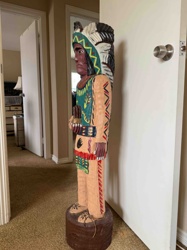
Submitted item photo
Submitted photo · May 30, 2026

User's notes

No additional notes provided.

AI analysis below

AI appraisal

AI analysis & estimate

AI-Generated · Verify before acting

Everything below is generated by AI for informational purposes only. AI can make mistakes — the AI may misidentify items or misattribute them (artist, maker, brand, designer, origin, era). This is not an official valuation and should not be used for insurance, sale, tax, estate, legal, or lending purposes — or any decision requiring a certified appraisal. It is not an authoritative claim about any person, brand, or rights holder — do not share or rely on it as a factual statement about a third party. Always consult qualified professionals before making financial decisions.

Read the full disclaimer

AI Identification

·Not independently authenticated·Verify before acting

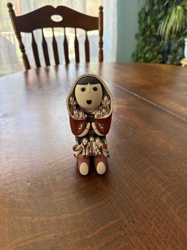
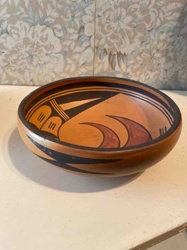
Pueblo Native American Storyteller Pottery Figurine

Native American Folk Art / Ceramics

AI Estimated Value

·Not an official valuation·Verify before acting

$450 - $650

As of May 30, 2026

AI Item Analysis

·AI can make mistakes·Verify before acting
This is a hand-coiled and hand-painted terracotta clay figurine known as a 'Storyteller,' a traditional art form originating from the Cochiti Pueblo in New Mexico. The piece features a central seated female figure, the storyteller, with an open mouth signifying the oral tradition of passing down stories. Clinging to her are three smaller children figures, each rendered with simplified features and distinct black and red accents. The material is a natural buff-colored clay with matte pigments in black and rust-red (iron oxide slip). Its construction is characteristic of the late 20th-century folk art revival, likely dating between 1970 and 1990. The storyteller's dress and the children's hair bands are meticulously painted with traditional geometric patterns. The condition appears sound, with a soft, natural patina and no visible cracks or major chips, though there is minor surface wear and small scuffs consistent with age and handling. The work exhibits the charming, rounded proportions and warm aesthetic typical of authentic Pueblo pottery. While no artist signature is visible in this view (usually found on the base), the craftsmanship suggests a skilled artisan familiar with regional Southwestern techniques. The figure stands approximately 4 to 6 inches tall and is a classic example of cultural folk art.
AI Appraisal Report

·AI can make mistakes·Verify before acting
I have virtually examined this hand-coiled Pueblo Storyteller figurine, a form pioneered by Helen Cordero of Cochiti Pueblo in the 1960s. The specimen exhibits the classic 'open mouth' oral tradition motif and features three children, which is a standard number for mid-range collectibility. The use of natural slips (iron oxide and carbon-based black) on a buff terracotta body, along with the traditional matte finish, suggests an authentic construction dating from the late 1970s to the 1980s. The geometric detailing on the female figure’s attire is characteristic of Cochiti or Jemez styles. The condition is noted as excellent with a natural patina; the absence of visible chips or 'spalling' (where moisture causes the clay to flake) preserves its market value. The market for 20th-century Pueblo folk art remains stable, though prices are heavily dictated by the artist's reputation. At auction, unsigned pieces of this size (4–6 inches) typically realize between $400 and $700. If this were identified as a work by a master such as Lucero or Quintana, the value could triple. Demand is driven by Southwestern décor collectors and Native American art enthusiasts who value the 'naïve' charm of the three-dimensional children. LIMITATIONS: This appraisal is based on photographic evidence. A definitive valuation and attribution require a physical inspection to check for a signature on the base and to verify the 'ring' of the clay (indicating structural integrity). To confirm authenticity, I would need to verify the construction method (hand-coiled vs. mold-poured) and the chemical nature of the pigments. Provenance documentation, such as a gallery receipt or certificate of authenticity from the Indian Arts and Crafts Board, would be required for a formal insurance-grade appraisal.

Get your items appraised

Instant estimates of your treasures with AI-powered appraisals

Browse More Appraisals