AI Appraisal Estimate

AI-generated estimates · not official valuations

From the user

What was submitted

Photo and notes provided by the user — not generated by AI

Submitted item photo
Submitted photo · June 18, 2026

User's notes

No additional notes provided.

AI analysis below

AI appraisal

AI analysis & estimate

AI-Generated · Verify before acting

Everything below is generated by AI for informational purposes only. AI can make mistakes — the AI may misidentify items or misattribute them (artist, maker, brand, designer, origin, era). This is not an official valuation and should not be used for insurance, sale, tax, estate, legal, or lending purposes — or any decision requiring a certified appraisal. It is not an authoritative claim about any person, brand, or rights holder — do not share or rely on it as a factual statement about a third party. Always consult qualified professionals before making financial decisions.

Read the full disclaimer

AI Identification

·Not independently authenticated·Verify before acting

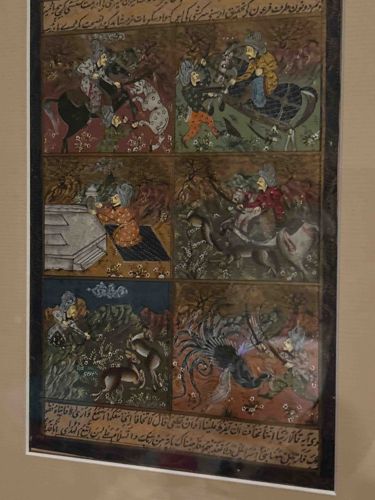
Persian Miniature Narrative Painting Folio

Fine Art / Middle Eastern Manuscripts

AI Estimated Value

·Not an official valuation·Verify before acting

$400 - $800

As of June 18, 2026

AI Item Analysis

·AI can make mistakes·Verify before acting
This item is an illuminated Persian miniature painting, likely a folio from a larger manuscript such as the Shahnameh or a similar epic poem. The work is divided into a grid of six distinct narrative panels framed by decorative borders. Each panel depicts stylized figures in traditional Persian attire, featuring themes of equestrian combat, courtly life, hunting, and mythical encounters including a prominent scene with a Simurgh or large phoenix-like bird. The medium consists of opaque watercolors (gouache) and potentially gold leaf on paper. The composition is flanked by bands of Nasta'liq calligraphy at the top and bottom, which provide the accompanying text for the illustrations. Physically, the piece shows signs of age consistent with a 17th to 19th-century origin, including some darkening of the pigments, minor surface abrasions, and a visible patina on the paper substrate. The craftsmanship displays the intricate detail characteristic of the Safavid or Qajar traditions, with vibrant earth tones, blues, and reds. The figures are rendered with the classic three-quarter view and stylized facial features typical of central Asian manuscript art. The condition appears stable within its protective mount, though there is some slight edge wear and minor pigment loss in the more heavily layered areas. The integration of text and image indicates it served as a didactic or narrative tool for the elite.

AI Appraisal Report

·AI can make mistakes·Verify before acting
Based on my visual examination of this Persian miniature folio, I believe it to be a later production piece, likely from the late 19th or early 20th century, possibly Qajar or Pahlavi era, rather than an older Safavid original. While the layout mimics classical manuscript tradition with Nasta'liq script and multi-panel narrative scenes including the Simurgh, the execution lacks the microscopic precision and refined pigment layering found in high-value royal workshop pieces. The grid-like composition of six distinct scenes on a single page is somewhat atypical for classical narrative flow, suggesting it may have been created for the tourist or export market rather than as part of a functioning royal library codex. The condition shows age-appropriate wear, including paper oxidation and minor pigment abrasion, which adds to its decorative appeal. The market for later decorative Persian miniatures is steady but distinct from the high-end antiquities market. Collectors appreciate these for their aesthetic value rather than historical significance. Similar decorative folios often sell in the mid-hundreds at auction. However, without physical inspection, I cannot rule out the possibility of modern synthetic pigments or modern paper artificially aged. To verify a higher value or earlier date (17th-18th century), I would require physical analysis of the paper pulp, pigment chemical testing, and examination of the ink's interaction with the paper fibers under high magnification. Provenance documentation linking it to a known collection would also significantly impact the appraisal.

Get your items appraised

Instant estimates of your treasures with AI-powered appraisals

Browse More Appraisals