AI Appraisal Estimate

AI-generated estimates · not official valuations

From the user

What was submitted

Photo and notes provided by the user — not generated by AI

Submitted item photo
Submitted photo · May 26, 2026

User's notes

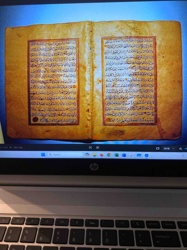
Leaf mogul period

AI analysis below

AI appraisal

AI analysis & estimate

AI-Generated · Verify before acting

Everything below is generated by AI for informational purposes only. AI can make mistakes — the AI may misidentify items or misattribute them (artist, maker, brand, designer, origin, era). This is not an official valuation and should not be used for insurance, sale, tax, estate, legal, or lending purposes — or any decision requiring a certified appraisal. It is not an authoritative claim about any person, brand, or rights holder — do not share or rely on it as a factual statement about a third party. Always consult qualified professionals before making financial decisions.

Note

This analysis also relies on unverified notes provided by the user, which may be incomplete or inaccurate and could affect the result.

Read the full disclaimer

AI Identification

·Not independently authenticated·Verify before acting

Calligraphic manuscript leaf in the Perso-Arabic Nasta'liq script style

Manuscripts and Calligraphy

AI Estimated Value

·Not an official valuation·Verify before acting

$400 - $800

As of May 26, 2026

AI Item Analysis

·AI can make mistakes·Verify before acting
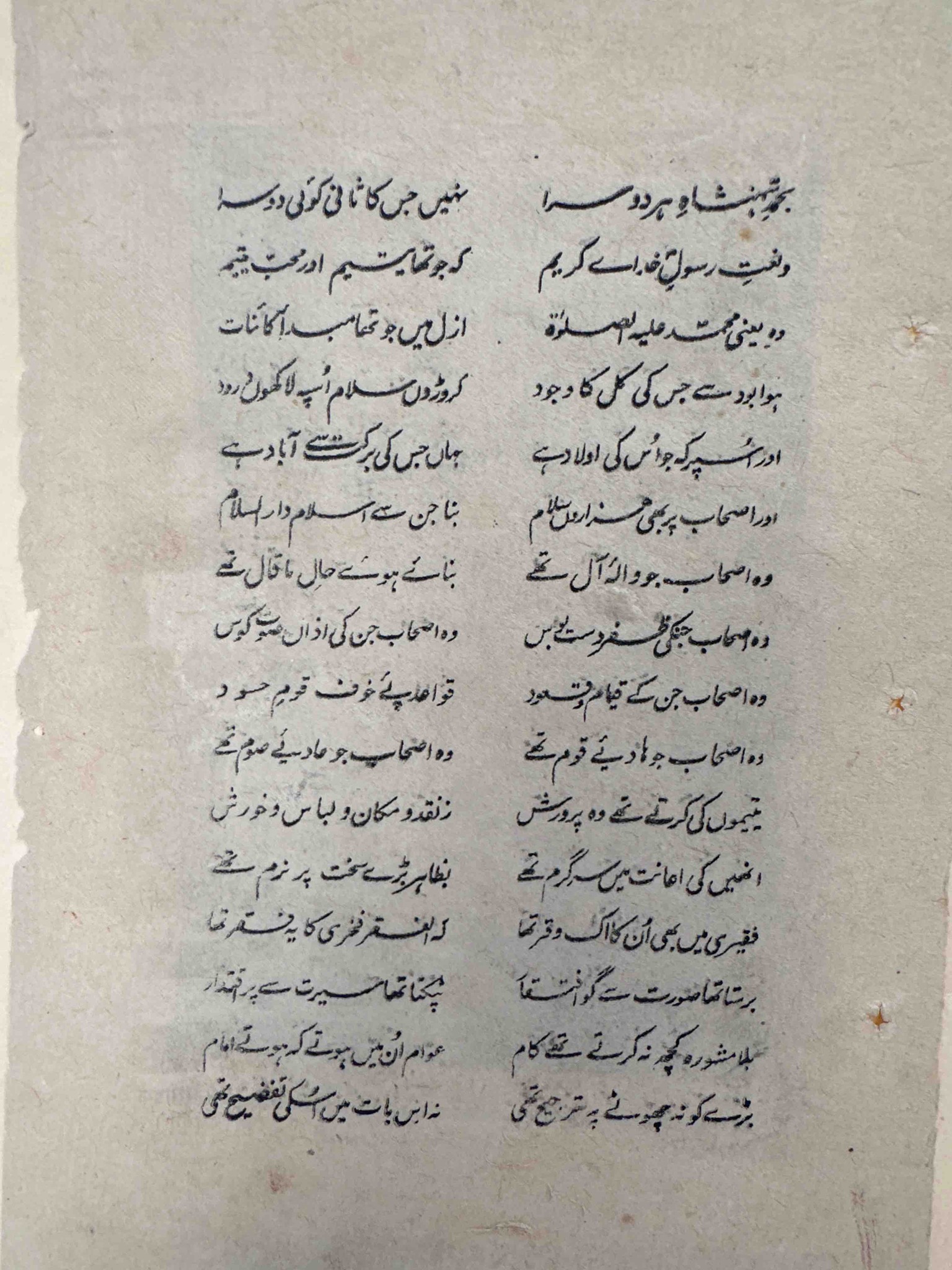
This item is a single manuscript leaf featuring calligraphic text in the Perso-Arabic Nasta'liq script, typically used for Persian, Urdu, and Ottoman Turkish literature. The text is arranged in two vertical columns (bayts), a layout stylistically consistent with poetic or devotional works. The calligraphy is executed in black ink on a light, cream-colored paper substrate that appears to be handmade, characterized by its fibrous texture and uneven edges. The user identifies this as a 'mogul period' leaf; while the script style and format are consistent with manuscript traditions from the Mughal era or later Indo-Persian school, this attribution remains unverified without physical analysis of the paper and ink composition. The paper shows physical characteristics consistent with age, including mild foxing (small brown spots), overall tonal yellowing, and minor fraying at the upper left perimeter. There are no visible maker's marks, seals, or signature colophons visible on this side of the leaf to definitively establish the scribe or a specific date of production. The quality of the fluid, sloping calligraphy indicates a practiced hand consistent with historical manuscript production techniques.

AI Appraisal Report

·AI can make mistakes·Verify before acting
I have examined the digital image of the calligraphic manuscript leaf, which features Nasta'liq script arranged in dual columns. Per user submission, the item is identified as a 'mogul period' leaf. Based on what I can see, the fluid script and paper texture are consistent with Indo-Persian manuscript traditions typically associated with the 17th to 19th centuries; however, I cannot verify the specific era or origin from a photograph alone. Determination of age requires physical inspection of the paper's fiber composition and ink acidity. The presence of foxing and frayed edges suggests natural aging, but these characteristics and the script style could also be found in later 19th or early 20th-century 'in the style of' copies. The estimated value of $400 - $800 assumes the hypothesis of a Mughal-era production is correct and reflects current market demand for individual leaves of high calligraphic quality. Should the piece be a more recent reproduction or a common 19th-century provincial work, the value would likely decrease to the $50 - $150 range. To confirm the origin and date, an in-person examination by a specialist in Islamic Paleography and scientific testing of the substrate would be necessary. The lack of a visible colophon or seal on this side of the leaf means the specific scribe remains unattributed. General market interest in Persianate calligraphy remains steady, though individual leaves without illumination or known provenance generally occupy the mid-tier market for collectors of Islamic art.

Get your items appraised

Instant estimates of your treasures with AI-powered appraisals

Browse More Appraisals