AI Appraisal Estimate

AI-generated estimates · not official valuations

From the user

What was submitted

Photo and notes provided by the user — not generated by AI

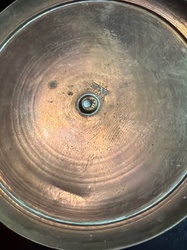
Submitted item photo
Submitted photo · June 15, 2026

User's notes

No additional notes provided.

AI analysis below

AI appraisal

AI analysis & estimate

AI-Generated · Verify before acting

Everything below is generated by AI for informational purposes only. AI can make mistakes — the AI may misidentify items or misattribute them (artist, maker, brand, designer, origin, era). This is not an official valuation and should not be used for insurance, sale, tax, estate, legal, or lending purposes — or any decision requiring a certified appraisal. It is not an authoritative claim about any person, brand, or rights holder — do not share or rely on it as a factual statement about a third party. Always consult qualified professionals before making financial decisions.

Read the full disclaimer

AI Identification

·Not independently authenticated·Verify before acting

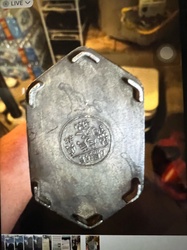
Hand-Engraved Middle Eastern Tinned Copper Tray

Antiques / Metalware

AI Estimated Value

·Not an official valuation·Verify before acting

$450 - $650

As of June 15, 2026

AI Item Analysis

·AI can make mistakes·Verify before acting
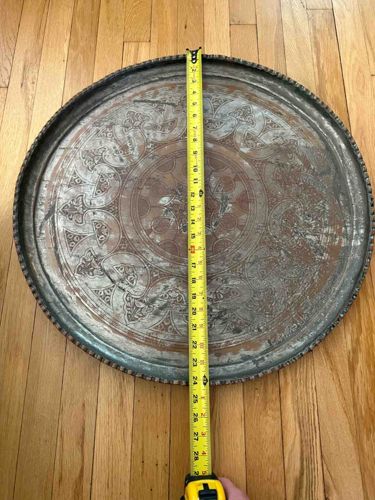
This is a significant, circular decorative tray measuring approximately 24 inches in diameter across the inner basin, with an overall width of roughly 25 inches including the rim. The item is constructed from heavy-gauge copper that has been traditionally coated with tin, an Islamic craftsman technique used to create a silver-colored finish and protect the food surface. The central medallion features a highly detailed star or floral geometric motif, surrounded by wide concentric bands of intricate hand-etched calligraphy and repeating arabesque patterns. The raised border is finished with a 'pie-crust' or scalloped rim, providing structural rigidity and aesthetic detail. Notable condition issues include substantial wear to the tinned surface, where the underlying reddish-orange copper is visible through heavy patination and oxidation. This creates a weathered, variegated appearance common in antique pieces. There is visible surface scuffing, minor indentations throughout the basin, and darkened oxidation spots, indicating ages of utility and display. The style is indicative of Persian or Ottoman craftsmanship from the late 19th to early 20th century. The quality is marked by the precision of the manual chasing and engraving rather than machine stamping, suggesting a skilled artisan's hand.
AI Appraisal Report

·AI can make mistakes·Verify before acting
This late 19th to early 20th-century Middle Eastern tinned copper tray, likely of Persian or Ottoman origin, displays the distinctive characteristics of skilled manual chasing. Upon visual inspection, the complex geometric central medallion and concentric bands of calligraphic script indicate a high level of craftsmanship. The 25-inch scale is desirable for collectors seeking significant statement pieces. The physical condition reflects its age and utility; the significant 'copper-show-through' where the tinning has worn away is a double-edged sword: while it confirms the authentic materials and traditional manufacturing process, the heavy oxidation and surface scuffing detract from a 'mint' valuation. The market for Islamic metalware remains steady, with prices driven by the complexity of the engraving and the physical size. Comparable pieces of this diameter and age typically fetch mid-range prices at specialty auctions. The 'pie-crust' rim and heavy-gauge construction suggest this was a high-quality domestic object rather than a lightweight tourist souvenir. Valuation is limited by the digital format; a physical inspection is required to confirm the presence of an artisan's signature (tamga), which could significantly increase value. Furthermore, in-person analysis under magnification would be necessary to rule out modern acid-etching techniques and confirm the presence of genuine tool marks from a chisel and hammer. Provenance documentation or a bill of sale from a reputable estate would be required for a definitive authentication for insurance purposes.

Get your items appraised

Instant estimates of your treasures with AI-powered appraisals

Browse More Appraisals