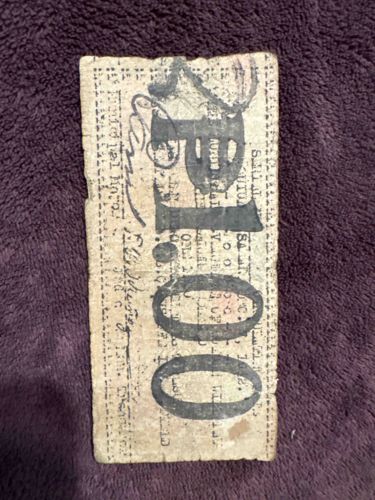
Emergency Currency Note for 100 Pesetas (Consell Municipal d'Olot)
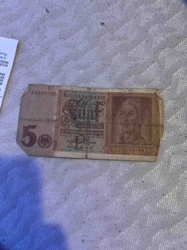
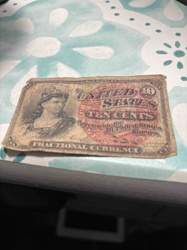
This item is an example of local emergency paper currency, likely issued during the Spanish Civil War era (circa 1937) by the Consell Municipal d'Olot. The note is rectangular, printed on a coarse, off-white or yellowish paper stock that shows significant signs of age and handling. The most prominent feature is a large, black overprint of the numeral '100' positioned vertically across the face. Behind this overprint, fine typography is visible, representing the original municipal bond or note text, which includes Catalan script. The left edge appears roughly cut or perforated, suggesting it was part of a larger sheet or booklet. The condition is heavily circulated, characterized by rounded corners, frayed edges with small nicks, and significant staining or foxing throughout the paper's surface. A dark, circular smudge or stamp is visible near the center. The reverse side is not shown, but typically such notes might feature signatures or secondary stamps to validate their authenticity during a period of extreme economic instability. The craftsmanship reflects the functional, hurried production of wartime necessity rather than high-security banknote printing, with simple black ink on basic paper.
AI-Generated Appraisal Disclaimer
Estimated Value
$65.00 - $95.00
Basic Information
Category
Numismatics - Historical Currency
Appraised On
December 31, 2025
Estimated Value
$65.00 - $95.00
Item Description
This item is an example of local emergency paper currency, likely issued during the Spanish Civil War era (circa 1937) by the Consell Municipal d'Olot. The note is rectangular, printed on a coarse, off-white or yellowish paper stock that shows significant signs of age and handling. The most prominent feature is a large, black overprint of the numeral '100' positioned vertically across the face. Behind this overprint, fine typography is visible, representing the original municipal bond or note text, which includes Catalan script. The left edge appears roughly cut or perforated, suggesting it was part of a larger sheet or booklet. The condition is heavily circulated, characterized by rounded corners, frayed edges with small nicks, and significant staining or foxing throughout the paper's surface. A dark, circular smudge or stamp is visible near the center. The reverse side is not shown, but typically such notes might feature signatures or secondary stamps to validate their authenticity during a period of extreme economic instability. The craftsmanship reflects the functional, hurried production of wartime necessity rather than high-security banknote printing, with simple black ink on basic paper.
Get Your Items Appraised
Instant estimates of your treasures with AI-powered instant appraisals