AI Appraisal Estimate

AI-generated estimates · not official valuations

From the user

What was submitted

Photo and notes provided by the user — not generated by AI

Submitted item photo
Submitted photo · May 27, 2026

User's notes

No additional notes provided.

AI analysis below

AI appraisal

AI analysis & estimate

AI-Generated · Verify before acting

Everything below is generated by AI for informational purposes only. AI can make mistakes — the AI may misidentify items or misattribute them (artist, maker, brand, designer, origin, era). This is not an official valuation and should not be used for insurance, sale, tax, estate, legal, or lending purposes — or any decision requiring a certified appraisal. It is not an authoritative claim about any person, brand, or rights holder — do not share or rely on it as a factual statement about a third party. Always consult qualified professionals before making financial decisions.

Read the full disclaimer

AI Identification

·Not independently authenticated·Verify before acting

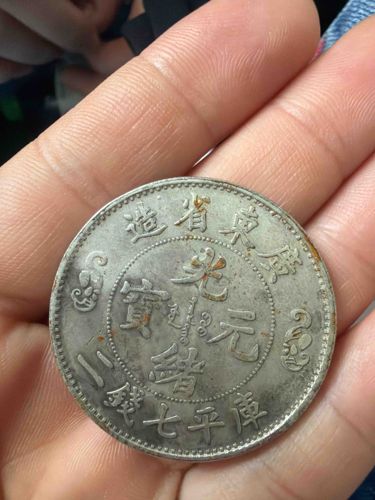
Guangxu Yuanbao Silver 7 Mace and 2 Candareens Coin - Kwangtung Province

Numismatics / Historical Currency

AI Estimated Value

·Not an official valuation·Verify before acting

$40 - $120

As of May 27, 2026

AI Item Analysis

·AI can make mistakes·Verify before acting
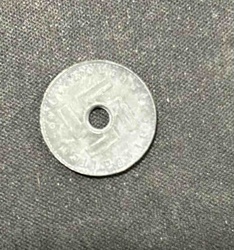
This is a Chinese silver dollar (Dragon Dollar) from the late Qing Dynasty, specifically minted in Kwangtung (Guangdong) Province. The coin features four large Chinese characters in the center reading 'Guangxu Yuanbao,' indicating it was minted during the reign of the Guangxu Emperor (1875–1908). Smaller Manchu script characters are located at the very center. The upper perimeter contains Chinese characters denoting 'Made in Kwangtung Province,' while the lower perimeter states the weight/denomination: '7 Mace and 2 Candareens.' Physically, the coin appears to be made of a silver-colored metal; however, the presence of distinct reddish-brown rust spots on the surface and edges is highly unusual for 90% silver and may suggest a non-precious metal core with silver plating. The strike shows signs of significant wear, with softened details in the calligraphy and a slightly uneven rim. The overall patina is a dull grey with visible surface scratches and minor pitting, which are common in circulated examples. Authentic strikes from this period are known for their high craftsmanship and became the standard for Chinese imperial coinage. The condition of this specific piece shows moderate circulation wear and potential environmental surface damage, or it may be a contemporary or later numismatic reproduction.
AI Appraisal Report

·AI can make mistakes·Verify before acting
Upon visual examination of this Kwangtung Province 'Guangxu Yuanbao' 7 Mace 2 Candareens coin, I have noted several significant flags regarding its authenticity and condition. While these Dragon Dollars are highly sought after by collectors, this specific piece exhibits 'reddish-brown rust spots' which are inconsistent with the metallurgical properties of a genuine 90% silver specimen. Authentic imperial silver develops a dark grey or iridescent patina, but never iron-oxide style rusting, which strongly indicates a base-metal core (likely copper or steel) with silver plating. Furthermore, the strike lacks the crispness associated with the Kwangtung Mint; the calligraphy appears 'mushy' and the rim denticles are uneven. The current market for genuine, certified Dragon Dollars is robust, with high-grade Kwangtung specimens often fetching several thousand dollars. However, the presence of oxidation suggesting a counterfeit or contemporary forgery drastically reduces marketability to 'reproduction' status. Factors such as the visible surface scratches and pitting further suggest a lower-quality casting or a rough environmental history. Note that a definitive determination of authenticity cannot be made solely through images. To provide a final certification, I would require an in-person examination to verify the weight (standard being 26.7 grams), a magnetic test to check for a ferrous core, and an X-Ray Fluorescence (XRF) test to determine exact metal composition. Provenance documentation or previous grading by a reputable service like PCGS or NGC would also be necessary to move this valuation beyond the 'numismatic curiosity' range.

Get your items appraised

Instant estimates of your treasures with AI-powered appraisals

Browse More Appraisals