AI Appraisal Estimate

AI-generated estimates · not official valuations

From the user

What was submitted

Photo and notes provided by the user — not generated by AI

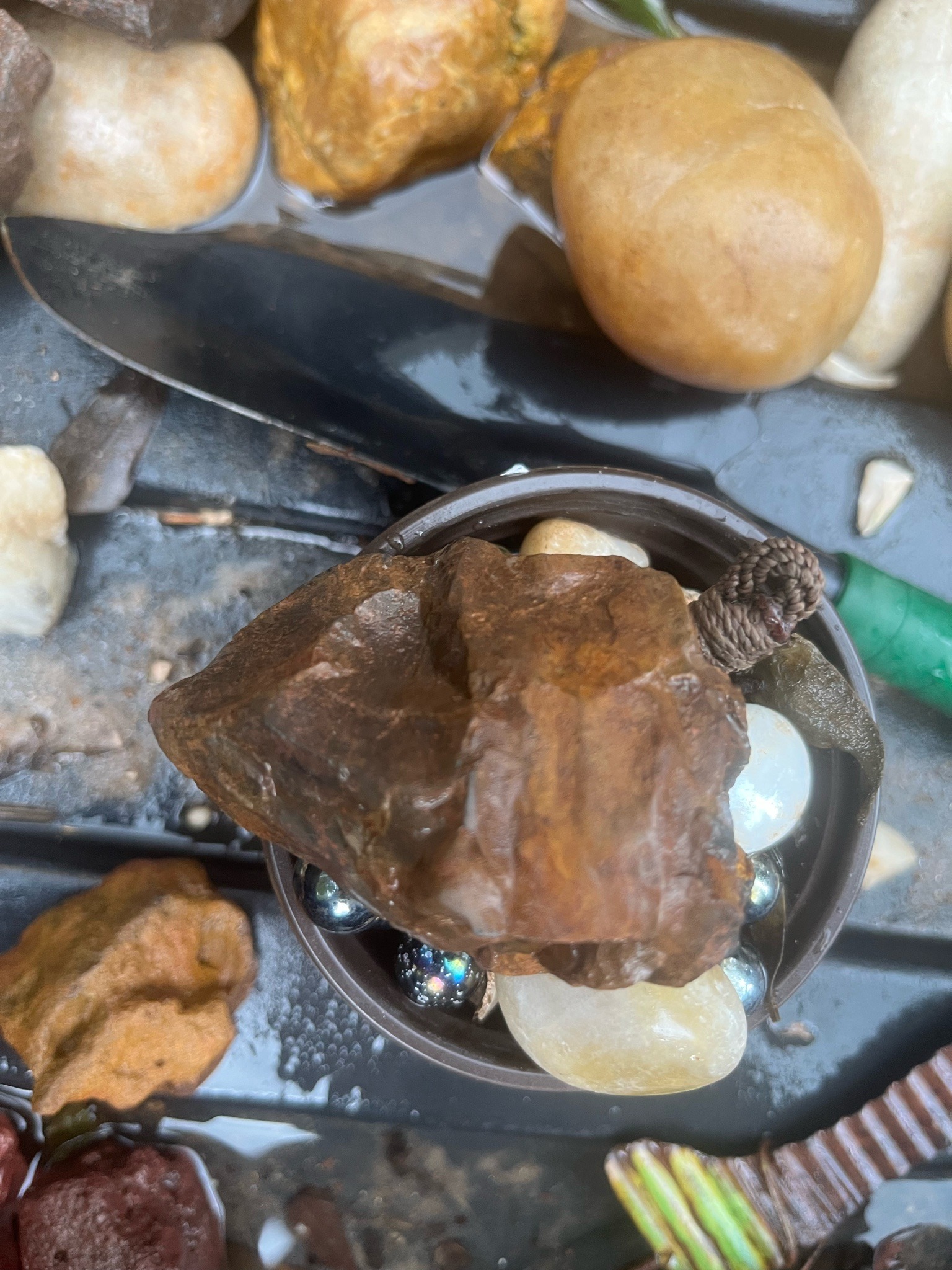
Submitted item photo
Submitted photo · June 18, 2026

User's notes

No additional notes provided.

AI analysis below

AI appraisal

AI analysis & estimate

AI-Generated · Verify before acting

Everything below is generated by AI for informational purposes only. AI can make mistakes — the AI may misidentify items or misattribute them (artist, maker, brand, designer, origin, era). This is not an official valuation and should not be used for insurance, sale, tax, estate, legal, or lending purposes — or any decision requiring a certified appraisal. It is not an authoritative claim about any person, brand, or rights holder — do not share or rely on it as a factual statement about a third party. Always consult qualified professionals before making financial decisions.

Read the full disclaimer

AI Identification

·Not independently authenticated·Verify before acting

Worked Lithic Point or Scraper in the Manner of a Prehistoric Stone Tool

Archaeological & Geological Artifacts

AI Estimated Value

·Not an official valuation·Verify before acting

$40-$125

As of June 18, 2026

AI Item Analysis

·AI can make mistakes·Verify before acting
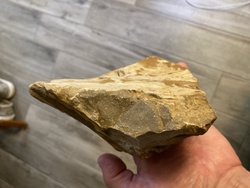
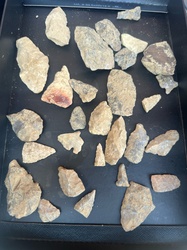
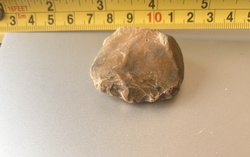
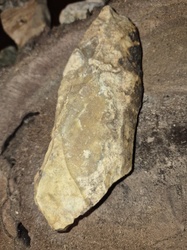
The center of the image features a reddish-brown, roughly triangular stone object that appears to possess characteristics consistent with a lithic tool, such as a large projectile point or scraping implement. The item displays irregular flaking patterns across its surface and edges, which may suggest anthropogenic reduction or 'knapping,' though these could also be the result of natural geological fracturing and weathering. It is resting atop white river stones and small metallic spheres within a circular container. The material is likely a form of chert, jasper, or ferruginous quartzite, common in the production of stone tools. There are no visible maker's marks, signatures, or inscriptions. The piece is approximately three to four inches in length based on proximity to surrounding objects like the garden trowel. While its appearance is stylistically consistent with Neolithic or Archaic period artifacts, a definitive age cannot be established from the photo as its provenance is unverified and tools of this style were manufactured for millennia and are also produced by modern flintknappers. The surface shows a wet patina, making it difficult to assess fine detail or wear patterns that would differentiate ancient use-wear from modern production or natural abrasion.
AI Appraisal Report

·AI can make mistakes·Verify before acting
Based on my visual examination of the stone object, it displays morphology consistent with a lithic tool, such as a scraper or projectile point. The reddish-brown material appears to be a ferruginous stone like jasper or chert, showing flaking patterns that suggest anthropogenic reduction. However, I cannot determine from the photo if these features result from prehistoric knapping, modern replication, or natural geological processes. The wet appearance of the stone obscures fine details such as hinge fractures or microscopic use-wear that would be vital for dating. This estimate assumes the item is potentially an Archaic or Neolithic period artifact. In the current market, lithic objects without verified provenance or professional archaeological context typically occupy a lower price bracket, as they are often traded as 'found objects' or study pieces. Should the item be identified as a modern flintknapped reproduction or a naturally fractured stone, its value would likely drop to a decorative or nominal amount under $20. Conversely, if documentation provided a clear chain of custody to a specific archaeological site or culture, the value could exceed the current range. To arrive at a more precise valuation, a physical inspection by a lithics specialist is necessary to assess the patina and edge-wear under magnification. Scientific testing, such as hydration analysis or microscopic residue study, along with provenance documentation, would be required to shift this from a hypothesis to a more supported attribution. The current valuation reflects the speculative nature of an unprovenanced, water-saturated find in the style of prehistoric stone tools within a general collector market.

Get your items appraised

Instant estimates of your treasures with AI-powered appraisals

Browse More Appraisals