AI Appraisal Estimate

AI-generated estimates · not official valuations

From the user

What was submitted

Photo and notes provided by the user — not generated by AI

Submitted item photo
Submitted photo · June 14, 2026

User's notes

No additional notes provided.

AI analysis below

AI appraisal

AI analysis & estimate

AI-Generated · Verify before acting

Everything below is generated by AI for informational purposes only. AI can make mistakes — the AI may misidentify items or misattribute them (artist, maker, brand, designer, origin, era). This is not an official valuation and should not be used for insurance, sale, tax, estate, legal, or lending purposes — or any decision requiring a certified appraisal. It is not an authoritative claim about any person, brand, or rights holder — do not share or rely on it as a factual statement about a third party. Always consult qualified professionals before making financial decisions.

Read the full disclaimer

AI Identification

·Not independently authenticated·Verify before acting

Worked Lithic Artifact or Polished Stone Tool

Archaeological & Geological Objects

AI Estimated Value

·Not an official valuation·Verify before acting

$15 - $45

As of June 14, 2026

AI Item Analysis

·AI can make mistakes·Verify before acting
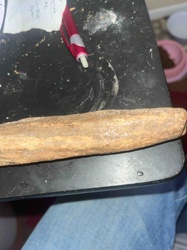
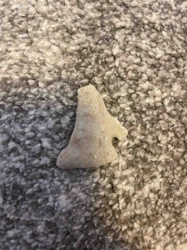
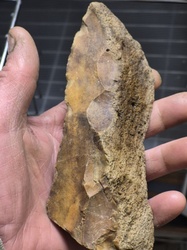
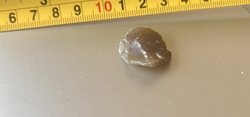
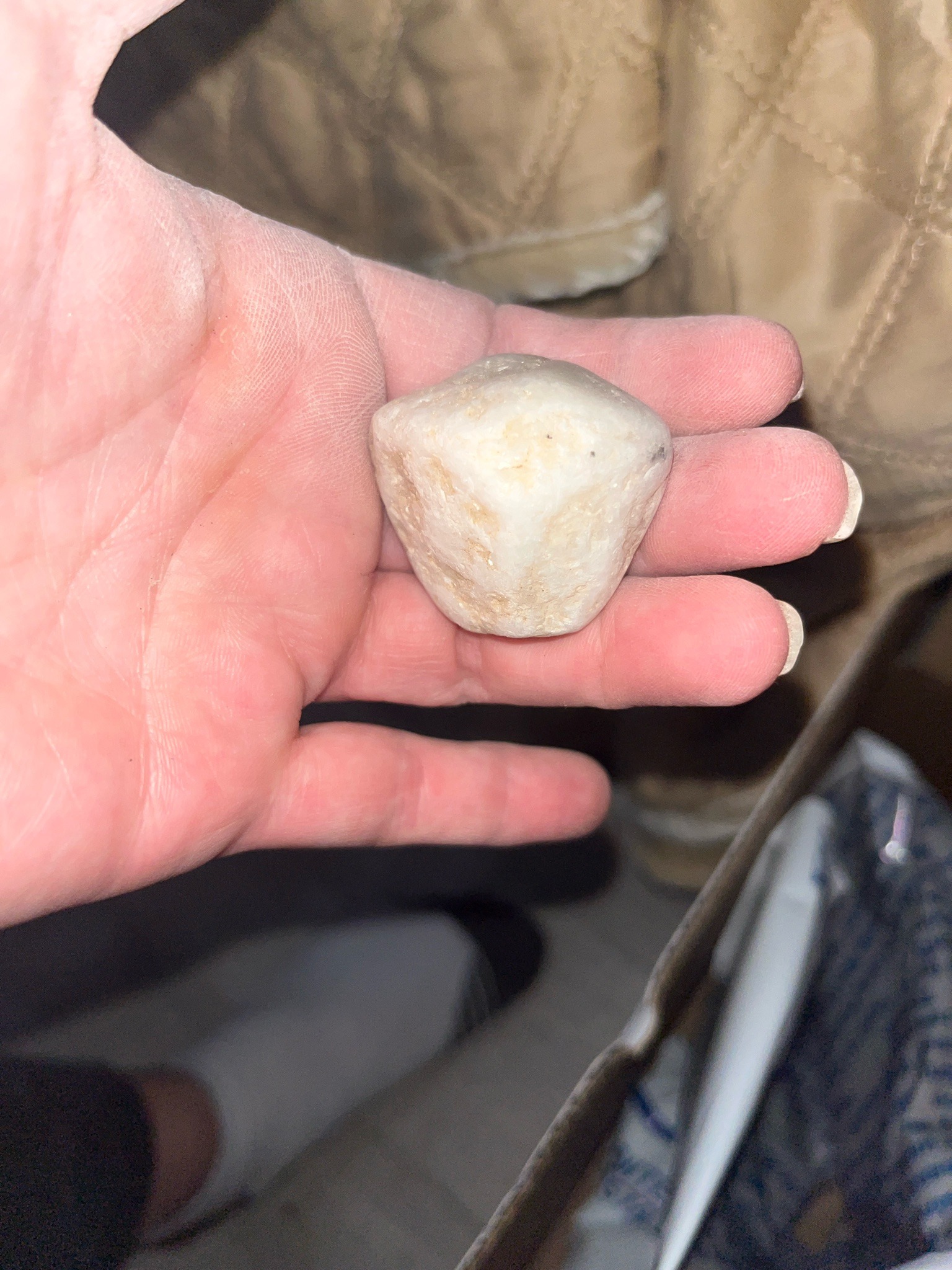
This object appears to be a small stone typically consistent with prehistoric or indigenous lithic artifacts, possibly a net weight, gaming stone, or polishing tool. It measures approximately two inches in width based on its scale within the palm of a hand. The material is a light-colored, cream-to-off-white stone, stylistically consistent with quartz, quartzite, or a similar hard mineral. It features a roughly pentagonal or pyramidal form with rounded edges, suggesting it may have been intentionally shaped or weathered through use. The surface exhibits a matte finish with visible pitting, iron staining (yellowish-brown patches), and small black inclusions. There are no maker's marks, signatures, or inscriptions present on the visible surfaces. The item shows signs of significant age-related wear, including blunted corners and surface abrasions, though it is difficult to determine if these originated from intentional knapping, river tumbling, or agricultural wear without a physical inspection. Because there are no cultural markings, its identification as a specific artifact remain a hypothesis based on its morphology; it could also be a naturally occurring geofact or floor-polished stone. In-person verification by an archaeologist would be required to establish a cultural origin or era.
AI Appraisal Report

·AI can make mistakes·Verify before acting
Based on the provided imagery, I have examined this small lithic object, which I am treating as a hypothesized prehistoric stone tool or net weight. The off-white material suggests a quartzite or quartz composition, and the rounded, pentagonal morphology suggests intentional shaping, though I cannot verify from a photo whether this is an anthropogenic artifact or a naturally occurring geofact (a stone shaped by geological processes). The surface pitting and iron staining are consistent with long-term environmental exposure, but a physical inspection by an archaeologist would be required to determine if the edge wear results from intentional knapping or river tumbling. My value estimate is based on the assumption that this is a generic indigenous lithic find without an established archaeological site context or specific cultural provenance. In the current market, such items are frequently traded as curiosities or educational specimens. Generally, pieces of this type without documented find-site history or professional authentication command modest prices; if confirmed to be a natural geofact, the value would be negligible ($1-$5). Conversely, if the piece were authenticated as a specific cultural tool (e.g., a plummet or gaming stone) from a notable archaeological horizon, the value could increase toward the higher end of the range. To refine this estimate, one would need an in-person examination to look for microscopic 'use-wear' patterns and documentation regarding the location of discovery. At present, the value reflects its status as an unattributed lithic object with significant morphological ambiguity.

Get your items appraised

Instant estimates of your treasures with AI-powered appraisals

Browse More Appraisals