AI Appraisal Estimate

AI-generated estimates · not official valuations

From the user

What was submitted

Photo and notes provided by the user — not generated by AI

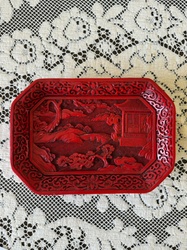
Submitted item photo
Submitted photo · June 20, 2026

User's notes

No additional notes provided.

AI analysis below

AI appraisal

AI analysis & estimate

AI-Generated · Verify before acting

Everything below is generated by AI for informational purposes only. AI can make mistakes — the AI may misidentify items or misattribute them (artist, maker, brand, designer, origin, era). This is not an official valuation and should not be used for insurance, sale, tax, estate, legal, or lending purposes — or any decision requiring a certified appraisal. It is not an authoritative claim about any person, brand, or rights holder — do not share or rely on it as a factual statement about a third party. Always consult qualified professionals before making financial decisions.

Read the full disclaimer

AI Identification

·Not independently authenticated·Verify before acting

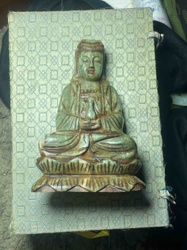
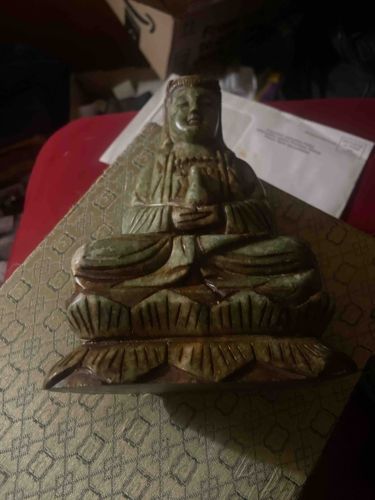
Carved Green Soapstone Guanyin Figure

Asian Art and Antiques

AI Estimated Value

·Not an official valuation·Verify before acting

$150 - $250

As of June 20, 2026

AI Item Analysis

·AI can make mistakes·Verify before acting
This is a hand-carved decorative figurine depicting Guanyin, the Bodhisattva of Compassion, seated in a meditative dhyana posture atop a double lotus throne. The piece is crafted from a mottled green stone, likely soapstone or a similar soft soapstone-derived steatite, characterized by its distinctive waxy luster and varied coloration ranging from pale sage to deep forest green with brownish-grey inclusions. The figure is shown holding a traditional vessel, possibly a sacred vase, in her lap. Physically, the carving measures approximately 5 to 7 inches in height and features traditional flowing robes with stylized linear folds. The lotus base is carved with distinct, downward-pointing petals showcasing deep vertical incisions for texture. Regarding condition, the piece shows visible age-related wear, including soft rounding of the sharpest carved edges and light surface scratches. There is a notable unevenness in the patina, with dust accumulation in the deeper crevices of the robes and lotus petals. Small nicks or flee-bite chips are visible along the sharpest edges of the bottom lotus base. No visible maker's marks or signatures are apparent in the provided view, which is typical for these types of export studio carvings. The craftsmanship suggests a mid-20th-century origin, likely produced for the export market as a decorative scholar's object or spiritual icon. The carving technique is of moderate quality, utilizing standard traditional motifs without the high-detail intricacy found in master-level jadeite works, yet it retains a pleasing symmetry and serene expression.
AI Appraisal Report

·AI can make mistakes·Verify before acting
Based on my visual examination of this Carved Green Soapstone Guanyin, I have identified it as a mid-20th-century decorative export piece. The use of soapstone (steatite) as the medium is evident from the waxy luster and the specific type of edge wear, which is characteristic of softer stone. The carving demonstrates 'moderate' workshop quality; while the symmetry of the Guanyin’s features is pleasing, the linear folds of the robes and the repetitive vertical incisions on the lotus base lack the fluid virtuosity of high-end jadeite or nephrite carvings from earlier periods. The condition is consistent with its age, showing typical 'flee-bite' nicks on the base and dust accumulation that suggests a lack of recent professional cleaning. These issues are minor for decorative objects but do prevent the item from reaching the top tier of the collector market. Currently, the market for mid-century Chinese export soapstone is stable but saturated, as these items were produced in high volumes for the Western market. Limitations: My assessment is based solely on digital images. Without a physical inspection, I cannot rule out the use of tinted resins or composite stones designed to mimic natural soapstone. A physical 'scratch test' for Mohs hardness would be required to definitively confirm the mineral composition. Furthermore, the absence of a signature makes provenance documentation essential for any higher valuation. To fully authenticate this as a vintage piece rather than a modern reproduction, I would need to examine the depths of the carvings under UV light to check for modern adhesives or synthetic polishing agents.

Get your items appraised

Instant estimates of your treasures with AI-powered appraisals

Browse More Appraisals