AI Appraisal Estimate

AI-generated estimates · not official valuations

From the user

What was submitted

Photo and notes provided by the user — not generated by AI

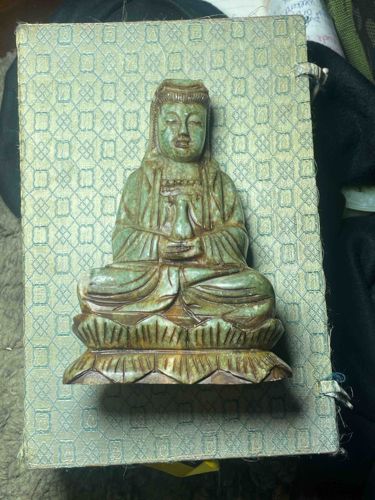
Submitted item photo
Submitted photo · June 20, 2026

User's notes

No additional notes provided.

AI analysis below

AI appraisal

AI analysis & estimate

AI-Generated · Verify before acting

Everything below is generated by AI for informational purposes only. AI can make mistakes — the AI may misidentify items or misattribute them (artist, maker, brand, designer, origin, era). This is not an official valuation and should not be used for insurance, sale, tax, estate, legal, or lending purposes — or any decision requiring a certified appraisal. It is not an authoritative claim about any person, brand, or rights holder — do not share or rely on it as a factual statement about a third party. Always consult qualified professionals before making financial decisions.

Read the full disclaimer

AI Identification

·Not independently authenticated·Verify before acting

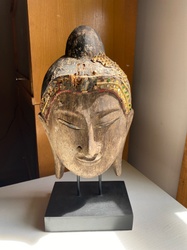
Carved Soapstone Guanyin Statue

Asian Art and Antiques

AI Estimated Value

·Not an official valuation·Verify before acting

$150 - $250

As of June 20, 2026

AI Item Analysis

·AI can make mistakes·Verify before acting
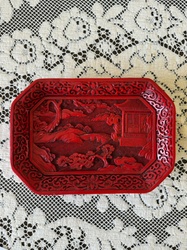
This is a hand-carved soapstone figurine depicting Guanyin, the Bodhisattva of Compassion, seated in a meditative dhyanasana pose atop a double-tiered lotus base. The figure stands approximately 4 to 6 inches in height and is crafted from a celadon-green soapstone featuring prominent brownish-red veining and surface iron staining, which gives it a faux-archaic appearance. Guanyin is portrayed with a serene expression, elongated earlobes, and a high cowl covering her hair. She holds a sacred 'pure water' vase (kalasha) in her lap, symbolize of healing and blessings. The carving style uses deep, repetitive incised lines to define the drapery of the robes and the petals of the lotus throne, which is a characteristic technique of mid-20th-century Chinese export handicrafts. Regarding condition, the piece shows significant surface grime and dust accumulation within the recessed carvings. There is a visible reddish patina that appears to be a mix of natural mineral inclusions and applied staining to simulate age. No major chips or fractures are immediately apparent from the front view, though the edges of the lotus base show minor flea bites and abrasive wear typical of soft stone. The statue is presented against a silk-brocade covered box, which suggests it may be part of a vintage gift or collector's set. Based on the craftsmanship and material, this likely dates to the mid-to-late Republic period or early People's Republic of China (circa 1940s-1970s), intended for the decorative international market.
AI Appraisal Report

·AI can make mistakes·Verify before acting
I have examined the provided images of the carved soapstone Guanyin figurine. This piece exhibits the classic hallmarks of mid-20th-century Chinese 'export' soapstone carving. The celadon-green stone with deliberate brownish-red surface staining is characteristic of items produced between 1940 and 1970 to mimic the patina of earlier Ming or Qing dynasty artifacts. The carving utilizes repetitive, deep incised lines for the drapery, which prioritizes decorative efficiency over the fluid, master-level craftsmanship found in high-period antiques. The overall condition is fair; while no major structural losses are noted, the accumulation of surface grime and 'flea bites' on the soft mineral edges are consistent with its age and material. The market for mid-century soapstone is currently stable but faces high supply, as these were mass-produced for the international gift market. Compared to high-quality Shoushan stone carvings, which can fetch thousands, this soapstone example is valued primarily as a decorative collectible. Its value is enhanced slightly by the presence of the original silk-brocade box. Importantly, this appraisal is based on visual examination of digital images. A definitive determination of age and mineral composition requires an in-person inspection to verify the tactile density of the stone and search for potential repairs hidden beneath the staining. Authentication would be further strengthened by provenance documentation, such as original import records or receipts. Without physical handling, it is impossible to rule out modern high-density composite imitations, though the mineral veining here suggests genuine soft stone.

Get your items appraised

Instant estimates of your treasures with AI-powered appraisals

Browse More Appraisals